 EN
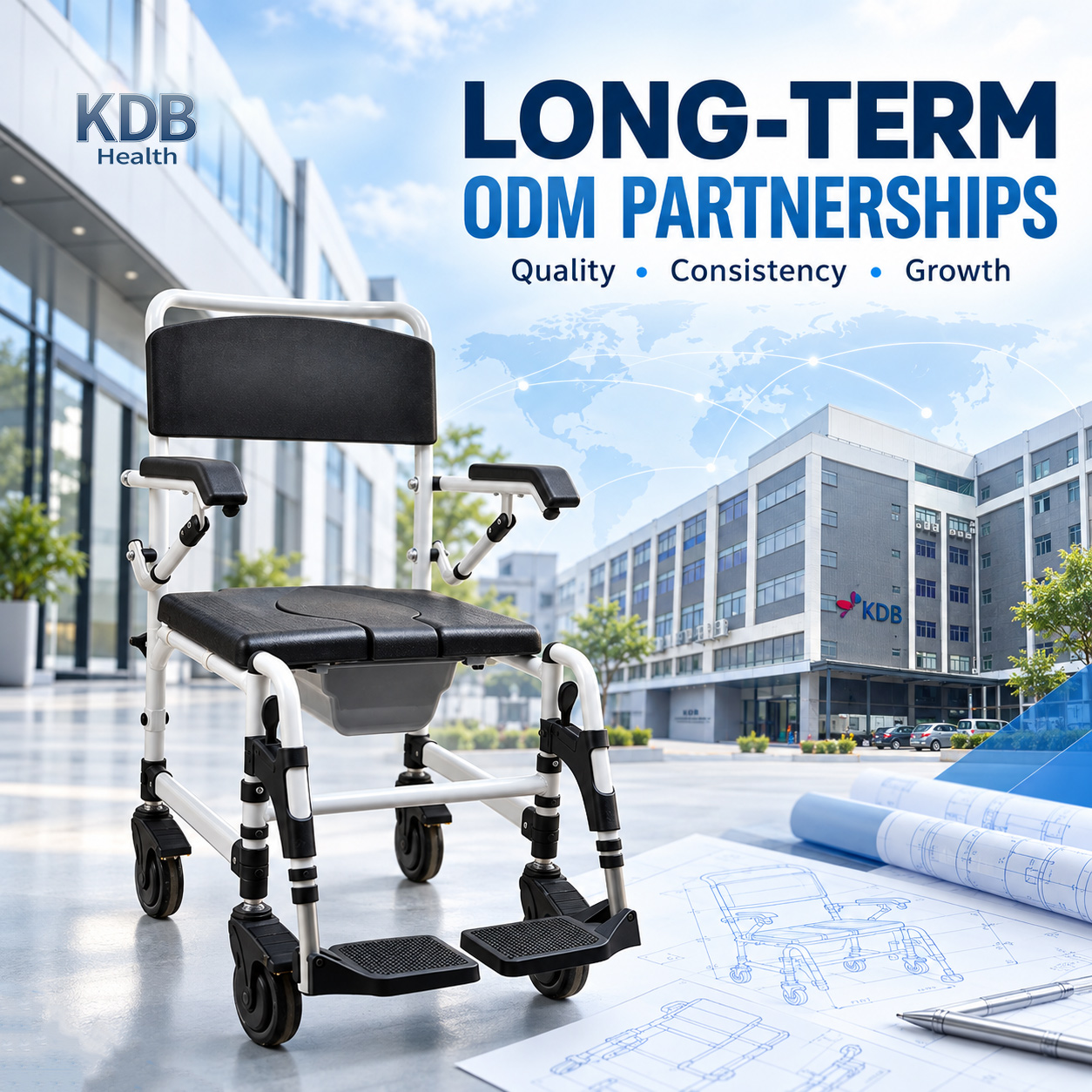
At the quotation stage, many medical equipment manufacturers can appear similar. They may offer comparable products, prices and production lead times.
The differences usually become visible later—during the second or fifth repeat order, a packaging update, a component change, a quality investigation or the launch of a product into another market.
For healthcare brands, distributors and importers, a long-term ODM relationship is therefore not simply about buying from the same supplier for several years. It is about establishing a controlled operating system for managing product specifications, quality, changes, documentation and future development.
A capable ODM medical equipment manufacturer should help protect product continuity while supporting the brand’s growth across different sales channels and markets.
What Defines a Long-Term ODM Partnership?
A conventional supplier relationship is often organized around individual purchase orders. Specifications, pricing and delivery dates are discussed one order at a time.
A long-term ODM partnership takes a broader view. Both parties establish shared processes covering:
▪ Approved product specifications
▪ Sample and production version control
▪ Material and component changes
▪ Quality acceptance criteria
▪ Packaging and labeling requirements
▪ Market-specific documentation
▪ Forecasting and production planning
▪ Product improvement and future SKU development
The objective is not to remove commercial flexibility. It is to reduce avoidable variation and make responsibilities clearer as order volumes, product ranges and target markets expand.
1. Transactional Sourcing Creates Hidden Costs
Changing suppliers to obtain a slightly lower quotation may appear attractive. However, the unit price is only one part of the sourcing cost.
A supplier change may also require:
▪ New samples and product evaluations
▪ Reconfirmation of dimensions and load requirements
▪ New packaging tests and instruction manuals
▪ Revised labels, barcodes and product photography
▪ Requalification of materials or components
▪ Additional inspections during initial production
▪ Updated regulatory or importer documentation
▪ New spare-parts and after-sales arrangements
These activities consume engineering, procurement, quality and marketing resources.
When products are purchased from several unrelated factories, specifications can also begin to diverge. Two chairs sold under the same brand may use different fasteners, rubber tips, coatings or assembly methods, making inventory and after-sales management more difficult.
A well-managed long-term partnership helps the brand retain product knowledge instead of rebuilding it for every order.
2. The Partnership Should Begin With a Product Roadmap
Long-term ODM cooperation works best when the manufacturer understands more than the immediate purchase order.
Before selecting a product platform, the brand and manufacturer should discuss questions such as:
▪ Which countries and sales channels will the product serve?
▪ Is the product intended for institutional, retail or e-commerce use?
▪ Which models are planned during the next 12 to 24 months?
▪ Which features must remain standardized across the product family?
▪ Which elements require private-label customization?
▪ What are the expected trial and replenishment quantities?
▪ Could future models share components, packaging or accessories?
For example, a brand launching a commode chair may later add a shower chair, toilet safety rail or walker. Planning the broader portfolio can help maintain consistent colors, packaging, user instructions and spare components.
Brands can review KDB Health’s rehabilitation and bathroom safety product portfolio when evaluating potential product families and customization opportunities.
3. Establishing a Controlled Product Baseline
One of the most important steps in an ODM relationship is establishing the approved product baseline.
The baseline defines exactly what the brand has approved for production. Depending on the project, it may include:
▪ Approved reference sample
▪ Product drawings and dimensions
▪ Materials and finishes
▪ Critical components
▪ Performance and load requirements
▪ Packaging structure and carton markings
▪ Labels, manuals and warning information
▪ Inspection and acceptance criteria
▪ Product and document version numbers
Without this baseline, the buyer and manufacturer may have different interpretations of what constitutes the approved product.
The approved sample alone is not always sufficient. Some materials, internal components or production tolerances may not be visible in a finished sample. Written specifications and controlled documents provide a more reliable reference for repeat orders.
A useful principle is simple: if a change cannot be identified, reviewed and approved, it cannot be effectively controlled.
4. Managing Product and Component Changes
Medical and home healthcare products often remain in the market for several years. During that time, raw materials, components, packaging regulations and customer expectations may change.
The ODM agreement should establish which changes require notification and approval. Examples include:
▪ Frame material or wall thickness
▪ Plastic resin or seat material
▪ Casters, brakes, fasteners or rubber tips
▪ Surface treatment or coating process
▪ Packaging structure or carton specification
▪ Product labels and instructions for use
▪ Tooling or manufacturing process
▪ Critical subcontractors
▪ Production location
Not every change has the same level of risk. A carton artwork update is different from changing a load-bearing component.
A mature change-control process evaluates the possible effects on product safety, performance, documentation, inventory and market compliance before the change is released to production.
This protects the brand from discovering an unapproved change only after goods have entered the market.
5. Maintaining Quality Across Repeat Orders
A successful first order does not automatically guarantee consistent future production. Long-term value comes from reproducing the approved product across multiple batches.
An ISO 13485 quality management system provides an important framework, but certification alone does not replace product-specific controls. Buyers should also examine how the manufacturer manages:
▪ Incoming material inspection
▪ In-process production checks
▪ Critical dimensions and assembly points
▪ Functional and stability testing
▪ Final inspection and release
▪ Nonconforming products
▪ Corrective and preventive actions
▪ Batch and production records
Performance should be reviewed across repeat orders rather than judged from one pre-production sample.
For a more detailed overview, see KDB Health’s guide to medical equipment quality control.
6. Clarifying Regulatory and Documentation Responsibilities
Regulatory requirements depend on the product configuration, intended use and destination market. A statement that one product is “CE/FDA compliant” should not automatically be applied to every model or customization.
Before production, the parties should confirm:
▪ Exact product model and intended use
▪ Destination country or region
▪ Legal manufacturer and importer responsibilities
▪ Applicable registration or conformity route
▪ Required declarations, reports and technical documents
▪ Labeling and instructions for use
▪ Language requirements
▪ Complaint and post-market responsibilities
▪ Changes that could affect existing documentation
Private-label customization may also affect the information shown on the product, packaging and documentation. These details should be reviewed before printing or production begins.
Importers entering the United States or European Union can refer to the KDB Health guide to commode chair CE and FDA requirements.
Final compliance responsibilities and required evidence must always be confirmed for the specific model and target market.
7. Coordinating Forecasts and Production Capacity
Long-term cooperation does not mean the buyer must commit to excessive inventory. It means both parties exchange enough information to plan realistically.
Useful planning information can include:
▪ Rolling demand forecasts
▪ Confirmed purchase orders
▪ Seasonal sales periods
▪ Expected promotion dates
▪ Component lead times
▪ Packaging preparation time
▪ Required inspection windows
▪ Shipping and replenishment schedules
A forecast is not necessarily a firm order, but it helps the manufacturer anticipate materials and production capacity. The buyer should separately identify confirmed quantities and provisional demand.
This becomes especially important when a brand expands from test orders to regular replenishment or container-volume purchasing.
Additional planning considerations are covered in KDB Health’s article on medical equipment supply chain management.
8. Turning Market Feedback Into Controlled Product Improvements
A long-term ODM manufacturer gradually develops a deeper understanding of the brand’s customers, target price range and product positioning.
Feedback may come from:
▪ Distributor sales teams
▪ E-commerce reviews and returns
▪ Institutional procurement teams
▪ Caregivers and end users
▪ Quality inspections
▪ Warranty or complaint records
The manufacturer should not respond to every comment with an immediate production change. Feedback first needs to be categorized and evaluated.
A controlled improvement process normally includes:
1. Defining the problem or opportunity
2. Evaluating engineering feasibility and risk
3. Developing a prototype or revised sample
4. Verifying function and usability
5. Obtaining buyer approval
6. Updating specifications and documents
7. Releasing the new version into production
This creates product improvement without losing control of the original design.
Brands planning a more substantial new product can review the custom rehabilitation equipment ODM development guide.
9. Evaluating Total Relationship Cost
The lowest quotation does not always produce the lowest total sourcing cost.
Procurement teams should consider:
▪ Product consistency
▪ Inspection and rework costs
▪ Communication efficiency
▪ Delivery reliability
▪ Documentation accuracy
▪ Packaging errors
▪ Return and warranty exposure
▪ Time required for corrective action
▪ Cost of changing suppliers
▪ Availability of replacement components
A reliable long-term ODM partner may not provide the lowest price for every individual order. However, better continuity can reduce operational volatility and repeated qualification work.
This is particularly important for healthcare products, where small inconsistencies can affect user experience, brand reputation and market access.
10. Creating a Practical Partnership Review System
Long-term cooperation should be measured, not assumed.
Depending on purchasing frequency, partners can conduct monthly operational reviews, quarterly product reviews or annual roadmap meetings.
A review may cover:
▪ Delivery performance
▪ Inspection and quality results
▪ Open issues and corrective actions
▪ Product and document change logs
▪ Forecasts and production capacity
▪ Packaging or labeling updates
▪ Customer feedback
▪ Existing SKU performance
▪ Planned products and target markets
These reviews give both parties an opportunity to identify risks before they affect a shipment or product launch.
How to Evaluate a Potential Long-Term ODM Partner
Before committing to a strategic manufacturing relationship, brand owners and procurement teams should ask:
▪ Can the manufacturer maintain an approved master specification for each model?
▪ How are product and component changes communicated?
▪ How is the approved sample transferred into mass production?
▪ Which inspections are performed during production?
▪ Can documentation be provided for the exact model and destination market?
▪ How are nonconformities and corrective actions managed?
▪ Can production capacity support future growth?
▪ How are repeat orders and version updates controlled?
▪ Can the manufacturer support both existing platforms and qualified new development?
▪ Who will remain responsible for the project after the first order ships?
Clear answers are generally more valuable than broad claims about being a “one-stop supplier.”
Building a Long-Term Partnership With KDB Health
KDB Health supports distributors, healthcare brands, importers and project buyers with standard product supply, private-label programs, existing-platform ODM and qualified new-product development.
Our manufacturing and development resources include:
▪ More than 14 years of experience in rehabilitation and home healthcare equipment
▪ An approximately 18,000-square-meter manufacturing facility
▪ An ISO 13485-certified quality management system
▪ A 12-member product development team
▪ More than 500 existing product molds
▪ Production capacity of up to 80,000 commode chairs per month, depending on model mix and production schedule
▪ Prototype or sample support from approximately 15 days for qualified projects, depending on scope and component availability
Project requirements are evaluated according to the product model, target market, customization scope, documentation needs and forecast volume.
For growing brands, KDB Health can also discuss low-MOQ medical equipment sourcing using suitable existing product platforms.
Frequently Asked Questions
What is the difference between a long-term ODM partner and a regular supplier?
A regular supplier may focus mainly on individual quotations and purchase orders. A long-term ODM partner also helps manage product specifications, version changes, quality continuity, documentation and future product development.
Does a long-term partnership require exclusivity?
Not necessarily. Exclusivity should only apply when both parties agree to clearly defined products, markets, volumes and contractual terms.
Should every healthcare product use the ODM model?
No. ODM is suitable when a brand can use an existing product platform with selected modifications. A fully customized project may require a different development, tooling and validation process.
What should be agreed before the first bulk order?
The parties should confirm the approved sample, specifications, packaging, labels, quality criteria, documentation responsibilities, change-control process, lead time and after-sales responsibilities.
How should ODM partner performance be measured?
Useful indicators include on-time delivery, repeat-order consistency, inspection results, response time, corrective-action effectiveness, change accuracy and documentation readiness.
Can a growing healthcare brand begin with a smaller order?
Possibly. MOQ depends on the product platform, materials, colors, packaging and customization requirements. Existing models generally provide more flexibility than projects requiring new tooling or structural development.
Conclusion
The value of a long-term ODM partnership is not simply familiarity or preferential pricing. It comes from retaining product knowledge, controlling changes, maintaining repeat-order quality and coordinating future development.
For global healthcare brands, these capabilities can reduce sourcing rework and make product growth more predictable.
If you are evaluating an ODM partner for commode chairs, shower chairs, bathroom safety products or other rehabilitation equipment, contact KDB Health to discuss your product requirements, target market, estimated volume and development plan.
Table of Contents
- What Defines a Long-Term ODM Partnership?
- 1. Transactional Sourcing Creates Hidden Costs
- 2. The Partnership Should Begin With a Product Roadmap
- 3. Establishing a Controlled Product Baseline
- 4. Managing Product and Component Changes
- 5. Maintaining Quality Across Repeat Orders
- 6. Clarifying Regulatory and Documentation Responsibilities
- 7. Coordinating Forecasts and Production Capacity
- 8. Turning Market Feedback Into Controlled Product Improvements
- 9. Evaluating Total Relationship Cost
- 10. Creating a Practical Partnership Review System
- How to Evaluate a Potential Long-Term ODM Partner
- Building a Long-Term Partnership With KDB Health
-
Frequently Asked Questions
- What is the difference between a long-term ODM partner and a regular supplier?
- Does a long-term partnership require exclusivity?
- Should every healthcare product use the ODM model?
- What should be agreed before the first bulk order?
- How should ODM partner performance be measured?
- Can a growing healthcare brand begin with a smaller order?
- Conclusion