
 EN
EN
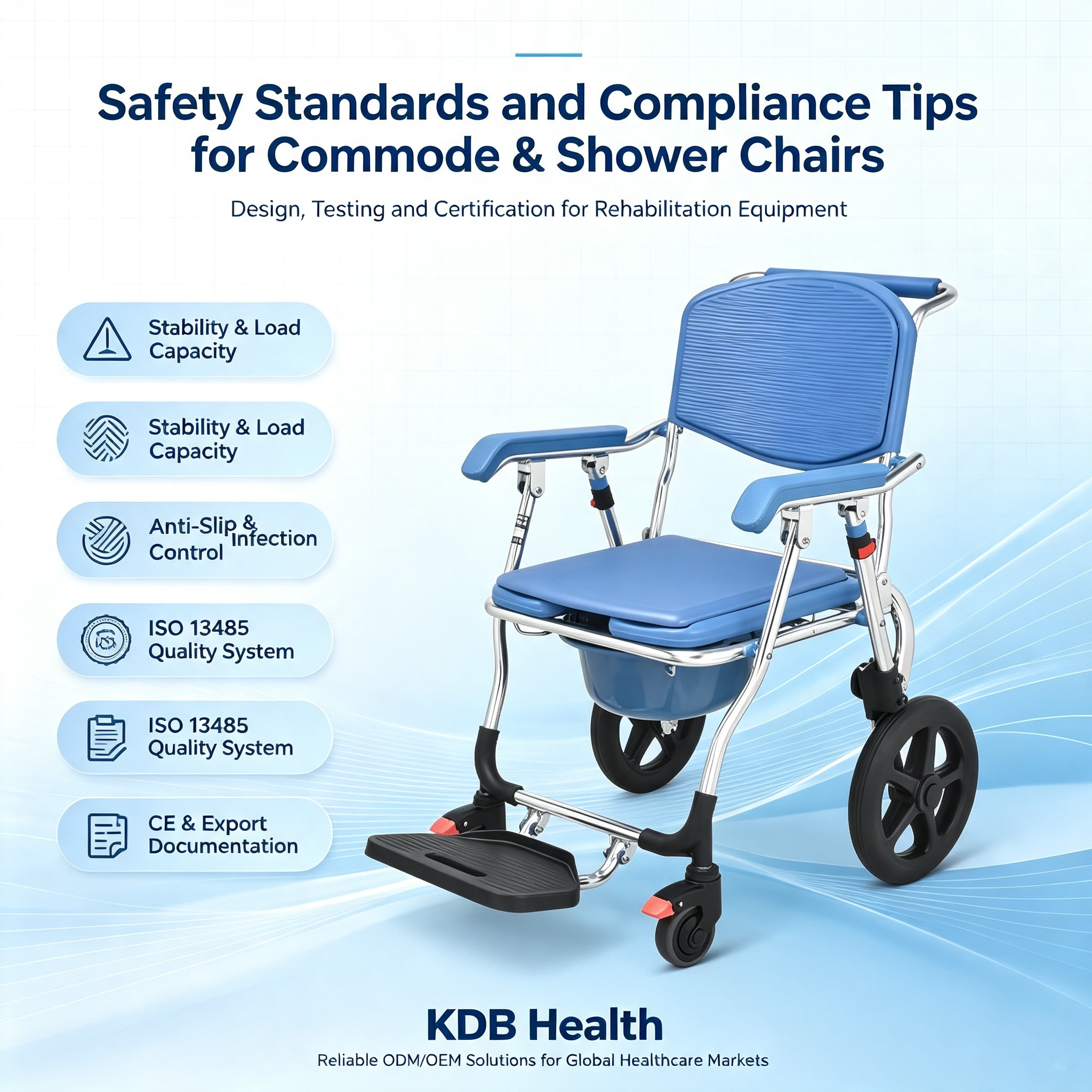
Mobility and bathroom safety market represents an important segment, but also an involved regulatory landscape for international distributors. Safety and regulatory compliance is not just the technical challenge but a very foundation on which trust, risk management, and market access are built in the supply of commode chairs and shower chairs to hospitals, nursing homes, and home care organizations. As a group brand with over a decade of experience in the market, KDB Health brings together the technical expertise of our KDB Medical division with the understanding of the market that our Sangohe division represents. In this article, we will discuss some of the important compliance considerations.
The Foundation: Certified Quality Systems and International Standards
It is important for distributors to focus on those suppliers who work within an established quality management system. The dedication of the manufacturer towards compliant medical equipment starts with the certifications required from the suppliers, such as the ISO 13485 standard, which is the standard for quality management systems in the medical devices industry. In the case of commode chairs and shower chairs, since these products are designed to support individuals that have reduced mobility, all three suppliers will need to follow CE, FDA and ISO guidelines. The suppliers will also need a CE mark on their product as this demonstrates how well their product meets the health and safety and environmental directives of the European Union. Furthermore, if the supplier wishes to sell their product in the United States they will also need an FDA number so that they can register their product with the U.S. Food and Drug Administration.
Material Safety and Durability: Beyond Basic Requirements
Safety is not limited to the paperwork and compliance with regulations. It is also the physical integrity of the product. For bathroom safety equipment, this means the product is exposed to moisture, cleaning products, and constant weight-bearing. Medical equipment, which is compliant with regulations, must be made with materials such as corrosion-resistant anodized aluminum or stainless steel. Seat surfaces should be non-slip and antibacterial. Products should be tested to ensure they can bear 300 lbs (136 kg) weight or greater. They should also be tested to ensure the weight capacity is well-marked. Moreover, parts such as the lock, armrest, and the tool-free adjust feature should be tested to ensure they can withstand many cycles.
Navigating B2B Procurement Requirements
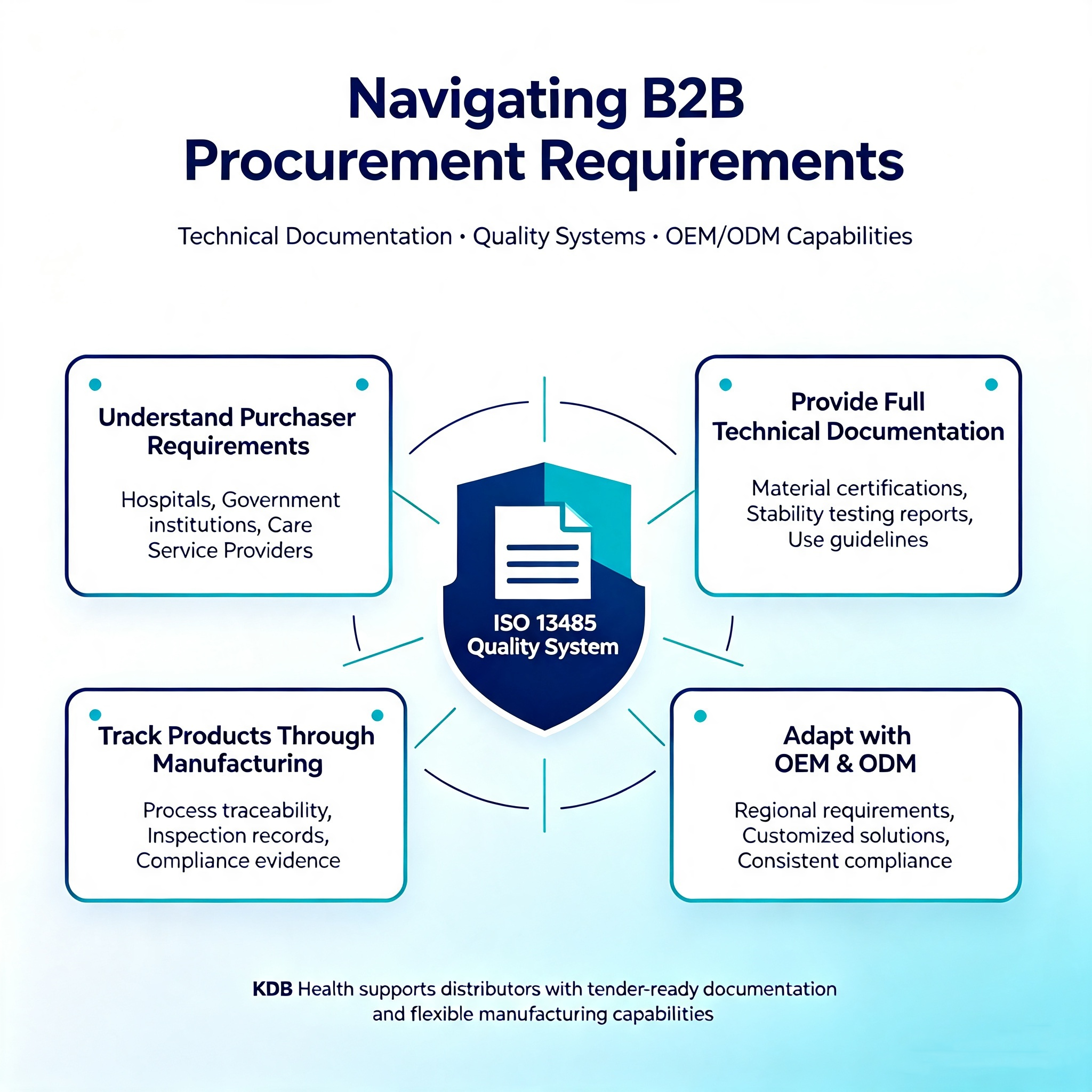
In order to be able to supply a variety of large scale purchasers (such as Hospitals, Government institutions, Care Service Providers) it is important for distributors to understand what their B2B purchaser will require in terms of purchasing. Procurement contracts normally state specific requirements; typically these would include testing documents and certification documentation; additionally, in many cases purchasers will also want suppliers to show evidence of how they can track products through their manufacturing process. Therefore, KDB Health believes that all our suppliers must demonstrate that they are capable of providing full technical documentation including material certifications, stability testing reports and use guidelines in accordance with internationally accepted standards. Our ISO 13485 certified Quality System enables KDB Health to quickly respond to a distributor's request for this documentation; which we believe will greatly increase a distributor's chances of being successful in any tender bid. This will further help to develop an on-going relationship between the distributor and their institutional customer. Moreover, KDB Health’s OEM & ODM capabilities allow distributors to easily adapt to procurement requirements in different regions without compromising compliance.
Safety Design for Seniors: Key Features to Evaluate
The users of commode and shower chairs are mostly elderly people with low strength, balance, and cognitive abilities. There are important aspects that should be incorporated into a safety design of a product for elderly people. The shower chair has a slanted seat design which allows water to drain properly from the seat. The design of a commode chair requires a stable frame which must have a broad base and non-skid rubber tips to stop the chair from tipping over. The commode chair requires tool-free height adjustment because it enables caregivers to achieve correct height settings without any risk of making assembly errors. A padded armrest and a backrest are also important in a commode chair because they enhance comfort and support. These factor should be considered by distributors as they are important in fall prevention, a major concern in elderly care facilities.
Documentation, Labeling, and Post-Market Support
Compliance does not end with the shipment. Labeling and documentation work as essential tools which organizations need to fulfill their compliance requirements while maintaining safe operations. Products should be well-labeled with assembly instructions, weight capacity, and cleaning procedures. For markets with unique device identification (UDI) requirements, it is important to verify the suppliers can support the labeling requirements. Moreover, support after the sale, including warranty, parts availability, and customer support, is important to differentiate suppliers. As a long-term partner in home-based care solutions, KDB Health provides our distributors with the support needed throughout the product life cycle.
Partnering with a Compliant Manufacturer
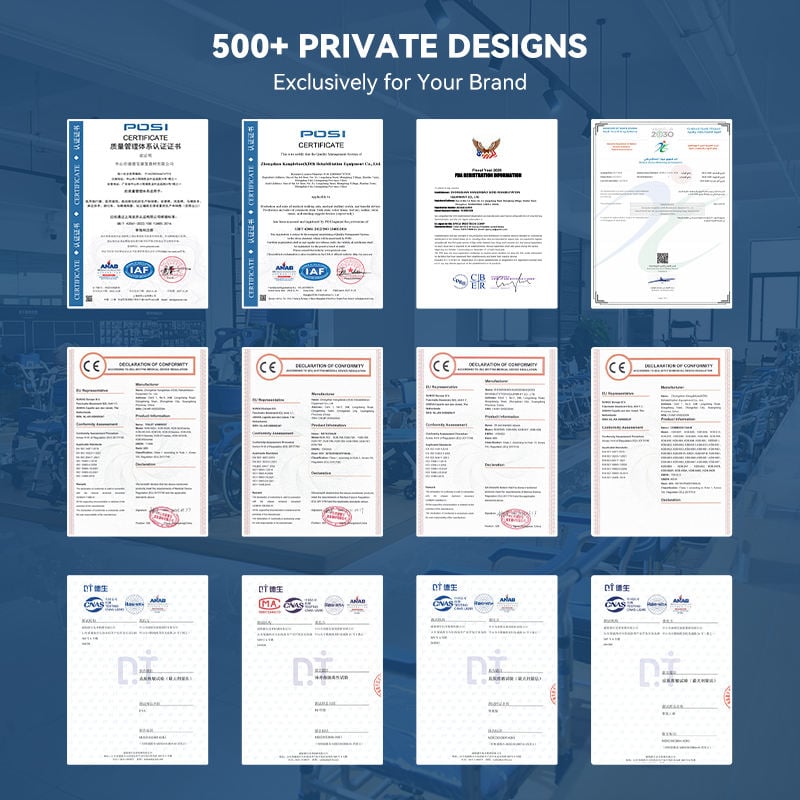
For global distributors, choosing a proper manufacturing partner is a most critical decision in terms of compliance. Working with a supplier who has a proven record in compliant medical equipment, CE/FDA/ISO standards, a deep understanding of B2B procurement, and a safety design for seniors will give a competitive edge in this competitive market. KDB Health, with its integrated business model, which combines KDB Medical's manufacturing excellence with Sangohe's consumer-centric innovation, enables our partners to successfully serve a wide range of markets with confidence, from prototyping in as little as 15 days to e-commerce development support.
By focusing on safety standards and compliance, not only are they protecting their end-users, but they are building a strong brand in a growing global market for home healthcare and rehabilitation products.
Table of Contents
- The Foundation: Certified Quality Systems and International Standards
- Material Safety and Durability: Beyond Basic Requirements
- Navigating B2B Procurement Requirements
- Safety Design for Seniors: Key Features to Evaluate
- Documentation, Labeling, and Post-Market Support
- Partnering with a Compliant Manufacturer