
 EN
EN
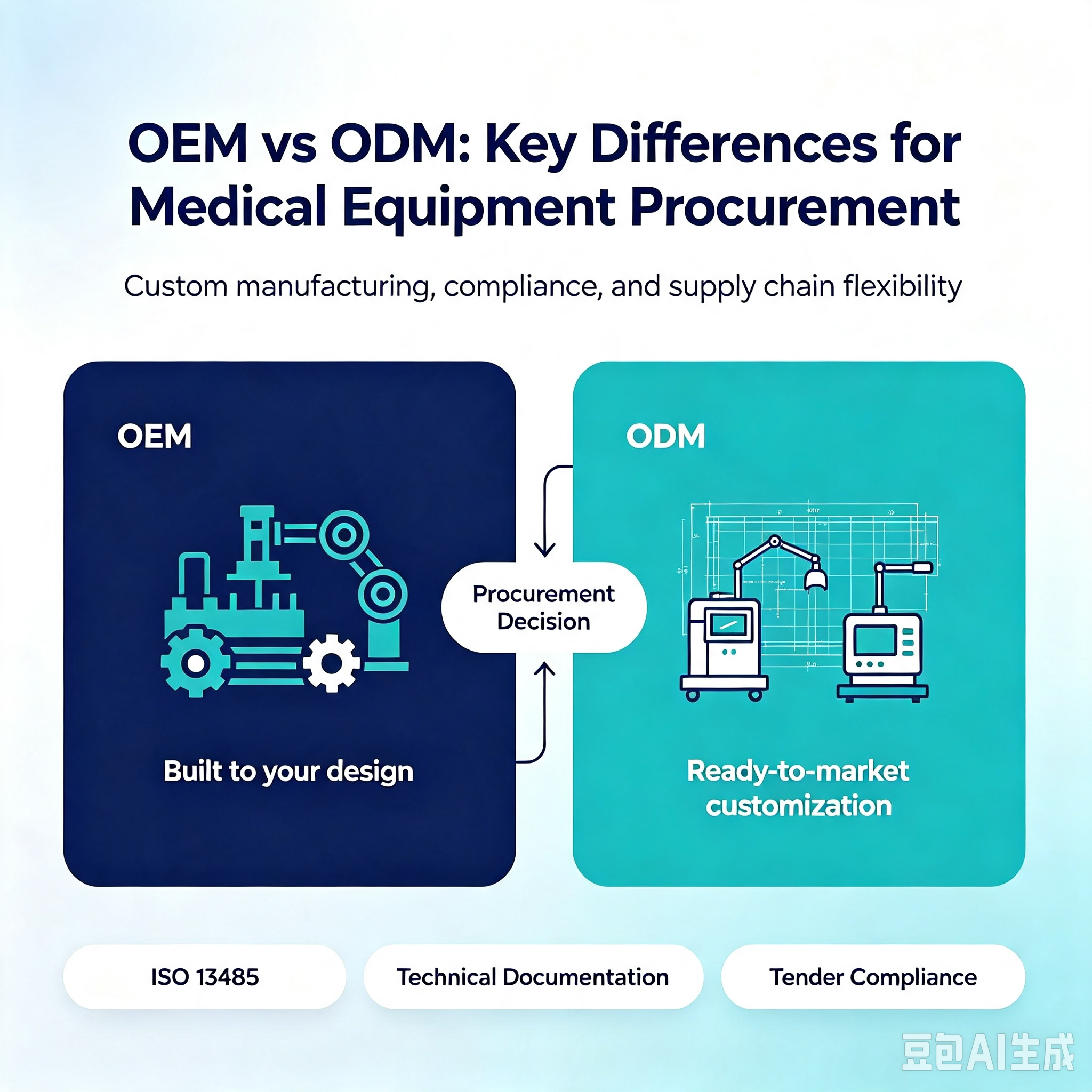
In the context of hospital procurement experts and the distributors operating in the complicated environment of medical equipment sourcing, it is critical to comprehend the difference between manufacturing models. In the purchase of products like shower chairs, commode chairs, patient lifts, and walking aids, the decision between Original Equipment Manufacturing and Original Design Manufacturing influences a lot the cost structure, time-to-market, positioning of the brand as well as compliance with the regulations. This paper explains the difference between OEM and ODM and provides a practical B2B buying guide to enable the procurement decision-maker to choose the appropriate model of partnership to adopt in accordance with the needs.
Defining the Models: OEM and ODM Explained
The basic OEM vs ODM difference must be learnt before the selection of a single model that is suitable in a given procurement situation.
In the OEM model, the purchaser provides the design, specifications, and in many cases, detailed engineering requirements for the product. The manufacturer makes the product to the specific requirements of the buyer and operates more of a production partner. Under this model, the buyer has the complete ownership of the design and intellectual property.
Original Design Manufacturing (ODM) on the other hand is where the manufacturer assumes the design and production. The supplier works out the product concept, engineering, and tooling and sells it as a semi-finished or finished product which can be branded by the buyers as their own. In this model, the procurement organizations are able to use the manufacturer R&D resources, and design experience without bearing the cost of developing in-house products.
Key Considerations for Hospital Procurement
In the case of hospital procurement team, the decision to continue with OEM or ODM is usually dependent on certain clinical needs and organizational strengths. Healthcare systems and hospitals are typically in need of products that are of high safety measures such as CE, FDA, and ISO 13485. The OEM model is more accurate in specifications when the hospital has proprietary design ideas that its clinical engineering team has aimed at or where the hospital is intending to make uniform equipment in a multi-facility system. This is the method that would make sure that products are well matched with set clinical practices and current inventory.
On the other hand, ODM partners provide a strong alternative when hospitals are in need of high-quality compliant products and need them as fast as possible without the heavy load of design management. A qualified ODM medical equipment supplier is capable of supplying familiar designs that are already of international standard with the capability to make small adjustments to suit a particular company like branding, color selection or the arrangement of certain accessories. The model not only saves a lot of time in development schedules, but it also enables the procurement team to work on suppliers qualification and value extracts as opposed to engineering observation.
Strategic Implications for Distributors
Here distributors have a different set of thoughts in considering OEM vs ODM. In the case of distributors who are creating a unique brand image, the ODM model offers an avenue of exclusivity in the market. Through association with a manufacturer with custom medical solutions, the distributors can develop lines of products with different features, packaging and branding that would be distinct to competitors. This strategy will enable distributors to build brand equity, using the manufacturer design capabilities and regulatory compliance infrastructure.
OEM alliances can be better suited to distributors who have come up with proprietary designs or those which serve niche markets in the market which need special product designs. In this scenario, the design differentiation in a distributor will become a competitive advantage, and the control of intellectual property will be one of the primary things. But in this method, there will be a high initial investment in design and tooling and regulatory documentation.
Evaluating the Difference Between OEM and ODM in Practice
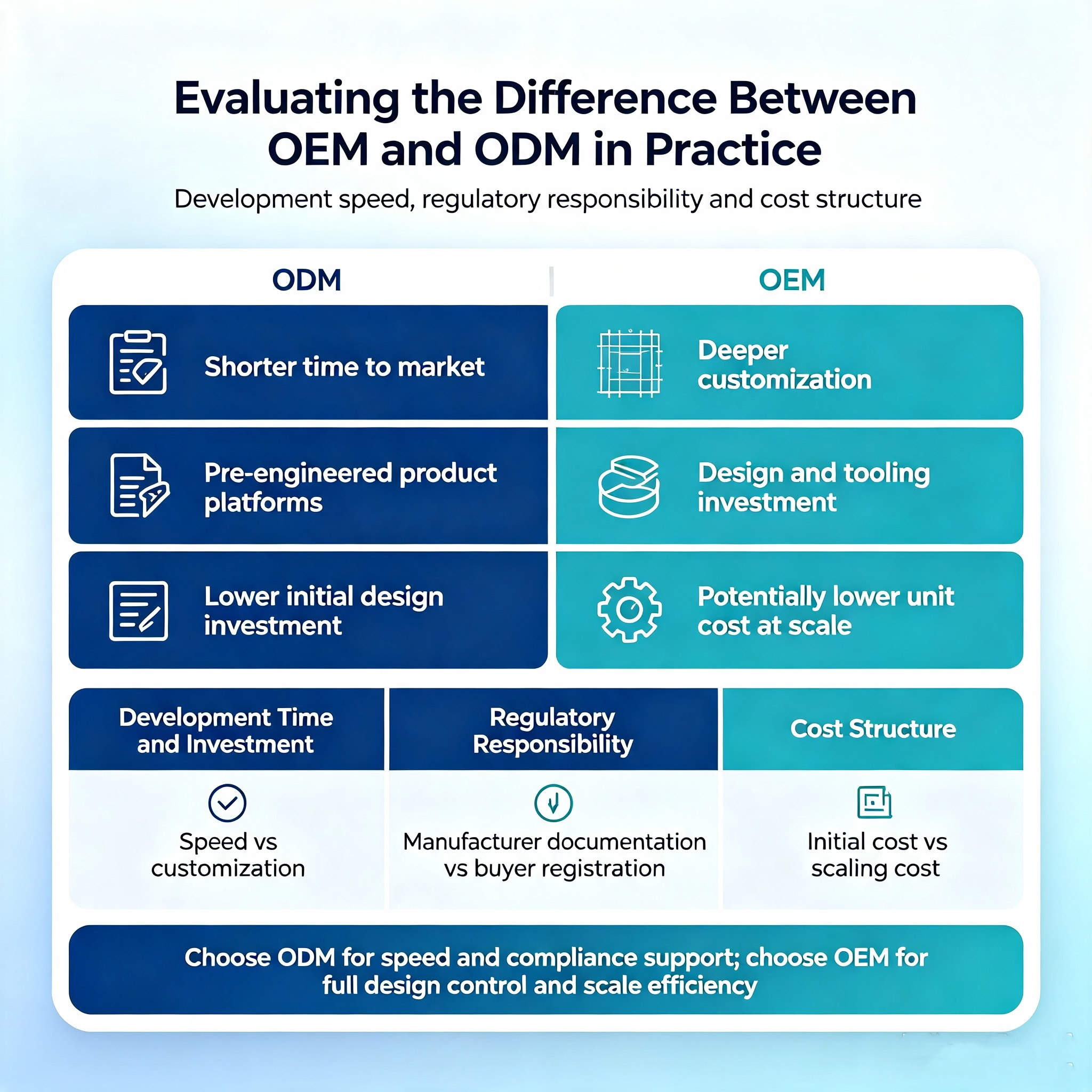
To have a practical picture of the difference between OEM and ODM, it is necessary to consider a number of crucial aspects:
Development Time and Investment: The ODM usually has a shorter time to market due to pre-engineered and proven designs. Buyers are able to choose among the existing product platforms and directly go to sampling and certification. OEM would need a design development, tooling development, and validation, which takes longer periods but provides a deeper level of customization.
Regulatory Responsibility: ODM alliances have the manufacturer who usually is in the first line of making sure that products are of required minimum regulatory standards like CE and FDA standards. The purchaser undertakes the risk of market-based labeling, registration and post-market surveillance. In OEM agreements, the buyer can be more responsible of the regulatory pathway but reputable manufactures can provide the necessary documentation.
Cost Structure: ODM saves design and tooling expenses in the initial design because the manufacturers are amortizing these expenses across a variety of clients. OEM is usually more initial investment but can be less unit cost at scale, especially when the volume-based standard products are high.
Conclusion
Regardless of whether OEM or ODM, the key to successful medical equipment acquisition is to engage with a manufacturer that proves to have technical know-how, regulation and operation consistency. KDB Health, in both the KDB Medical and Sangohe divisions, provides both with comparable skill and expertise: backed by an in-house R&D team with years of experience, ISO 13485-certified quality system, and pledge to prototype development in less than 15 days.