 EN
EN
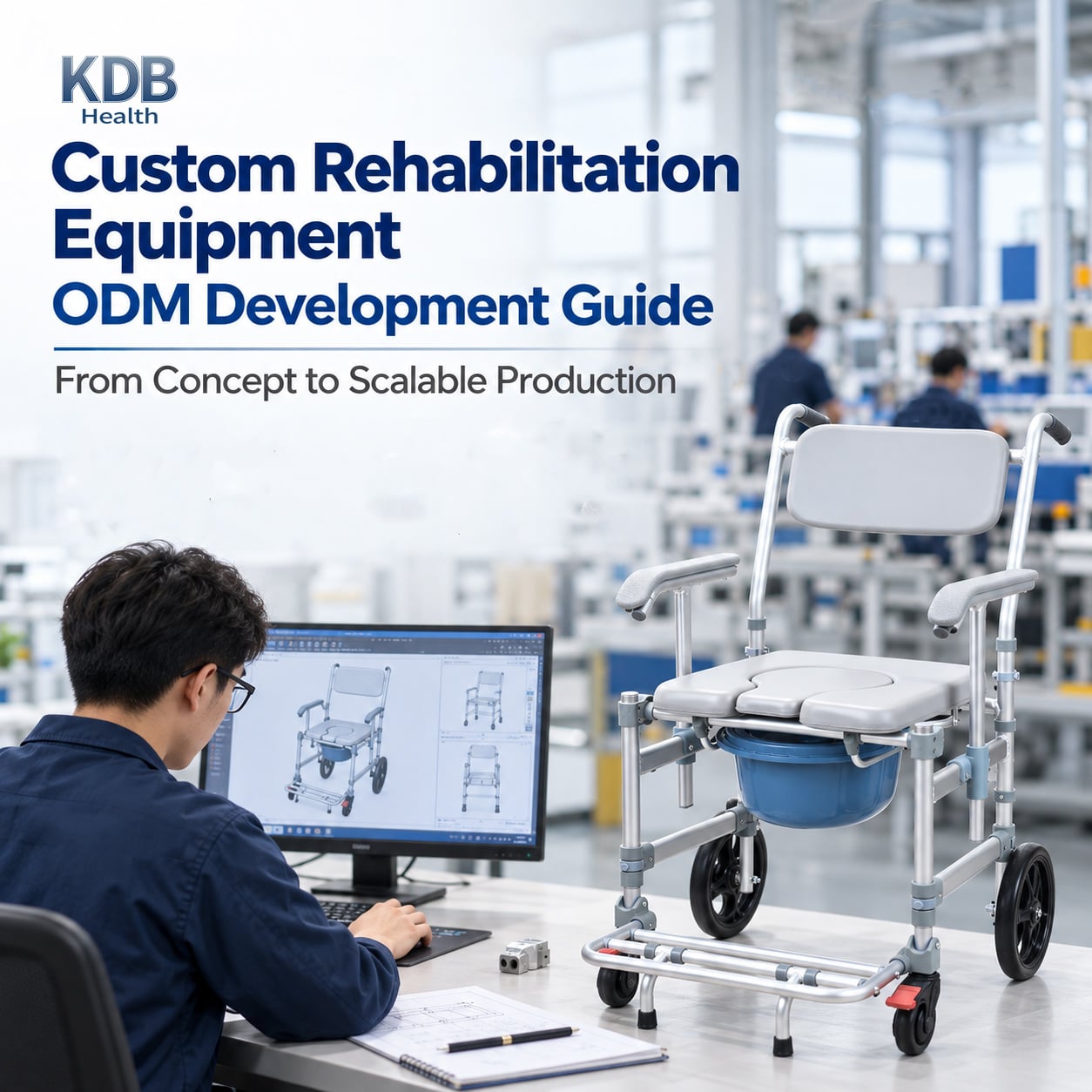
Developing custom rehabilitation equipment requires more than sending a reference image to a factory and asking for a quotation.
For medical brands, distributors and importers, a successful ODM project needs to connect market demand, product requirements, engineering feasibility, manufacturing, quality management and future commercial scale.
The development process may involve adapting an existing product platform, modifying key structures or creating new components depending on how differentiated the required product needs to be.
KDB Health works with healthcare brands, distributors, importers and project buyers to develop rehabilitation and homecare products from initial requirements through prototype evaluation and production.
This guide explains how a professional ODM development project should progress, what buyers should prepare at each stage and how to reduce unnecessary development risk.
1. Start With the Market Requirement, Not the Product Drawing
A custom product project should begin with a commercial problem.
Before discussing frame dimensions, materials or tooling, the buyer should define why the new product is needed.
Useful questions include:
▪ Which market will the product be sold in?
▪ Who is the intended buyer or end user?
▪ Which sales channel will be used?
▪ What problem does the current product fail to solve?
▪ Which features are essential?
▪ Which features are only preferred?
▪ What is the intended price positioning?
▪ What initial and future order volumes are expected?
For example, a rehabilitation product intended for institutional procurement may prioritize durability, cleaning and straightforward operation.
An e-commerce healthcare product may place greater importance on compact packaging, simple assembly, appearance and clearly differentiated functions.
Defining the commercial objective first prevents a common ODM problem: developing an impressive product that is technically possible but unnecessarily expensive or poorly suited to the target market.
2. Decide Whether the Project Is Truly ODM
Not every customization request requires a full ODM development project.
Before investing in new tooling or structural development, buyers and manufacturers should determine whether the requirement can be achieved through an existing platform.
A project may fall into three broad levels.
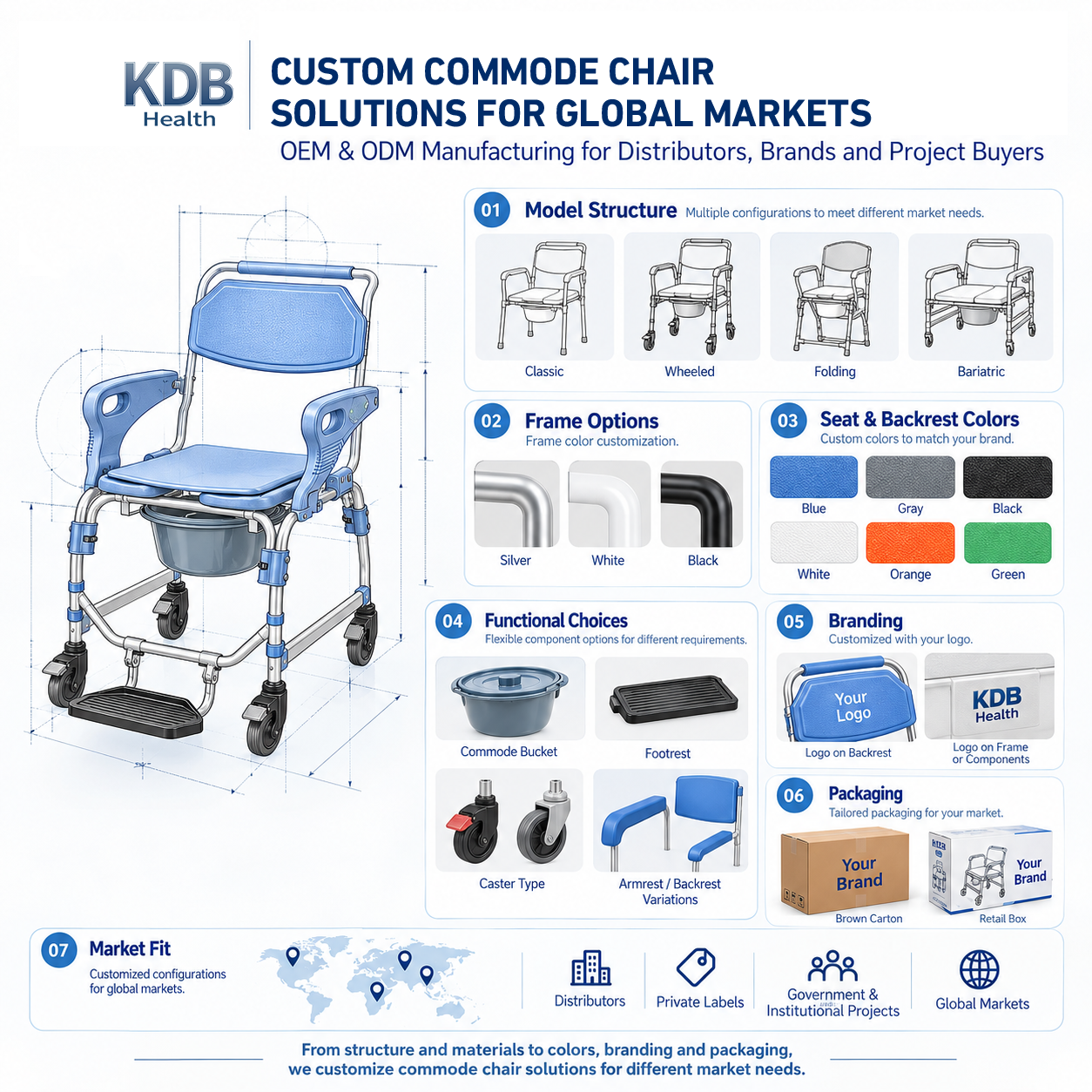
Existing Product Configuration
The product structure remains unchanged.
Changes may include:
▪ Existing accessories
▪ Available wheel or caster combinations
▪ Seat or backrest options
▪ Armrest or footrest configurations
▪ Existing materials or finishes
OEM / Private-Label Customization
The existing product remains largely unchanged, but the buyer needs market- or brand-specific adaptation.
This may include:
▪ Logo application
▪ Brand colors
▪ Product labels
▪ Instruction manuals
▪ Carton artwork
▪ Private-label packaging
ODM Product Development
ODM becomes more appropriate when the requirement affects the underlying product architecture.
Examples may include:
▪ New frame dimensions
▪ Different seat width or height
▪ Structural reinforcement
▪ New folding mechanisms
▪ New transfer functions
▪ New armrest or footrest structures
▪ New components
▪ Different load-bearing requirements
▪ New molds or tooling
Choosing the correct development level helps control cost and avoids turning a relatively simple customization project into an unnecessary engineering program.
For a practical example of how existing platforms and engineering changes can be combined, see our guide to OEM & ODM commode chair development for medical brands.
3. Prepare a Clear Product Development Brief
Once the project scope is understood, the buyer should prepare a structured development brief.
The development brief acts as the starting reference for sales, engineering, procurement and production teams.
Useful information includes:
▪ Target market
▪ Intended application
▪ Target user group
▪ Preferred dimensions
▪ Required weight capacity
▪ Required functions
▪ Preferred materials
▪ Existing reference products
▪ Features that must be improved
▪ Features that must remain unchanged
▪ Target price range
▪ Expected initial order quantity
▪ Forecast annual volume
▪ Packaging expectations
▪ Required branding
▪ Reference drawings, photos or sketches
The brief does not need to contain a finished engineering drawing.
What matters is that the manufacturer understands the buyer's real objective.
A good ODM team should ask questions rather than simply accept every requested feature.
4. Evaluate Existing Platforms Before Developing From Zero
One of the most effective ways to reduce development time is to determine whether an existing product platform can be used as the starting point.
KDB Health has more than 500 existing molds across rehabilitation and homecare product categories.
For many projects, an existing platform may already provide much of the required:
▪ Frame architecture
▪ Seat structure
▪ Height adjustment
▪ Folding mechanism
▪ Wheel system
▪ Armrest structure
▪ Footrest design
▪ Plastic components
The engineering team can then focus resources on the features that genuinely create differentiation.
This platform-based approach may help reduce:
▪ Tooling investment
▪ Engineering complexity
▪ Prototype cycles
▪ Initial MOQ pressure
▪ Development time
It can also make future repeat production more manageable because more of the product uses established components and manufacturing processes.
5. Translate the Commercial Requirement Into Engineering Specifications
After the product direction is confirmed, the manufacturer's R&D team begins translating buyer requirements into technical specifications.
This is where engineering capability becomes critical.
The engineering team may evaluate:
▪ Product dimensions
▪ Structural layout
▪ Material selection
▪ Load distribution
▪ Folding or adjustment mechanisms
▪ Component compatibility
▪ User space
▪ Assembly
▪ Production feasibility
▪ Packaging implications
The objective is not simply to make the requested feature possible.
The design should also remain practical to manufacture repeatedly.
For buyers evaluating whether a supplier has the technical resources required for this stage, our article on engineering capability in rehabilitation equipment suppliers explains what to examine in greater detail.
6. Apply Design for Manufacturing Before Prototyping
A product that works in a drawing or one prototype does not automatically make a good production product.
Design for Manufacturing, or DFM, considers how the product will be produced consistently at commercial scale.
The engineering team should consider questions such as:
▪ Can important dimensions be controlled consistently?
▪ Are materials practical for repeat production?
▪ Are components readily available?
▪ Is the assembly process unnecessarily complicated?
▪ Does the product require too many unique parts?
▪ Can inspection points be defined clearly?
▪ Will the design remain practical at higher order quantities?
▪ Can packaging be optimized without compromising the product?
This stage can prevent expensive changes later.
It is generally easier to simplify a component before tooling than after molds, fixtures and production processes have already been established.
7. Develop and Evaluate the Prototype
The prototype is where the proposed design becomes something the buyer can physically evaluate.
For suitable projects based on existing platforms, KDB Health's typical sample development time is approximately 15 days.
More complex ODM projects may require additional time depending on structural changes, tooling and prototype iterations.
The prototype should be evaluated against the original product brief.
Buyers should review areas such as:
▪ Dimensions
▪ Product stability
▪ Seat and user space
▪ Adjustment functions
▪ Folding mechanisms
▪ Casters and brakes
▪ Armrests and footrests
▪ Materials
▪ Appearance
▪ Assembly
▪ Accessories
▪ Branding
▪ Packaging
A prototype should not be approved simply because it looks similar to the original concept.
It should be evaluated based on whether it actually solves the intended market problem.
8. Manage Prototype Feedback Systematically
Many ODM projects require more than one round of feedback.
The important issue is how changes are managed.
Instead of sending individual comments through multiple messages, buyers should consolidate feedback into a clear revision list.
Each change should identify:
▪ What needs to change
▪ Why the change is required
▪ Which dimension or function is affected
▪ Whether the change is mandatory or optional
▪ Whether another component may also be affected
The manufacturer should then assess the technical and manufacturing implications before revising the product.
This prevents uncontrolled changes from gradually increasing complexity, cost or lead time.
9. Review Compliance Requirements Before Final Design Approval
Compliance should be considered during development rather than left until the product is ready for shipment.
The requirements depend on the product, classification and destination market.
Professional buyers should clarify:
▪ Intended market
▪ Product classification
▪ Applicable documentation
▪ Labeling requirements
▪ User instructions
▪ Product specifications
▪ Relevant testing requirements
▪ Importer or distributor responsibilities
KDB Health operates under an ISO 13485 quality management system and supports relevant product and export documentation according to the product and project requirements.
For products intended for the European market, applicable CE documentation and Declaration of Conformity should be reviewed for the specific product.
When major structural changes are introduced, buyers should also confirm whether those changes affect existing documentation or require additional evaluation.
10. Freeze the Approved Specification Before Mass Production
One of the most important stages in ODM development is the transition from prototype to production.
Once the product has been approved, the buyer and manufacturer should establish a clear production reference.
This may include:
▪ Approved product dimensions
▪ Materials
▪ Components
▪ Functions
▪ Colors and finishes
▪ Logos
▪ Labels
▪ Accessories
▪ Instruction manuals
▪ Packaging
▪ Inspection requirements
The approved sample and confirmed specification should then guide production and quality inspection.
This prevents the project from relying on informal discussions or old reference images after manufacturing begins.
11. Plan Packaging During Product Development
Packaging should not be treated as the final step of an ODM project.
For rehabilitation equipment, product size and shipping volume can have a significant impact on landed cost.
Packaging development may consider:
▪ Folding dimensions
▪ Disassembled dimensions
▪ Carton dimensions
▪ Product protection
▪ Component placement
▪ Accessory placement
▪ Assembly requirements
▪ Shipping marks
▪ Container utilization
A structural change that adds only a small amount to the assembled product may significantly increase carton volume.
For international distributors, this can affect the commercial viability of the product.
Packaging therefore needs to be considered together with product engineering.
12. Prepare the Product for Repeatable Production
An ODM project is successful only when the approved product can be manufactured consistently after the initial production run.
Before mass production, the manufacturer should confirm that:
▪ Key materials are available
▪ Customized components can be reproduced
▪ Product drawings and specifications are controlled
▪ Tooling is ready
▪ Production processes are defined
▪ Inspection points are established
▪ Packaging requirements are documented
▪ Approved samples are available as references
This is the point where engineering and quality management must work together.
The goal is not simply to reproduce the first prototype.
It is to create a repeatable manufacturing system.
13. Move From Pilot Order to Commercial Production
For a new product, a buyer may prefer to begin with a smaller commercial order before committing to larger volumes.
For selected existing product platforms, KDB Health can support customized orders starting from approximately 50 pieces, depending on the model, components, packaging and level of customization.
Many standard configurations are more suitable for quantities of 300 pieces or above.
Full ODM projects involving new structures, tooling or specially developed components require separate MOQ evaluation.
Typical bulk production lead time is approximately 30–45 days, depending on product type, order quantity, customization and production schedule.
A first production order should help the buyer validate:
▪ Product acceptance
▪ Packaging performance
▪ Customer feedback
▪ Assembly experience
▪ Sales performance
▪ Complaint patterns
▪ Preferred configurations
These findings can then guide the next production cycle.
14. Design the Project for Future Scale
A good ODM project should not only answer the question:
Can we manufacture this product?
It should also answer:
Can this product become part of a larger, commercially sustainable product line?
KDB Health operates an 18,000 m² manufacturing facility with production capacity of up to 80,000 units per month.
Our product-development resources include:
▪ 12-person R&D team
▪ Approximately 15 new product developments per month
▪ 500+ existing molds
▪ 19+ patents
▪ ISO 13485 quality management system
These resources allow development projects to begin with a specific product requirement while leaving room for future product variations and higher production volumes.
A successful base product may later develop into:
▪ Different size versions
▪ Entry and premium configurations
▪ Folding versions
▪ Wheeled versions
▪ Wider or heavy-duty versions
▪ Different market-specific packages
The strongest ODM relationships therefore develop products with a longer commercial life rather than treating every project as a one-time transaction.
15. What Should Buyers Evaluate in an ODM Manufacturer?
Before selecting an ODM partner, professional buyers should evaluate more than the number of products in the supplier's catalog.
Relevant Product Experience
Does the manufacturer already understand the product category?
Internal Engineering Resources
Can the supplier evaluate structural and functional changes internally?
Existing Product Platforms
Can existing designs or molds reduce unnecessary development?
Prototype Capability
Can the manufacturer move from requirements to a physical sample efficiently?
Design for Manufacturing
Does the engineering team consider production, assembly and inspection while developing the product?
Quality Management
Is there a structured system for controlling specifications and production?
Manufacturing Scale
Can the factory support larger repeat orders if the product succeeds?
Communication
Can technical decisions and revisions be documented clearly?
For buyers conducting broader supplier due diligence, our medical equipment factory audit checklist provides a practical framework for reviewing manufacturing, quality, engineering and supply capabilities before cooperation.
Frequently Asked Questions
What is ODM in rehabilitation equipment manufacturing?
ODM involves the manufacturer participating in product design and development rather than only producing an existing buyer-owned design. Depending on the project, this may include structural development, new components, prototypes and tooling.
What is the difference between OEM and ODM rehabilitation equipment?
OEM generally starts with an existing product or established design and focuses on branding, packaging or selected configuration changes. ODM usually involves deeper engineering or product-development work.
Does every custom rehabilitation product need a new mold?
No. Many projects can begin with existing product platforms and components. New tooling is generally considered when the required component or structure cannot be achieved using existing designs.
How long does a rehabilitation equipment prototype take?
For suitable KDB Health projects based on existing platforms, typical sample development is approximately 15 days. More complex ODM projects may require additional time depending on engineering, tooling and prototype revisions.
What is the MOQ for customized rehabilitation equipment?
For selected existing models, customization can start from approximately 50 pieces. Actual MOQ depends on the product, materials, components, branding and packaging. Full ODM projects are evaluated individually.
How long does mass production take?
Typical bulk production lead time is approximately 30–45 days, depending on the product, quantity, customization requirements and production schedule.
What should I send a manufacturer when starting an ODM project?
Provide as much information as possible about the target market, intended application, required functions, dimensions, estimated quantity, price positioning and any reference drawings, photos or existing products.
Can an ODM manufacturer support future product-line expansion?
Yes, provided the original project is designed with future development in mind. Existing platforms and shared components can often support additional versions or related products later.
Develop the Product Around the Market
Custom rehabilitation equipment development should not begin with adding features.
It should begin with understanding the target market, defining the product problem and selecting the most practical development path.
A strong ODM manufacturer should help buyers decide what can remain standard, what needs customization and what truly requires new engineering.
KDB Health supports medical brands, distributors, importers and project buyers through product evaluation, engineering development, prototype review and scalable manufacturing.
Buyers can also explore our rehabilitation and bathroom safety product solutions to identify existing product platforms that may provide a practical starting point for new development.
Contact KDB Health for product catalogs, ODM project evaluation, MOQ information, pricing or a customized rehabilitation equipment development proposal.
Table of Contents
- 1. Start With the Market Requirement, Not the Product Drawing
- 2. Decide Whether the Project Is Truly ODM
- 3. Prepare a Clear Product Development Brief
- 4. Evaluate Existing Platforms Before Developing From Zero
- 5. Translate the Commercial Requirement Into Engineering Specifications
- 6. Apply Design for Manufacturing Before Prototyping
- 7. Develop and Evaluate the Prototype
- 8. Manage Prototype Feedback Systematically
- 9. Review Compliance Requirements Before Final Design Approval
- 10. Freeze the Approved Specification Before Mass Production
- 11. Plan Packaging During Product Development
- 12. Prepare the Product for Repeatable Production
- 13. Move From Pilot Order to Commercial Production
- 14. Design the Project for Future Scale
- 15. What Should Buyers Evaluate in an ODM Manufacturer?
-
Frequently Asked Questions
- What is ODM in rehabilitation equipment manufacturing?
- What is the difference between OEM and ODM rehabilitation equipment?
- Does every custom rehabilitation product need a new mold?
- How long does a rehabilitation equipment prototype take?
- What is the MOQ for customized rehabilitation equipment?
- How long does mass production take?
- What should I send a manufacturer when starting an ODM project?
- Can an ODM manufacturer support future product-line expansion?
- Develop the Product Around the Market