
 EN
EN
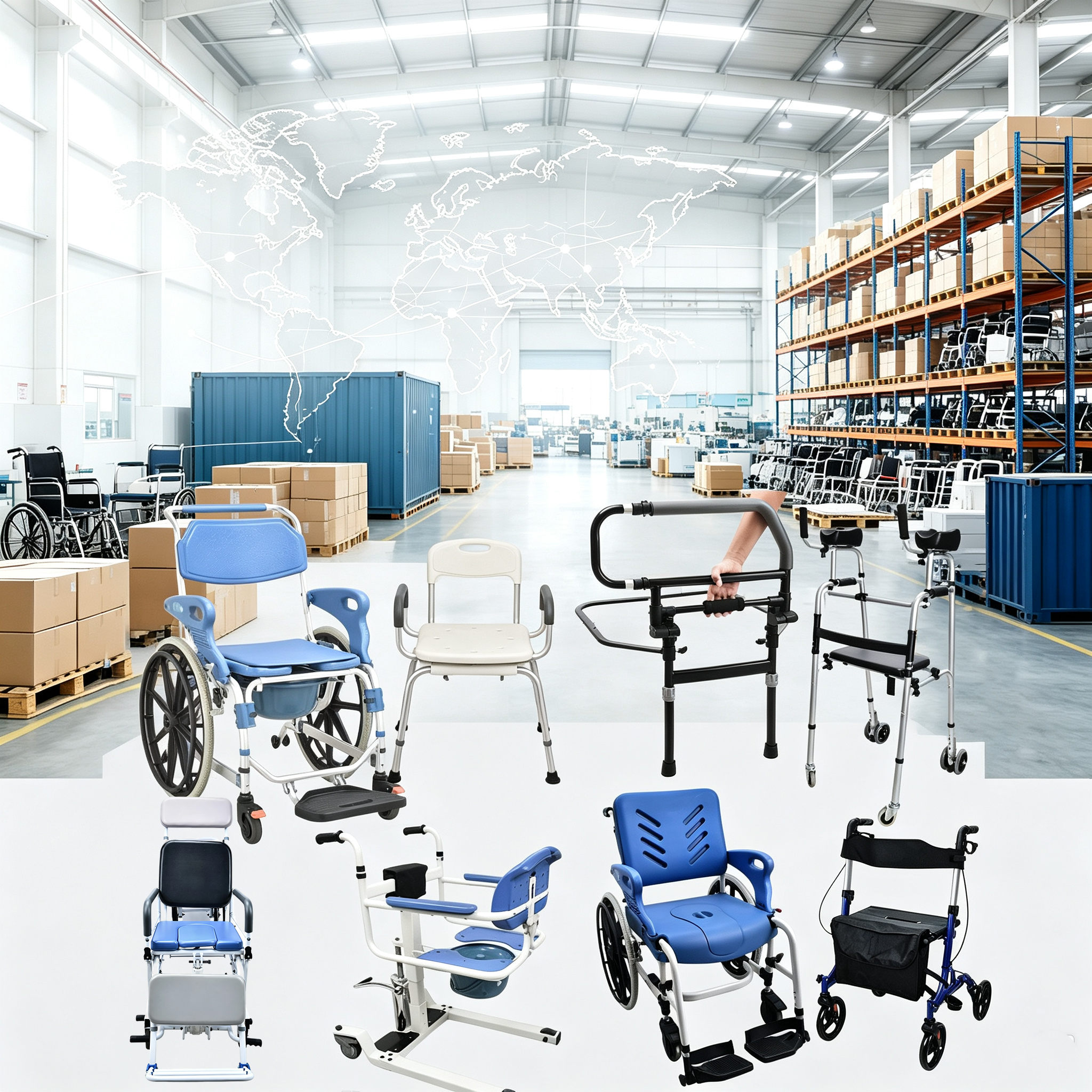
For healthcare distributors, medical equipment importers, and rehabilitation brands, supply chain management involves much more than placing purchase orders and arranging shipments.
Product quality, manufacturing capacity, lead times, documentation, packaging, customization, and communication can all affect whether a healthcare business can maintain reliable product availability in its target market.
This is particularly important for rehabilitation and patient care equipment. A distributor may manage multiple product categories, serve different customer groups, and work with different market requirements at the same time.
For this reason, the relationship between a healthcare business and its manufacturing partner can have a direct impact on supply chain reliability.
A capable medical equipment manufacturer can support more than production. The right partner can help coordinate product development, quality control, customization, documentation, production planning, and order fulfillment as part of a more connected supply process.
What Makes Medical Equipment Supply Chains Different?
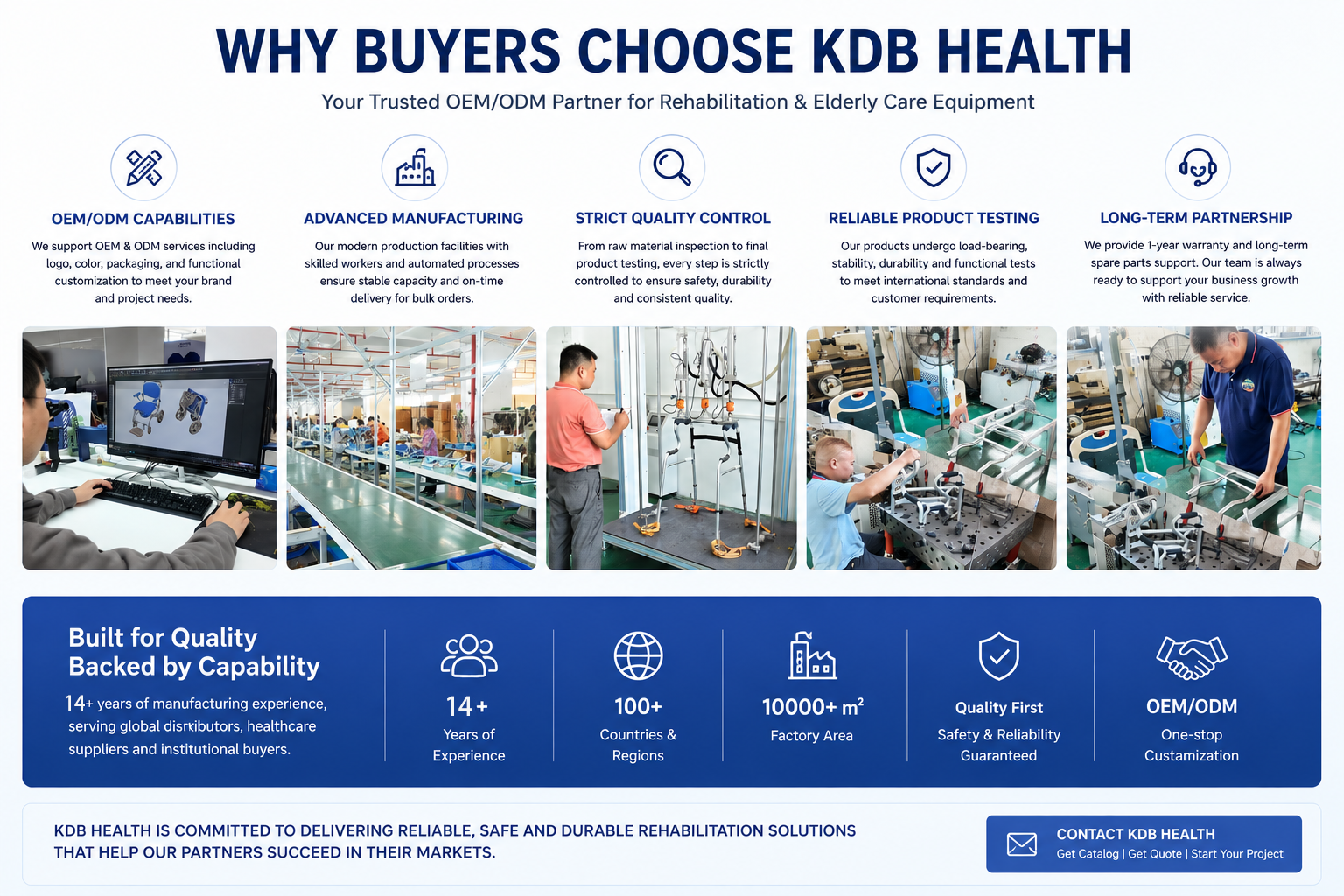
Medical equipment supply chains have several characteristics that distinguish them from ordinary consumer goods sourcing.
Healthcare distributors may need to consider:
- Product specifications and intended applications
- Quality management requirements
- Market-specific regulatory and documentation requirements
- Production capacity and lead times
- Packaging and labeling requirements
- Product customization and private-label needs
- Shipping and inventory planning
- After-sales and replacement support
These factors become more complex when a distributor manages multiple product categories or sells into several international markets.
For example, a healthcare distributor may source commode chairs, shower chairs, patient care equipment, and mobility products from the same or different suppliers. Each product category may have different specifications, documentation, packaging, and procurement requirements.
A reliable supply chain therefore depends not only on the products themselves, but also on how effectively the manufacturer and distributor work together.
Key Supply Chain Challenges for Healthcare Distributors
Product and Market Requirements
Healthcare products may be subject to different regulatory, documentation, labeling, and market-access requirements depending on the destination market and product classification.
For distributors, the challenge is often not simply obtaining a certificate. They also need accurate product information, technical documentation, labeling details, test reports, and other applicable documents that correspond to the products being purchased.
A capable manufacturer should be able to clearly identify which documents are available for each product and help the buyer understand what information can be provided for the intended market.
This is particularly important when distributors manage multiple SKUs.
Production Capacity and Lead-Time Management
Reliable product availability is essential for distributors.
Demand may change because of institutional projects, distributor expansion, seasonal purchasing, product launches, or unexpected customer orders. If production capacity is not properly planned, longer lead times can affect inventory and customer commitments.
However, production capacity should not be evaluated simply by asking how many units a factory can produce.
Buyers should also consider:
- Production planning
- Manufacturing processes
- Quality control capacity
- Availability of key components
- Ability to handle different order volumes
- Lead-time consistency
- Communication when production schedules change
The objective is to achieve a balance between production capacity, quality consistency, and delivery reliability.
Inventory and Logistics Planning
Rehabilitation and patient care equipment can require considerable storage and transportation space.
For distributors, purchasing too much may increase inventory pressure, while purchasing too little may result in stock shortages.
Manufacturers can support better purchasing decisions by communicating production schedules, packaging specifications, order readiness, and expected shipment timing clearly.
For larger orders, packaging design and shipment planning can also affect transportation efficiency.
How a Medical Equipment Manufacturer Can Support the Supply Chain
The role of a manufacturer should extend beyond producing products after receiving a purchase order.
A strong manufacturing partner can support several stages of the supply process.
1. Production Planning and Supply Stability
Production stability is one of the foundations of a reliable healthcare equipment supply chain.
Distributors should evaluate whether a manufacturer has:
- Established production processes
- Structured quality control procedures
- Appropriate production capacity
- Experienced production and engineering teams
- Reliable sourcing of key materials and components
- Experience handling different order volumes
A manufacturer with organized production planning can give distributors greater visibility when they prepare purchasing and inventory plans.
For long-term cooperation, consistency is often more valuable than simply achieving the lowest unit price.
2. Consistent Product Quality
Quality problems can create costs beyond a single defective shipment.
Returns, replacements, customer complaints, product recalls, and damage to a distributor's reputation can all affect the total cost of sourcing.
For this reason, distributors should evaluate how a manufacturer controls quality throughout production.
Important areas include:
- Incoming material inspection
- In-process quality control
- Functional and safety testing
- Final inspection
- Product traceability
- Non-conformance handling
- Quality documentation
An established quality management system can provide a structured framework for maintaining consistency across production.
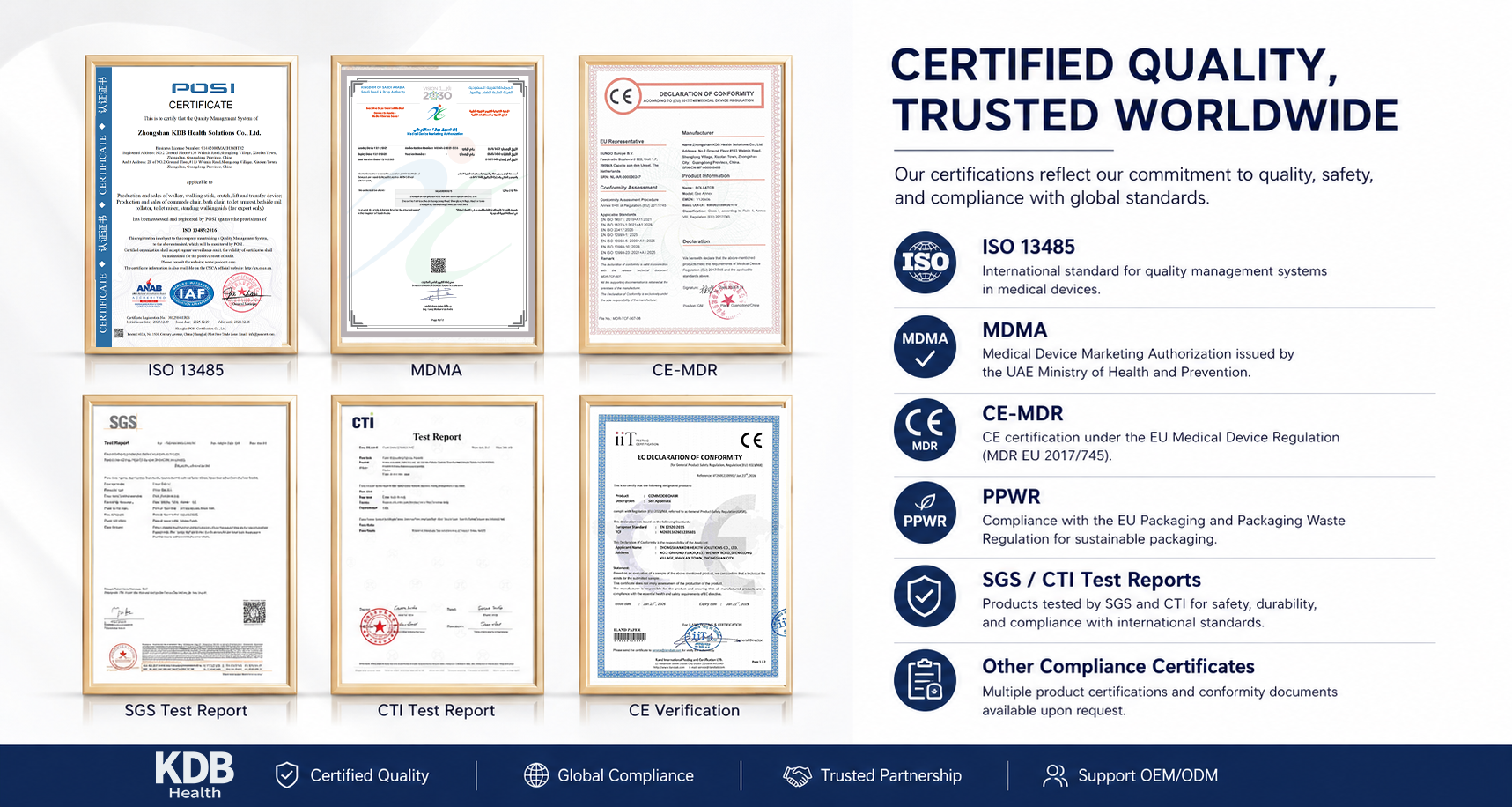
For medical device manufacturers, ISO 13485 is an internationally recognized quality management standard specifically designed for medical devices.
However, buyers should evaluate how the manufacturer's quality system is actually implemented rather than relying only on the presence of a certificate.
3. OEM and ODM Manufacturing Support
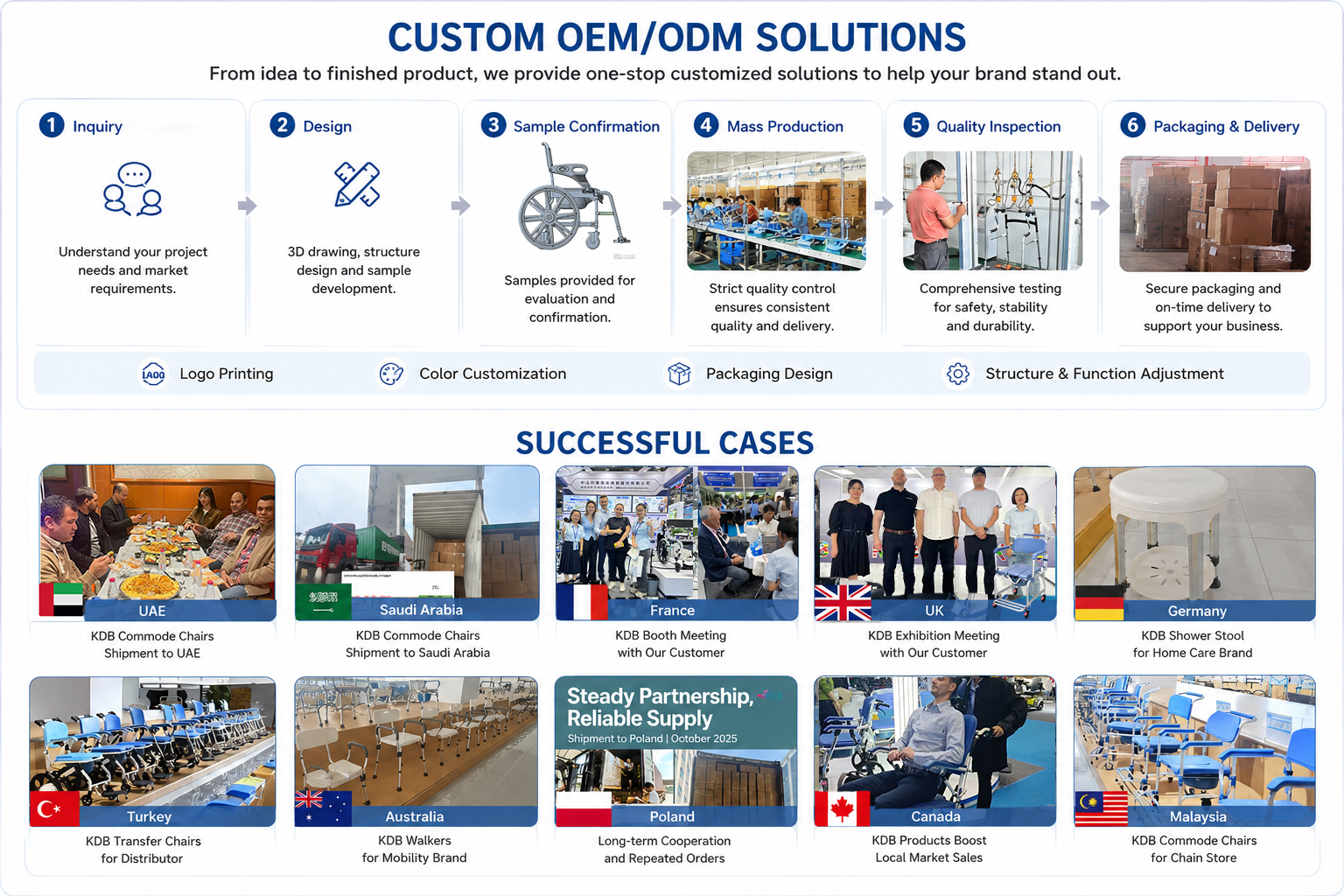

Many healthcare distributors and medical brands require more than standard catalog products.
Their requirements may include:
- Product configuration
- Color and appearance
- Brand logo
- Packaging
- User manuals and labels
- Product specifications
- Private-label requirements
- Selected design or structural modifications
OEM and ODM capabilities allow manufacturers and healthcare businesses to work together on these requirements.
For a distributor entering a new market, this can provide flexibility to test a product category before expanding into larger-scale procurement.
For established healthcare brands, OEM and ODM manufacturing can also support differentiated product lines under their own brands.
The key is to confirm the manufacturer's actual engineering and production capabilities rather than treating OEM/ODM as simply a logo-printing service.
4. Multi-Category Manufacturing
Managing multiple suppliers can increase communication, quality-control, purchasing, and logistics complexity.
A manufacturer with complementary product categories can sometimes simplify this process.
For example, a distributor developing a bathroom safety portfolio may source:
- Commode chairs
- Shower chairs
- Shower commode chairs
- Bathroom safety equipment
- Patient transfer equipment
- Mobility assistance products
When related products can be developed or sourced through one manufacturing partner, distributors may have fewer supplier relationships to coordinate.
This does not mean that every product should come from one supplier. Instead, buyers should evaluate whether a manufacturing partner has sufficient product expertise and quality capability across the categories they intend to source.
Supply Chain Coordination Should Begin Before Production
Effective supply chain management starts before a purchase order reaches the production line.
For standard products, the process may look like:
Product Selection → Sample Evaluation → Order Confirmation → Production → Quality Inspection → Packaging → Shipment
For OEM and ODM projects, the process may be more detailed:
Product Concept → Engineering Discussion → Prototype/Sample → Specification Confirmation → Packaging & Documentation → Production → Quality Inspection → Shipment
Clear communication at each stage helps distributors reduce misunderstandings and manage their own customer commitments.
Before mass production, buyers should confirm important details such as:
- Product specifications
- Approved samples
- Packaging requirements
- Branding and labeling
- Quantity
- Delivery schedule
- Inspection requirements
- Required documentation
A clear specification confirmed before production is often one of the simplest ways to reduce avoidable supply chain problems.
How to Evaluate a Medical Equipment Manufacturing Partner
Unit price should not be the only factor when selecting a manufacturer.
Healthcare distributors and importers should consider the manufacturer's capabilities across several areas.
Quality Management
Does the manufacturer have a structured quality management system and documented inspection procedures?
Manufacturing Capability
Can the manufacturer support current order volumes while maintaining consistent quality?
Product Development
Can the manufacturer provide samples, engineering support, product improvements, or customized configurations when required?
Documentation and Compliance Support
Can the manufacturer provide applicable product documentation and clearly explain what certifications, test reports, and technical files are available?
Communication
Does the manufacturer provide timely and accurate updates regarding samples, production, quality issues, and shipment schedules?
Product Portfolio
Can the supplier support the distributor as its product range expands?
Long-Term Cooperation
Does the manufacturer have the capability and willingness to support an ongoing B2B relationship rather than only individual transactions?
Evaluating these factors together provides a more realistic picture of the total value and risk of a manufacturing partnership.
How KDB Health Supports Global Healthcare Partners
KDB Health is a rehabilitation and elderly care equipment manufacturer supporting healthcare distributors, medical equipment importers, rehabilitation brands, private-label brands, hospitals, and project buyers.
Our product portfolio includes rehabilitation and patient care equipment across several complementary categories, including commode chairs, bathroom safety equipment, shower chairs, patient lifts, bedside rails, and mobility-related products.
For global healthcare partners, our manufacturing capabilities include:
- Multi-category rehabilitation equipment manufacturing
- OEM and ODM product development
- Product customization and private-label support
- Sample development and product engineering
- Structured quality management and inspection
- Production planning and order coordination
- Product documentation and market-support information
Our bathroom safety portfolio is designed to support healthcare businesses that need more than individual products. Distributors can develop broader bathroom safety and rehabilitation product ranges while working with a manufacturing partner that understands the requirements of international B2B procurement.
The objective is not simply to manufacture products after receiving an order. It is to build a more transparent, responsive, and dependable supply relationship with healthcare businesses.
Building a More Reliable Medical Equipment Supply Chain
For healthcare distributors and medical equipment importers, supply chain reliability is influenced by much more than product price.
Manufacturing capability, quality consistency, product development, documentation, customization, production planning, and communication all contribute to the overall performance of a healthcare supply chain.
As distributors expand their product portfolios and enter new markets, choosing a manufacturing partner that can support both current purchasing requirements and future product development can become increasingly important.
For healthcare distributors, wholesalers, medical brands, and project buyers looking for OEM/ODM manufacturing support or rehabilitation and bathroom safety equipment, KDB Health can discuss product requirements, sourcing needs, and customized manufacturing solutions.
Table of Contents
- What Makes Medical Equipment Supply Chains Different?
- Key Supply Chain Challenges for Healthcare Distributors
- How a Medical Equipment Manufacturer Can Support the Supply Chain
- Supply Chain Coordination Should Begin Before Production
- How to Evaluate a Medical Equipment Manufacturing Partner
- How KDB Health Supports Global Healthcare Partners
- Building a More Reliable Medical Equipment Supply Chain