
 EN
EN
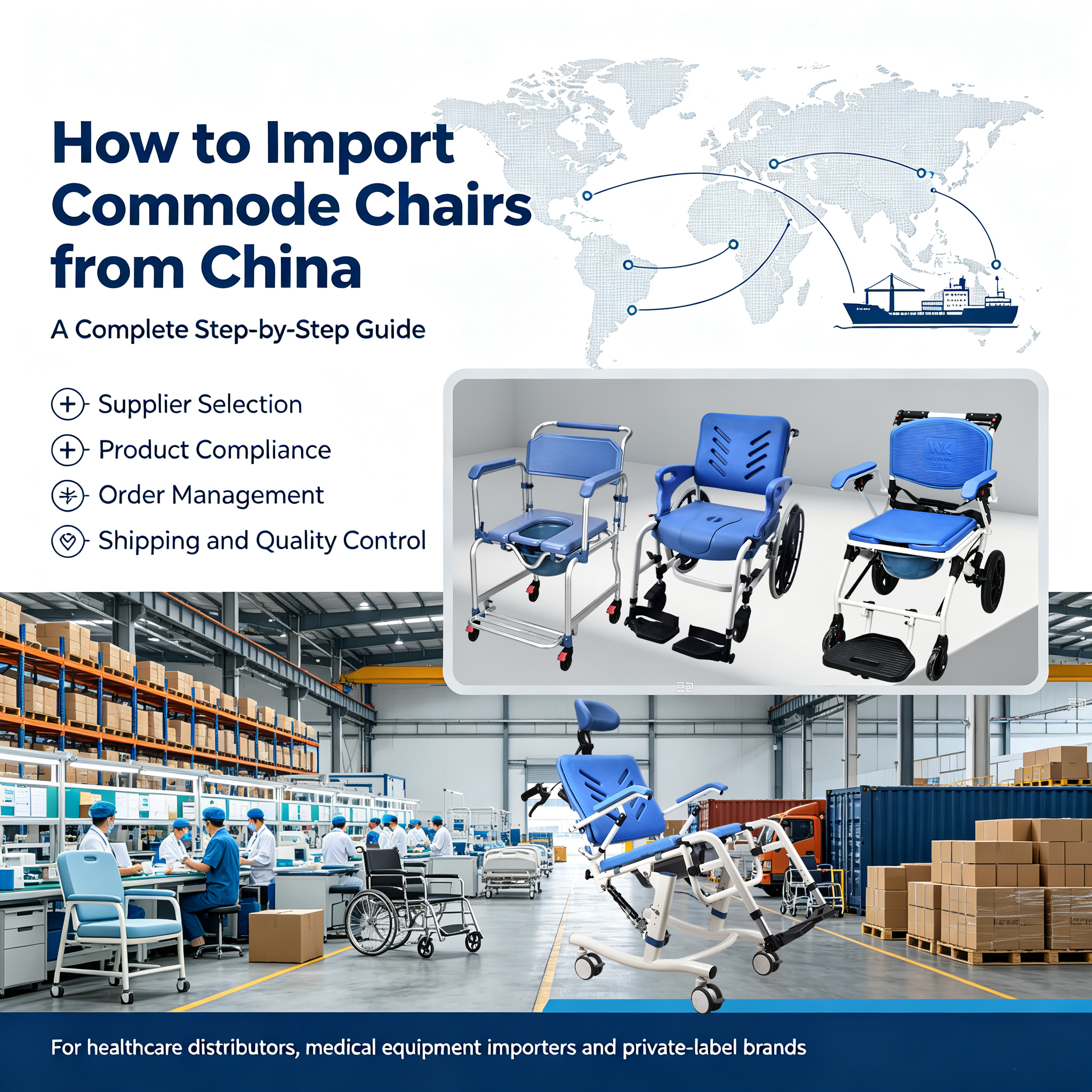
Importing commode chairs from China can give healthcare distributors, medical equipment importers, and private-label brands access to a broad manufacturing supply chain and a wide range of product options.
However, successful sourcing is about more than finding a competitive factory price.
For healthcare products, buyers also need to evaluate product specifications, manufacturing capabilities, quality management, regulatory requirements, customization options, shipping arrangements, and after-sales support.
This guide explains the key steps involved in sourcing and importing commode chairs from China—from defining your requirements and evaluating manufacturers to receiving your shipment.
Why Source Commode Chairs from China?
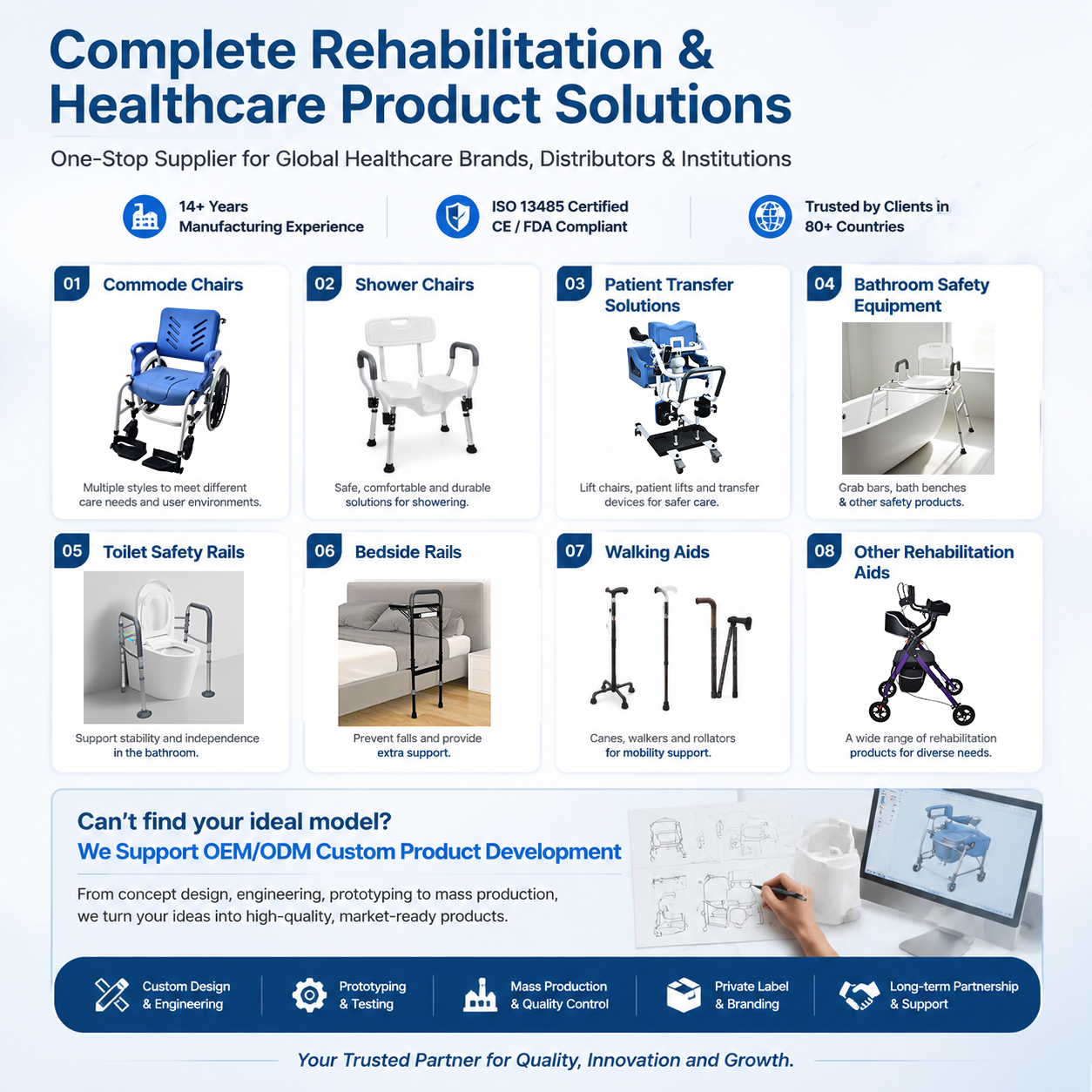
China has an established manufacturing ecosystem for rehabilitation and patient care equipment, including commode chairs, shower chairs, mobility aids, and related bathroom safety products.
For international distributors, working directly with a manufacturer can provide access to:
- Multiple commode chair designs and configurations
- OEM and ODM customization
- Different materials and product specifications
- Private-label packaging and branding
- Flexible order quantities for selected projects
- Integrated sourcing across related rehabilitation products
The important point is that not every factory offers the same level of engineering, quality control, customization, or export support.
Choosing the right manufacturer is therefore the first major decision in the importing process.
Step 1: Define Your Product and Target Market Requirements

Before contacting manufacturers, clearly define what type of commode chair you need and where you plan to sell it.
Identify the Product Type
Common categories include:
- Bedside commode chairs
- Folding commode chairs
- Commode chairs with wheels
- Shower commode chairs
- 3-in-1 commode chairs
- Bariatric or heavy-duty commode chairs
- Self-propelled commode wheelchairs
Your target customers will influence the appropriate configuration.
For example, a distributor serving homecare customers may prioritize compact, adjustable, and easy-to-use products, while institutional buyers may place greater emphasis on durability, cleaning, stability, and load capacity.
KDB Health's current commode chair portfolio includes non-wheeled, wheeled, multi-function, and bariatric categories, allowing distributors to build different product ranges around their target markets.
Define Your Product Specifications
Before requesting quotations, prepare a basic product specification sheet covering:
- Overall dimensions
- Seat width and height
- Weight capacity
- Frame material
- Seat material
- Wheel and caster configuration
- Folding or fixed structure
- Armrest and footrest requirements
- Packaging requirements
- Branding and labeling requirements
The clearer your specification is, the easier it becomes to compare manufacturers accurately.
Step 2: Confirm the Regulatory Requirements for Your Target Market
Medical and healthcare products can be subject to different regulatory requirements depending on the destination market.
Before selecting a supplier, determine what applies to your specific product and market.
For example, buyers selling into the European Union may need to consider applicable requirements under the EU Medical Device Regulation (MDR). U.S. market requirements may involve FDA establishment registration, device listing, product classification, labeling, and other applicable obligations depending on the product.
Other markets may have their own regulatory systems and documentation requirements.
A qualified manufacturer should be able to provide relevant technical documentation, test reports, certificates, and product information applicable to the target market.
However, importers should not rely solely on a supplier's statement that a product is “CE certified” or “FDA approved.” The buyer should verify the actual documentation and determine whether it meets the requirements of the destination market.
Step 3: Find and Evaluate Chinese Commode Chair Manufacturers
B2B platforms can help you identify potential suppliers, but a marketplace listing should only be the beginning of the evaluation process.
When comparing manufacturers, look beyond product photos and quoted prices.
Evaluate Manufacturing Capability
Consider:
- Factory location and facilities
- Production capacity
- R&D and engineering capability
- Production processes
- Quality control procedures
- Experience with international orders
- OEM and ODM capabilities
- Product range
- Ability to support future product development
A manufacturer that treats commode chairs as a core product category may be better positioned to support long-term product development than a trading company listing products from multiple unrelated factories.
Evaluate Quality Management
Ask the manufacturer about its quality management system, inspection procedures, material controls, and final inspection process.
For medical and rehabilitation equipment manufacturers, ISO 13485 is an important quality management standard to consider when evaluating suppliers.
You should also request relevant product-specific test reports and documentation rather than relying only on a general company certificate.
Step 4: Conduct a Factory Audit
A factory audit can help verify whether the supplier's claims match its actual capabilities.
Depending on your purchasing volume and project requirements, you may conduct:
- On-site factory audits
- Video factory inspections
- Third-party factory audits
- Production-line inspections
- Pre-shipment inspections
During an audit, pay attention to:
Production:
Are the production processes organized and repeatable?
Materials:
Can the supplier identify and control the materials used in the frame, seat, casters, and other components?
Quality Control:
Are incoming materials, in-process production, and finished products inspected?
Capacity:
Can the factory support your expected order volume and future growth?
Packaging:
Is the packaging suitable for international transportation and your target market?
A factory audit is particularly valuable when you are planning private-label products or long-term distribution cooperation.
Step 5: Request Samples and Validate Product Quality
Never select a manufacturer based solely on photographs or specifications.
Request samples from shortlisted suppliers and evaluate the actual products.
Important areas to check include:
Stability
Check whether the chair remains stable during normal use and movement.
Load Capacity
Verify the manufacturer's stated load capacity through appropriate testing and documentation.
Frame and Components
Inspect welds, joints, fasteners, casters, armrests, footrests, and other structural components.
Surface Finish
Look for sharp edges, uneven coating, corrosion concerns, or other visible defects.
Folding and Adjustment Mechanisms
For folding or height-adjustable products, repeatedly test the mechanisms and check whether they operate smoothly.
Packaging
Inspect whether the product is adequately protected against damage during international transportation.
Sample evaluation is also an opportunity to confirm whether the actual product matches the quotation, drawings, specifications, and documentation.
For suitable KDB Health projects, the company currently states that sample completion can be supported within 15 days, depending on project requirements.
Step 6: Compare MOQ, Pricing, and Customization
Once you have approved the sample, move to commercial discussions.
MOQ
Do not compare suppliers based only on their stated minimum order quantity.
Ask what the MOQ applies to:
- Standard products
- Custom colors
- Private-label packaging
- Logo printing
- Structural modifications
- New molds or tooling
MOQ can vary significantly depending on the level of customization.
KDB Health currently promotes flexible OEM/ODM cooperation, with selected projects available from low MOQ levels, while the actual MOQ depends on the product and customization requirements.
Pricing
Request a clear quotation covering:
- Product price
- Packaging
- Customization
- Tooling, if applicable
- Shipping terms
- Sample costs
- Payment terms
Avoid comparing factories using product price alone. The lowest quotation does not necessarily represent the lowest total procurement cost.
OEM and ODM
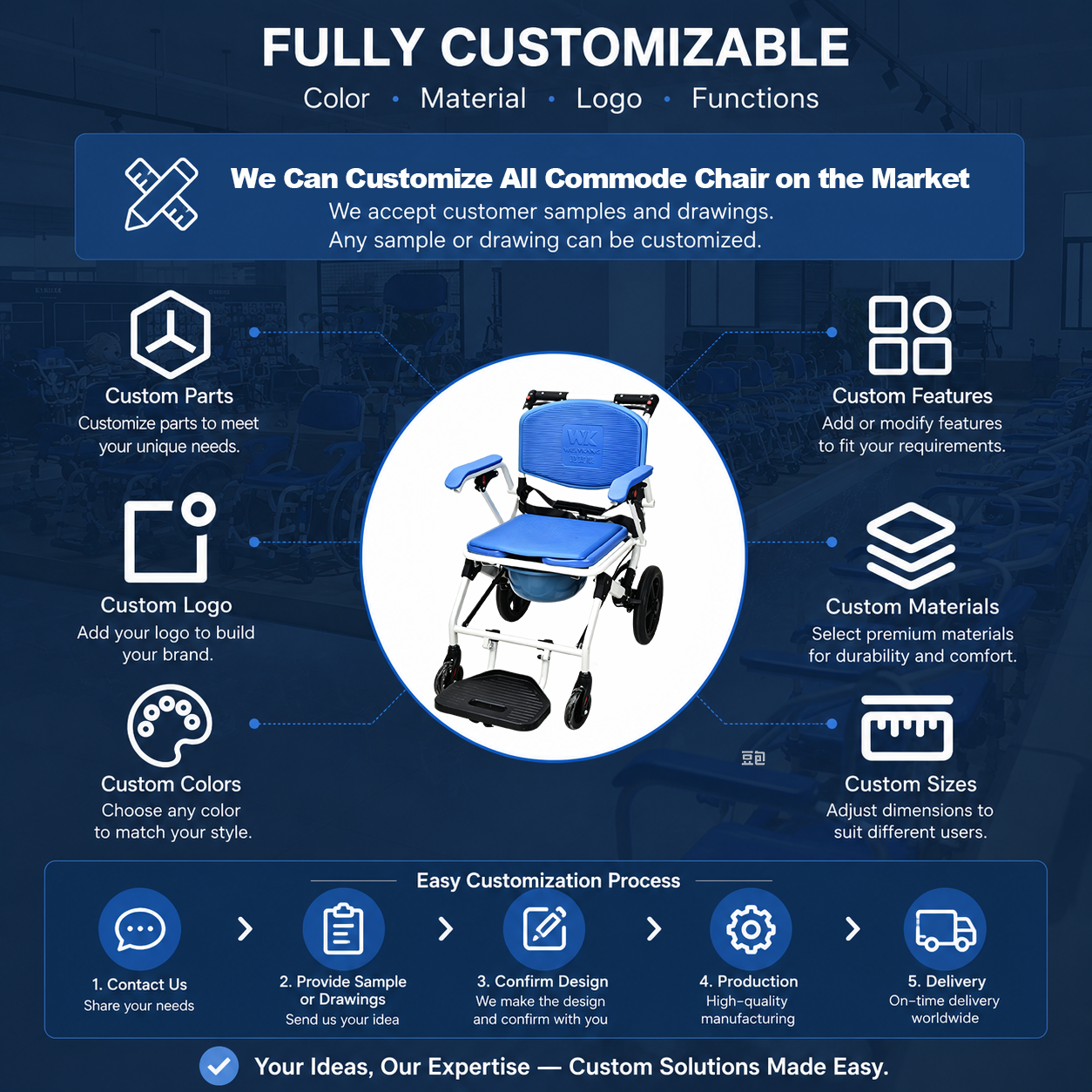
If you are building your own healthcare brand, ask whether the manufacturer can support:
- Logo customization
- Packaging
- Product colors
- Product configuration
- Product development
- Structural modifications
- New product development
This is particularly important if you intend to build a differentiated product line rather than resell generic products.
Step 7: Confirm Incoterms, Shipping, and Documentation
After commercial terms are agreed, clarify the shipping arrangement before placing the order.
Common Incoterms used in international trade include FOB and CIF, but the appropriate term depends on your logistics strategy and level of control.
Confirm:
- Loading port
- Incoterm
- Shipment method
- Estimated production lead time
- Estimated transit time
- Insurance responsibility
- Export documentation
- Destination customs requirements
- Final delivery arrangements
For customs clearance, confirm the correct HS classification and applicable import duties with your customs broker or local customs authority rather than relying on a generic HS code supplied online.
Typical export documentation may include commercial invoices, packing lists, bills of lading, certificates of origin, and applicable product or compliance documentation.
Step 8: Manage Pre-Shipment Quality and Final Delivery
Before shipment, distributors may arrange a final quality inspection.
Depending on the project, this can include:
- Quantity verification
- Visual inspection
- Functional inspection
- Packaging inspection
- Random sampling
- Carton marking verification
- Documentation review
For larger or private-label orders, third-party inspection can provide an additional layer of quality assurance.
Once the goods are shipped, keep the complete documentation package together so that your logistics and customs teams can process the shipment efficiently.
Common Mistakes When Importing Commode Chairs from China
| Common Mistake | Better Approach |
|---|---|
| Choosing a supplier only by price | Compare manufacturing, quality, documentation, and total landed cost |
| Buying based only on product photos | Request and test physical samples |
| Not defining specifications | Prepare a detailed product specification sheet |
| Assuming all suppliers have the same compliance capability | Verify actual product documentation |
| Ignoring packaging | Evaluate packaging before placing the bulk order |
| Choosing an unsuitable MOQ | Match MOQ to your market-testing and inventory strategy |
| Skipping factory verification | Conduct an on-site, video, or third-party audit |
| Using an unverified HS code | Confirm classification with your customs broker |
| Changing suppliers for every product | Consider a multi-category manufacturing partner for related products |
Why Work With a Specialized Commode Chair Manufacturer?
For distributors building a long-term healthcare product business, the manufacturer should be more than a source of low-cost products.
A specialized partner can support the business through:
- Product engineering
- Sample development
- Quality management
- OEM and ODM customization
- Multiple product categories
- Production planning
- Export documentation
- Long-term product development
KDB Health focuses on rehabilitation and bathroom safety equipment, with commode chairs as a core product category. Its current product portfolio includes multiple commode chair configurations as well as shower chairs, patient lifts, walking aids, and other rehabilitation equipment.
The company also supports OEM and ODM projects for distributors, healthcare brands, and other B2B buyers, including product development and customization.
Import Commode Chairs from China With a Long-Term Manufacturing Partner
Importing commode chairs successfully requires more than finding a competitive quotation.
The right process starts with clearly defining your market and product requirements, followed by manufacturer evaluation, sample testing, compliance verification, commercial negotiation, and shipment management.
For distributors and healthcare brands, establishing a long-term relationship with a specialized manufacturer can also make it easier to expand from one product into a broader bathroom safety or rehabilitation equipment portfolio.
KDB Health works with healthcare distributors, medical equipment importers, rehabilitation brands, and private-label healthcare businesses seeking OEM/ODM manufacturing support.
If you are planning to import commode chairs from China, contact KDB Health to discuss your target products, specifications, MOQ, OEM/ODM requirements, and sourcing needs.
FAQ
What should I check before importing commode chairs from China?
Check the manufacturer's production capability, quality management system, product documentation, target-market requirements, sample quality, MOQ, customization capability, packaging, and export experience.
How do I find a reliable commode chair manufacturer in China?
Compare manufacturers based on factory capability, product specialization, quality management, sample performance, OEM/ODM capabilities, documentation, and long-term support rather than price alone.
Can I import customized commode chairs from China?
Yes. Many manufacturers support OEM or ODM projects involving product configuration, branding, packaging, colors, and selected design modifications. The available options and MOQ depend on the project requirements.
What documents are needed to import commode chairs?
Requirements vary by destination market and product. Common international shipping documents include commercial invoices, packing lists, bills of lading, certificates of origin, and applicable product or compliance documentation. Importers should confirm local regulatory and customs requirements before shipment.
Table of Contents
- Why Source Commode Chairs from China?
- Step 1: Define Your Product and Target Market Requirements
- Step 2: Confirm the Regulatory Requirements for Your Target Market
- Step 3: Find and Evaluate Chinese Commode Chair Manufacturers
- Step 4: Conduct a Factory Audit
- Step 5: Request Samples and Validate Product Quality
- Step 6: Compare MOQ, Pricing, and Customization
- Step 7: Confirm Incoterms, Shipping, and Documentation
- Step 8: Manage Pre-Shipment Quality and Final Delivery
- Common Mistakes When Importing Commode Chairs from China
- Why Work With a Specialized Commode Chair Manufacturer?
- Import Commode Chairs from China With a Long-Term Manufacturing Partner