
 EN
EN
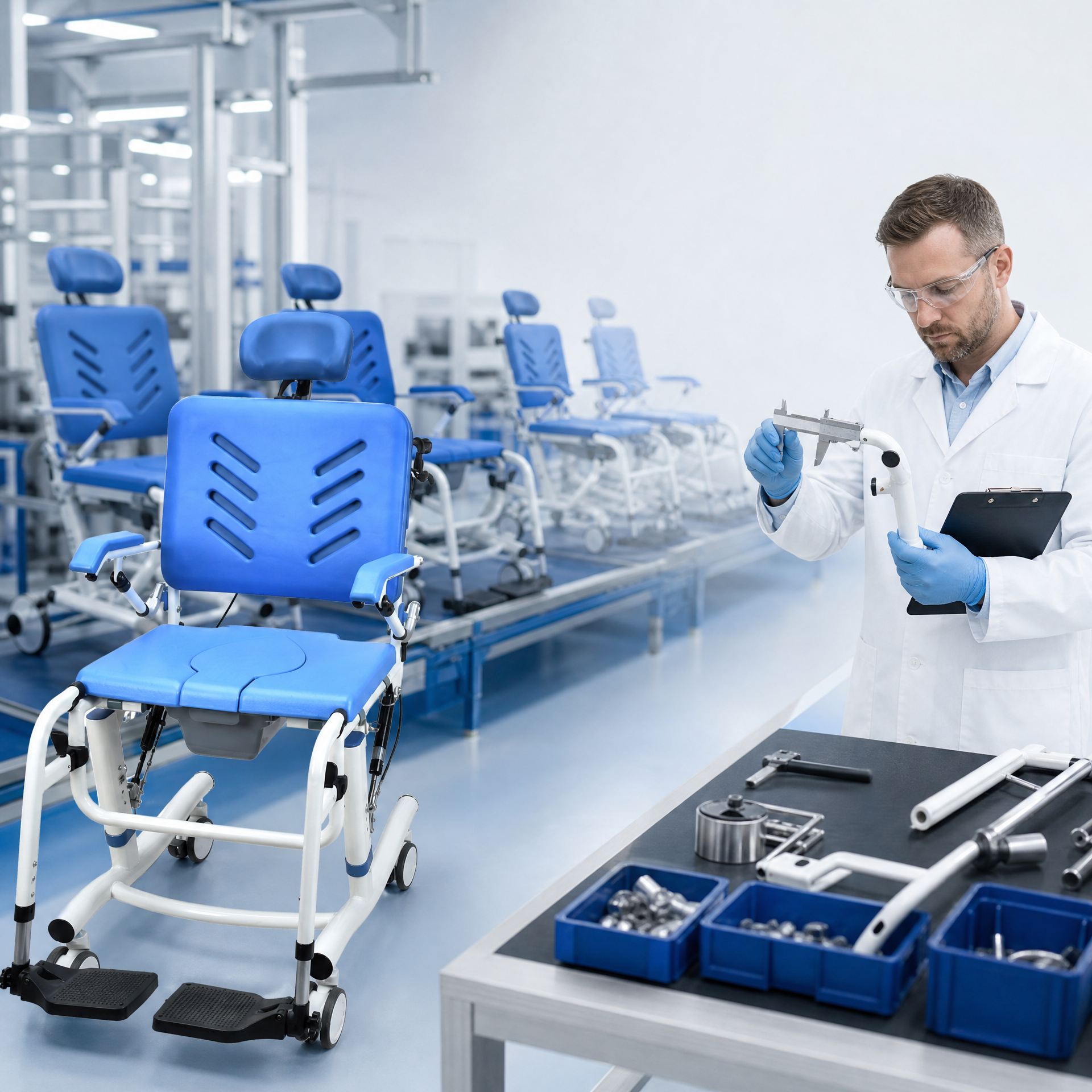
For healthcare distributors, medical equipment importers, and OEM buyers, choosing a manufacturer is not simply about comparing product prices.
The more important question is whether the manufacturer can consistently deliver products that meet the approved specifications—from the first sample to repeat production.
This is particularly important for rehabilitation and bathroom safety equipment such as commode chairs, shower chairs, patient lifts, and mobility aids. Product dimensions, materials, structural integrity, functionality, and packaging all need to remain consistent across production batches.
For buyers building a long-term healthcare product portfolio, understanding how a manufacturer manages quality can help reduce sourcing risks and make supplier evaluation more effective.
Why Quality Control Matters for Healthcare Equipment
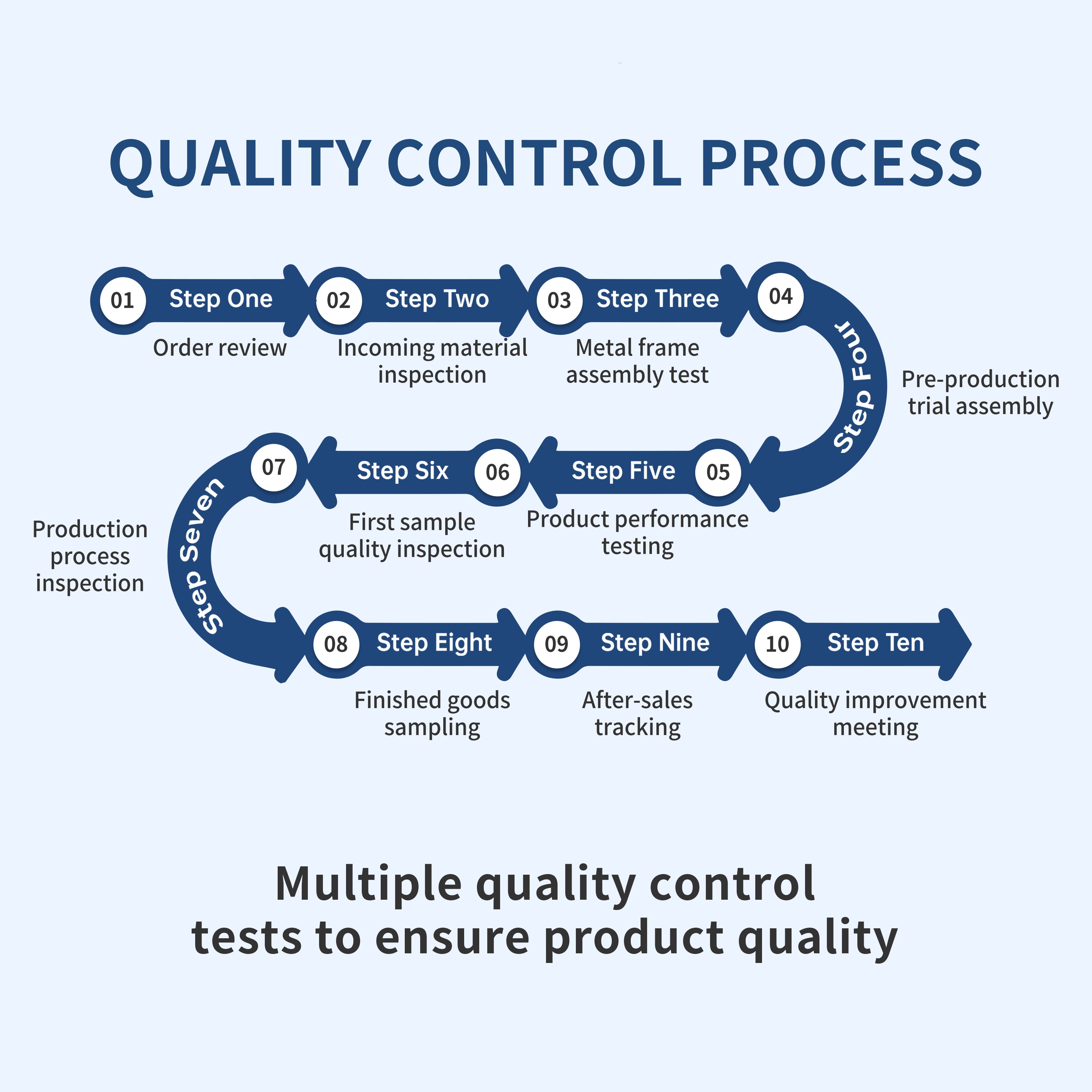
Quality control in healthcare equipment manufacturing is closely connected to product safety, reliability, and distributor reputation.
A product that does not consistently meet its approved specifications can result in:
- Product returns and replacement costs
- Customer complaints
- Additional inspection and rework
- Supply chain disruption
- Damage to the distributor's reputation
- Difficulties maintaining consistent product performance
For distributors and healthcare brands, quality should therefore be evaluated as a manufacturing system, rather than based only on the appearance of a finished product.
A reliable manufacturer should be able to demonstrate how quality is controlled before, during, and after production.
What Should Buyers Evaluate in a Medical Equipment Manufacturer?
When evaluating a potential supplier, buyers should look beyond certificates and product photographs.
A practical evaluation should cover five areas:
- Quality management system
- Incoming material control
- In-process production inspection
- Final product testing
- Documentation and traceability
These elements work together to reduce variation between production batches.
1. Quality Management System
A structured quality management system provides the foundation for consistent manufacturing.
For medical device manufacturers, ISO 13485 is an important standard for evaluating whether a company has established a structured quality management system for medical devices.
However, buyers should understand an important distinction:
ISO 13485 certification does not mean that every individual product is automatically defect-free.
Instead, it indicates that the manufacturer operates within a defined quality management framework covering relevant processes such as production, documentation, supplier management, corrective actions, and other quality-related activities.
When evaluating a supplier, buyers should therefore ask how the quality system is implemented in actual production—not simply request a certificate.
2. Incoming Material and Component Inspection
Product quality starts before assembly.
For rehabilitation and bathroom safety equipment, manufacturers may work with materials and components such as:
- Aluminum or steel tubing
- Plastic components
- Casters and wheels
- Seats and backrests
- Fasteners
- Adjustable mechanisms
- Packaging materials
A consistent manufacturing process requires incoming materials and components to meet the defined specifications before entering production.
For buyers, useful questions include:
- How are suppliers selected and evaluated?
- Are incoming materials inspected?
- How are non-conforming materials handled?
- Are material specifications documented?
- How are critical components controlled?
These questions can reveal much more about a manufacturer's quality system than simply asking whether it has ISO 13485 certification.
3. In-Process Production Control
Quality should not be checked only after a product has been completed.
During production, manufacturers should control important processes according to defined specifications and procedures.
For a commode chair or shower chair, this may involve checking areas such as:
- Frame dimensions
- Welding and assembly
- Component installation
- Seat and backrest positioning
- Wheel or caster installation
- Folding mechanisms
- Height adjustment
- Overall structural condition
The exact inspection points depend on the product design and manufacturing process.
The objective is simple:
Identify deviations during production rather than waiting until the finished product reaches final inspection.
This approach can reduce rework, improve production consistency, and help maintain the approved product specification.
4. Functional and Final Product Inspection
Before products are released for shipment, finished products should be inspected against the applicable specifications.
Depending on the product, inspection may include:
Visual inspection
Checking for visible defects, surface problems, damaged components, or incomplete assembly.
Dimensional inspection
Confirming that critical dimensions remain within the defined specifications.
Functional inspection
Checking whether folding, adjustment, locking, movement, or other product functions operate as intended.
Structural and stability checks
For products such as commode chairs and shower chairs, stability and structural integrity are important aspects of product evaluation.
Packaging inspection
Checking whether packaging protects the product adequately during storage and transportation.
The exact testing method should be determined according to the product design, applicable standards, internal specifications, and market requirements.
5. Documentation and Traceability
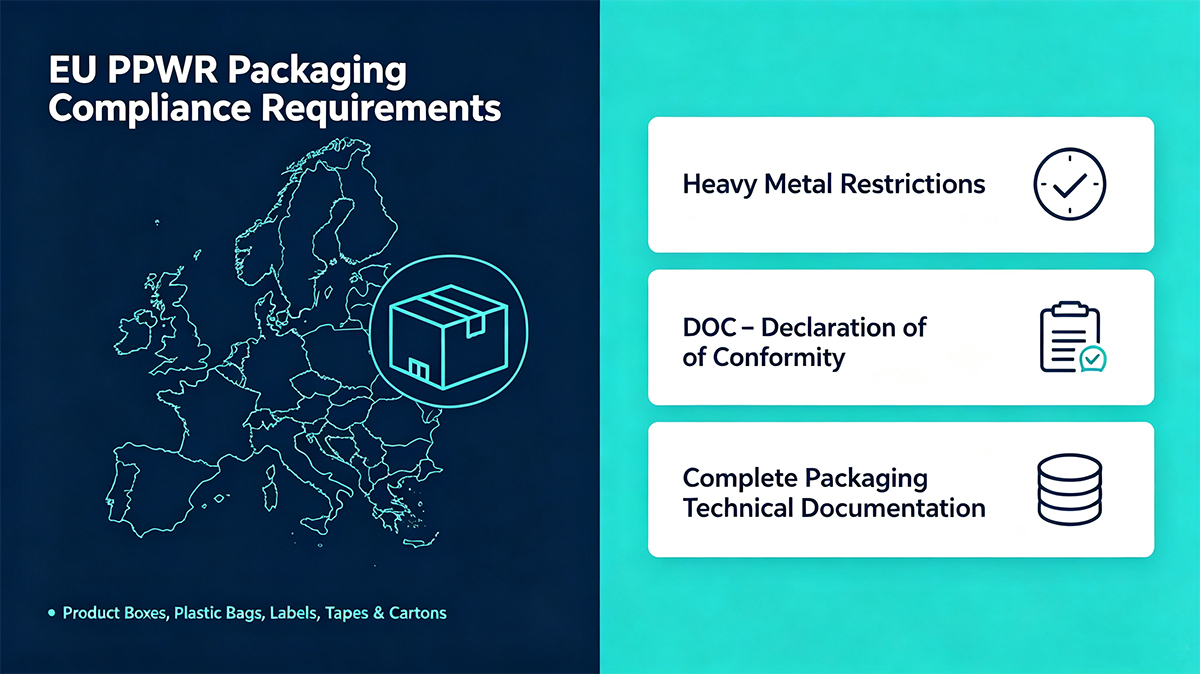
Good manufacturing is not only about what happens on the production floor.
It is also about whether the manufacturer can document what happened.
Quality records can help manufacturers and customers understand:
- Which materials were used
- Which production specifications were applied
- What inspections were performed
- Whether problems were identified
- How non-conforming products were handled
- Whether corrective actions were taken
For distributors, documented quality processes provide greater confidence when placing repeat orders or expanding a product line.
This becomes particularly important when a buyer has approved a sample and expects future production to remain consistent with that reference.
How Manufacturers Maintain Batch-to-Batch Consistency
For a distributor, approving a good sample is only the beginning.
The bigger question is:
Will the next 500 units look, function, and perform consistently with the approved sample?
Several manufacturing practices help address this challenge.
Standardized Product Specifications
A manufacturer needs clearly defined product specifications covering relevant dimensions, materials, components, and functions.
Without a controlled reference specification, different production batches can gradually develop variations.
For OEM and ODM projects, this is particularly important because customized products need to be manufactured according to an agreed specification rather than a general product description.
Controlled Production Procedures
Standardized work procedures help production teams follow the same manufacturing requirements repeatedly.
This reduces dependence on individual operator experience and helps create more repeatable production results.
For long-term B2B cooperation, buyers should ask whether the supplier has documented production and inspection procedures for the products they intend to purchase.
Sample-to-Mass-Production Control
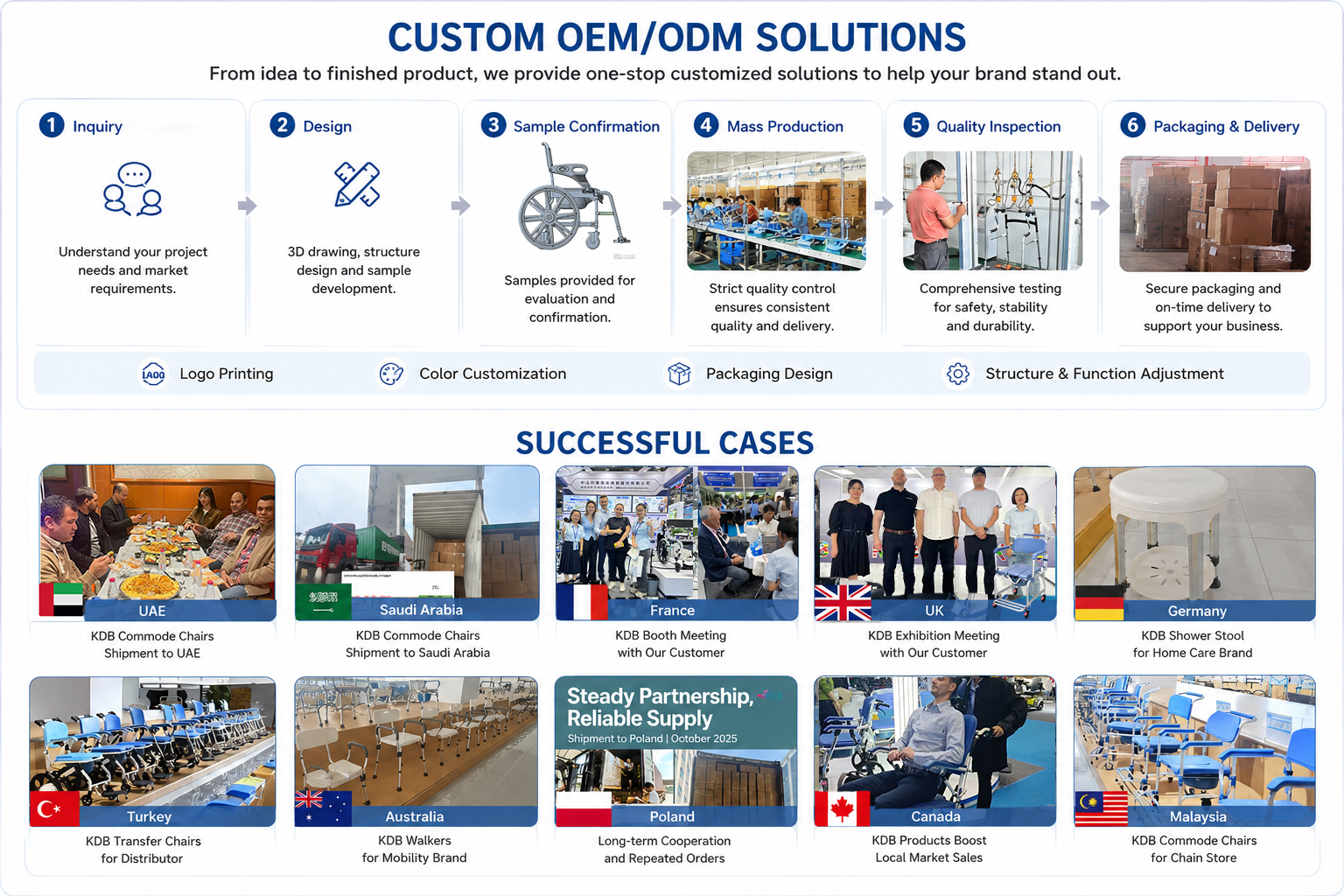
The approved sample should become an important reference for mass production.
Before bulk production begins, the manufacturer and buyer should confirm:
- Product specifications
- Materials
- Color
- Components
- Packaging
- Labeling
- Branding requirements
- Functional requirements
This is particularly important for OEM and private-label projects.
Supplier and Component Management
A manufacturer cannot maintain finished-product consistency without controlling the quality of critical components.
For this reason, supplier selection and component management are important parts of the overall quality system.
A manufacturer with a structured supplier management process can reduce the risk of unexpected changes in materials or components affecting the finished product.
Common Quality Risks Buyers Should Watch For
When evaluating a healthcare equipment supplier, several warning signs deserve attention.
| Quality Risk | What Buyers Should Check |
|---|---|
| Inconsistent product dimensions | Ask for controlled specifications and inspection methods |
| Material variation | Ask how incoming materials and critical components are controlled |
| Different quality between batches | Request sample approval and production inspection procedures |
| Assembly defects | Ask about in-process inspection |
| Packaging damage | Review packaging specifications and shipping protection |
| Poor documentation | Request relevant quality and product documentation |
| Unclear customization process | Confirm specifications before mass production |
| Supplier changes components without notice | Clarify change-control expectations |
The goal is not to find a manufacturer that claims to have “zero defects.”
The goal is to find a manufacturer with a repeatable system for controlling, identifying, and correcting quality risks.
How Distributors Can Evaluate a Manufacturer Before a Bulk Order
Before committing to a large order, distributors and importers can follow a practical evaluation process.
Step 1: Review the manufacturer's quality system
Request relevant quality management certifications and understand how the system is implemented.
Step 2: Review the factory
Use an on-site audit, video factory tour, or third-party inspection where appropriate.
Step 3: Request product samples
Evaluate the actual product rather than relying only on catalog images.
Step 4: Confirm product specifications
Create a clear specification sheet and obtain supplier confirmation before mass production.
Step 5: Discuss inspection procedures
Understand what the manufacturer checks during production and before shipment.
Step 6: Start with a controlled order
For a new supplier relationship, a manageable initial order can provide an opportunity to evaluate actual production consistency before scaling up.
Step 7: Review repeat-order performance
A reliable manufacturer should be able to maintain product specifications and quality expectations across repeated orders.
How KDB Health Approaches Product Quality
KDB Health is a rehabilitation equipment manufacturer serving healthcare distributors, wholesalers, brands, and other B2B partners.
Our manufacturing approach focuses on controlling product quality throughout the production process rather than relying only on final inspection.
KDB Health operates an approximately 18,000 m² manufacturing facility and has more than 14 years of experience in rehabilitation equipment manufacturing.
The company maintains a product development and manufacturing system covering core categories such as:
- Commode chairs
- Shower chairs
- Patient lifts
- Mobility and walking aids
- Other rehabilitation equipment
For commode chairs, KDB Health has established production capacity of up to 80,000 units per month, supporting both standard product supply and larger B2B orders.
Quality management is supported by an ISO 13485-certified quality management system, while product development and manufacturing processes are organized around defined specifications and inspection procedures.
For OEM and ODM projects, quality control also begins with confirming the customer's product requirements and continues through sample development, production, inspection, and shipment.
This is important because successful OEM cooperation requires more than changing a logo. The manufacturer needs to consistently reproduce the agreed product specifications and quality expectations.
Quality Consistency Is a Long-Term Manufacturing Capability
For healthcare distributors and medical equipment importers, supplier evaluation should go beyond price, catalog size, or certificates.
A reliable manufacturing partner should be able to demonstrate:
- A structured quality management system
- Controlled materials and components
- Standardized production processes
- Product inspection procedures
- Consistent product specifications
- Appropriate documentation
- Sample-to-production control
- OEM and ODM development capability
When these elements work together, manufacturers can provide greater consistency and distributors can build more reliable product portfolios.
For healthcare brands, wholesalers, and distributors looking for a long-term rehabilitation equipment manufacturing partner, KDB Health supports product sourcing, OEM/ODM customization, and multi-category rehabilitation equipment programs.
Contact KDB Health to discuss your product requirements, quality expectations, OEM/ODM project, or customized healthcare equipment needs.
FAQ
What is medical equipment quality control?
Medical equipment quality control refers to the inspections, tests, procedures, and documentation used to ensure that products meet defined specifications and applicable quality requirements throughout manufacturing.
Does ISO 13485 guarantee product quality?
No. ISO 13485 provides a structured quality management framework for medical device manufacturers, but certification alone does not guarantee that every individual product is defect-free. Buyers should also evaluate the manufacturer's actual production and inspection processes.
How can distributors evaluate a medical equipment manufacturer's quality?
Distributors should review the manufacturer's quality management system, factory capabilities, incoming material controls, production inspections, final testing, documentation, sample quality, and ability to maintain consistency across repeat orders.
Should I request samples before placing a bulk order?
Yes. Samples allow buyers to evaluate product dimensions, materials, workmanship, functionality, packaging, and overall suitability before committing to larger production quantities.
How do manufacturers maintain batch-to-batch consistency?
Manufacturers maintain consistency through controlled product specifications, standardized production procedures, material and component controls, in-process inspections, final inspections, and documented quality processes.
What should I ask a medical equipment manufacturer about quality control?
Ask how the manufacturer controls incoming materials, production processes, finished products, supplier quality, product specifications, non-conforming products, inspections, documentation, and changes to components or manufacturing processes.
Table of Contents
- Why Quality Control Matters for Healthcare Equipment
- What Should Buyers Evaluate in a Medical Equipment Manufacturer?
- 1. Quality Management System
- 2. Incoming Material and Component Inspection
- 3. In-Process Production Control
- 4. Functional and Final Product Inspection
- 5. Documentation and Traceability
- How Manufacturers Maintain Batch-to-Batch Consistency
- Standardized Product Specifications
- Controlled Production Procedures
- Sample-to-Mass-Production Control
- Supplier and Component Management
- Common Quality Risks Buyers Should Watch For
- How Distributors Can Evaluate a Manufacturer Before a Bulk Order
- How KDB Health Approaches Product Quality
- Quality Consistency Is a Long-Term Manufacturing Capability
-
FAQ
- What is medical equipment quality control?
- Does ISO 13485 guarantee product quality?
- How can distributors evaluate a medical equipment manufacturer's quality?
- Should I request samples before placing a bulk order?
- How do manufacturers maintain batch-to-batch consistency?
- What should I ask a medical equipment manufacturer about quality control?