
 EN
Published: July 1, 2026 | Last Updated: November 5, 2026
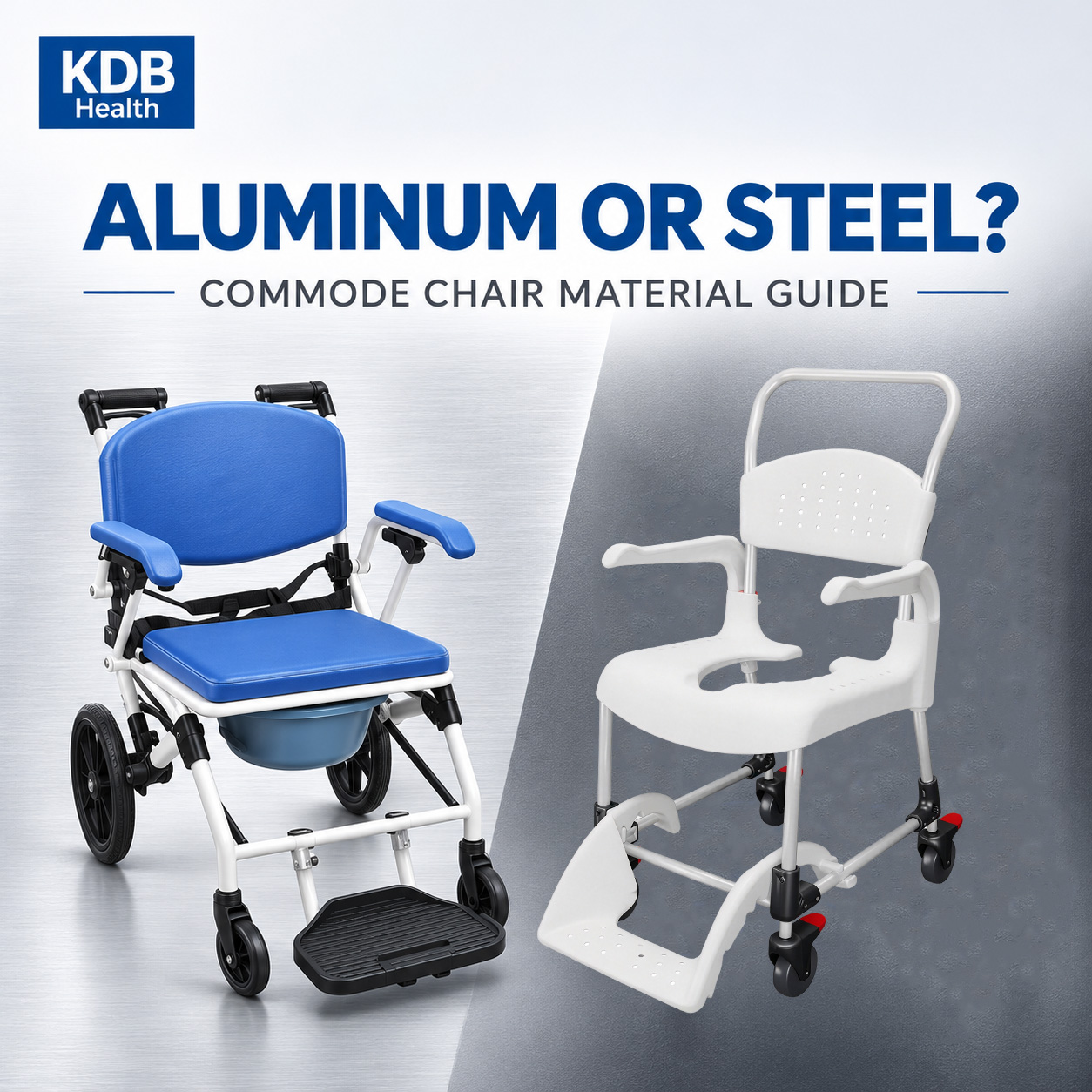
When healthcare brands, distributors, online sellers and project buyers develop a commode chair product line, frame material is often one of the first decisions they need to make.
Aluminum is generally associated with lower product weight and better suitability for wet environments. Steel is often selected for cost-efficient, reinforced or heavy-duty structures.
However, material alone does not determine whether a commode chair is safe, durable or suitable for a particular market.
Frame geometry, tube dimensions, cross-bracing, welding, surface treatment, casters, seat construction and the intended application all influence product performance.
This guide explains how professional buyers can compare aluminum and steel commode chairs based on their sales channel, product positioning and procurement requirements.
There Is No Universally Better Material
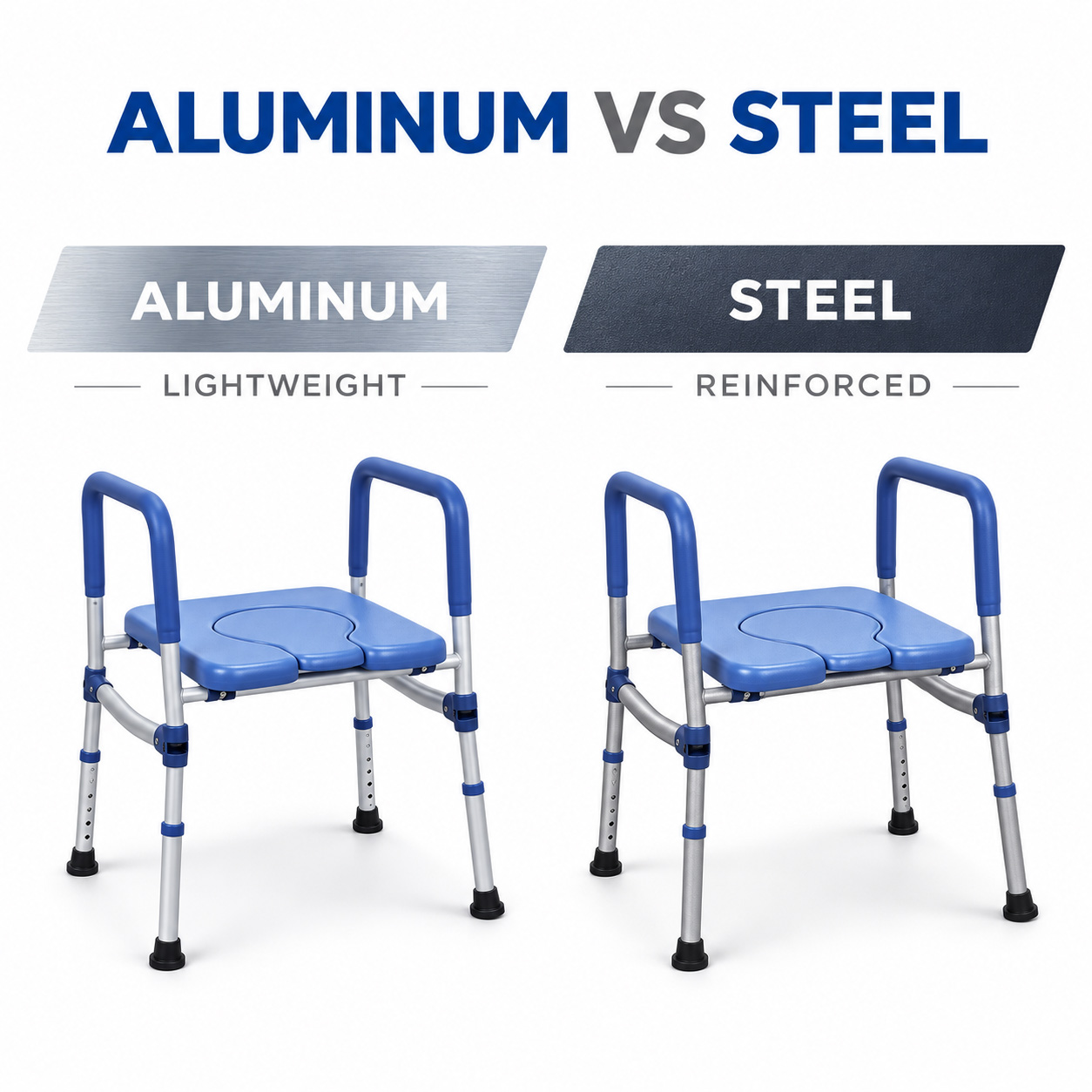
The question is not simply:
Is aluminum better than steel?
The more useful question is:
Which material and frame design best match the intended product, user environment and sales channel?
An aluminum folding commode chair developed for e-commerce has different priorities from a stationary heavy-duty model supplied for project procurement.
Before selecting a material, buyers should define:
▪ Intended use and care environment
▪ Required weight capacity
▪ Folding or non-folding structure
▪ Wheeled or static configuration
▪ Frequency of movement and storage
▪ Exposure to water and cleaning agents
▪ Target unit cost
▪ Carton size and shipping method
▪ Retail, wholesale, e-commerce or project channel
▪ Expected order volume and product positioning
Once these requirements are clear, the supplier can evaluate whether an existing aluminum or steel platform is suitable—or whether structural modification is required.
Aluminum Commode Chairs: Main Advantages
1. Lower Product Weight
For comparable frame designs, aluminum tubing generally allows manufacturers to develop a lighter product than carbon steel.
Lower product weight can be valuable when the chair needs to be:
▪ Moved regularly between rooms
▪ Folded and stored
▪ Loaded into a vehicle
▪ Handled by one caregiver
▪ Packed for parcel or e-commerce delivery
▪ Used in homecare environments with limited storage
Product weight should still be checked model by model. Buyers should not assume that every aluminum chair is automatically lightweight, especially when the product includes large wheels, padded seating, footrests or additional transfer functions.
2. Better Suitability for Wet Environments
Aluminum does not form red rust in the same way as untreated carbon steel. This makes it a practical material for products that may be used in bathrooms or shower areas.
However, aluminum should not be described as completely corrosion-proof.
Long-term performance still depends on:
▪ Aluminum alloy and material quality
▪ Surface treatment
▪ Weld quality
▪ Contact with cleaning chemicals
▪ Water accumulation around joints
▪ Fasteners and components made from other metals
▪ Cleaning and maintenance instructions
Buyers should evaluate the complete chair rather than only the main frame material.
3. Strong Positioning for Retail and E-Commerce
Aluminum can support a more portable or premium product position.
It may be suitable for healthcare brands and online sellers developing:
▪ Folding commode chairs
▪ Shower commode chairs
▪ Compact homecare products
▪ Tool-free assembly products
▪ Models intended for frequent movement
▪ Products where carton weight affects fulfillment cost
For e-commerce projects, frame material should be considered together with folded dimensions, carton size, assembly steps and protection during parcel delivery.
A lighter chair with inefficient packaging may still create unnecessary fulfillment costs.
Steel Commode Chairs: Main Advantages
1. Practical for Reinforced Structures
Carbon steel is commonly used in stationary and heavy-duty commode chair platforms because it can support rigid frame designs and reinforced structures.
Steel may be suitable when the product requires:
▪ A wide seat
▪ Reinforced cross-members
▪ A non-folding frame
▪ Higher specified weight capacity
▪ Stable positioning
▪ Frequent use in professional care environments
▪ Cost-efficient production for larger orders
KDB Health’s heavy-duty steel platforms, such as the KDB601A series, demonstrate how frame reinforcement, seat width and tube configuration can be combined for higher-capacity applications.
The rated capacity of a chair should always be confirmed through the exact model specification and applicable testing. It should not be estimated from the word “steel” alone.
2. Cost-Efficient Product Development
For some product structures, carbon steel can provide a more economical manufacturing option than aluminum.
This can be relevant for:
▪ Entry-level product ranges
▪ High-volume wholesale programs
▪ Price-sensitive retail channels
▪ Project and tender procurement
▪ Stationary bedside commodes
▪ Markets where unit cost is a major purchasing factor
The final price difference is not fixed.
It depends on tubing, frame complexity, surface treatment, components, labor, packaging and current material costs. Buyers should therefore compare actual quotations for equivalent specifications rather than rely on a general percentage.
3. Flexible Surface Finishes
Steel frames can use different surface treatments and colors to match the buyer’s product positioning.
A powder-coated steel chair can be produced in white, gray, black or other available colors. However, coating quality is important because scratches, incomplete coverage and poorly protected welding areas can increase the risk of corrosion.
Professional buyers should ask the supplier to explain:
▪ Surface-treatment process
▪ Coating thickness or inspection method where relevant
▪ Protection around welding points
▪ Color consistency between production batches
▪ Cleaning and maintenance recommendations
▪ Handling of scratches or coating damage
Aluminum vs Steel: Buyer Comparison
| Decision Factor | Aluminum Frame | Steel Frame | What Buyers Should Verify |
|---|---|---|---|
| Product weight | Generally lower for comparable structures | Generally higher | Actual net and gross weight |
| Portability | Suitable for folding and frequently moved products | Suitable for static or less frequently moved products | Folded size, handles and assembly |
| Wet-environment use | Better resistance to red rust | Depends more heavily on surface coating | Complete frame, fasteners and joints |
| Heavy-duty design | Possible with appropriate engineering | Commonly used for reinforced structures | Rated capacity and test documentation |
| Unit cost | May be higher depending on alloy and processing | Often suitable for cost-focused programs | Equivalent configuration quotations |
| E-commerce | Can reduce product and parcel weight | May increase shipment weight | Carton size, gross weight and packaging |
| Project procurement | Suitable when mobility and wet use are priorities | Suitable for stable, reinforced or economical models | Tender specification and intended use |
| Customization | Colors, structures and components can be modified | Wide range of coatings and reinforced structures | Tooling, testing and MOQ implications |
This comparison should be used as a starting point, not as a substitute for evaluating the complete product.
Frame Design Matters as Much as Material
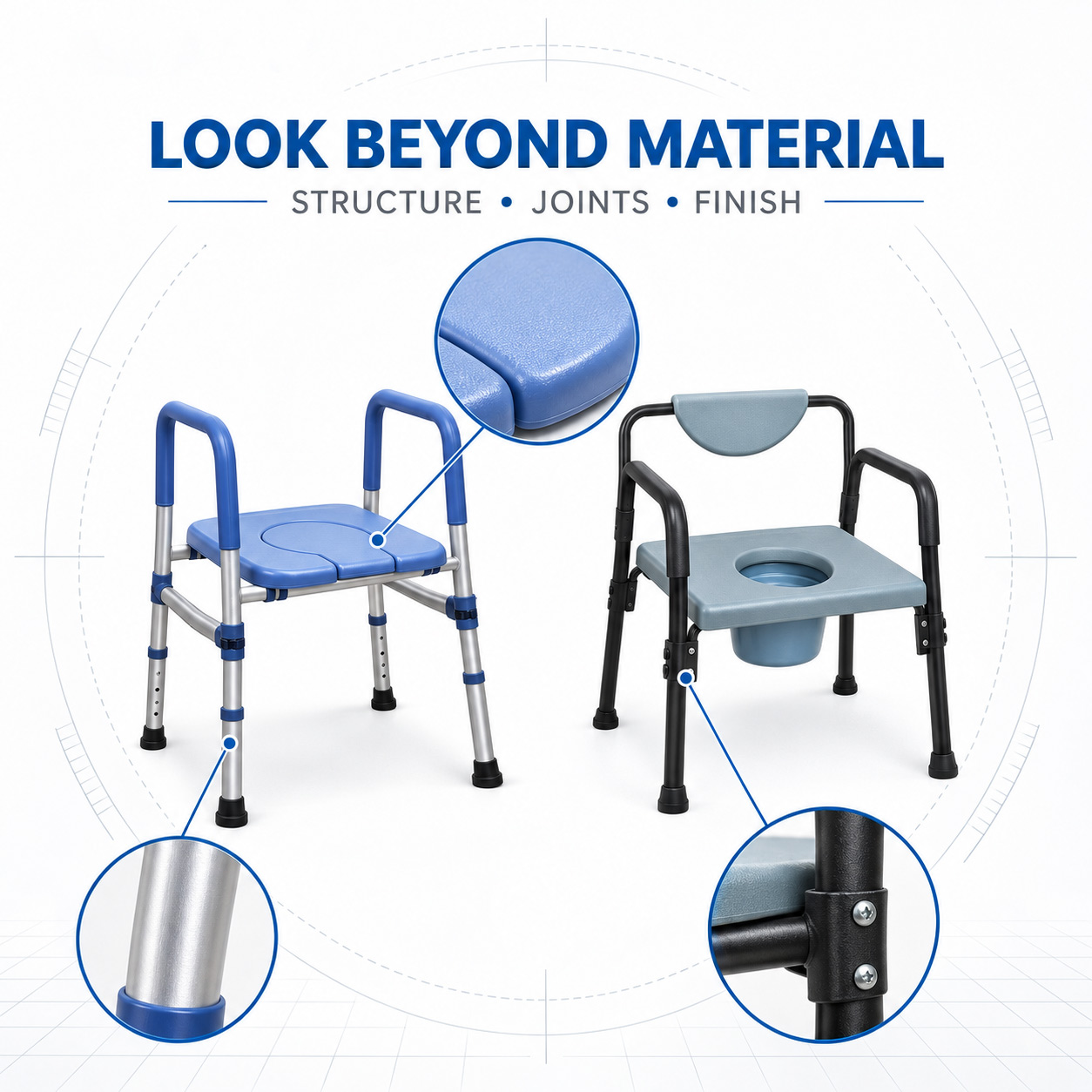
Two aluminum commode chairs can perform very differently. The same is true for two steel chairs.
Professional buyers should assess:
▪ Tube diameter and wall thickness
▪ Frame geometry
▪ Cross-bracing
▪ Welding quality
▪ Joint construction
▪ Leg spacing
▪ Seat attachment
▪ Height-adjustment structure
▪ Folding and locking mechanisms
▪ Armrest and footrest connections
▪ Casters and brakes
▪ Anti-slip foot tips
▪ Stability at different height settings
▪ Suitability for repeated cleaning
A poorly designed steel frame is not automatically stronger than a well-engineered aluminum frame. Likewise, choosing aluminum does not automatically make a product portable or suitable for shower use.
This is why material decisions should be reviewed together with the product’s complete engineering specification.
Buyers planning customized structures can also review why engineering capability matters when choosing a rehabilitation equipment supplier.
Consider Total Landed Cost, Not Only Unit Price
Material influences more than the factory price.
A complete cost comparison may include:
▪ Product unit cost
▪ Net and gross weight
▪ Carton dimensions
▪ Container loading quantity
▪ Parcel or fulfillment charges
▪ Warehousing requirements
▪ Assembly labor
▪ Inspection requirements
▪ Spare parts
▪ Warranty and quality-claim handling
▪ Packaging required to prevent transit damage
For example, an aluminum product may have a higher unit cost but offer advantages in handling and parcel shipment.
A steel product may provide a more competitive purchase price, but its shipping weight and surface-protection requirements should be included in the comparison.
The best decision depends on the buyer’s actual sales and logistics model.
Material Recommendations by Buyer Type
Healthcare Brands
Brands should select materials according to the intended market position.
An aluminum frame may support a lightweight, portable or premium product story. A reinforced steel frame may support a heavy-duty, stable or value-focused product range.
The chosen material should match the brand’s claims, target price and after-sales strategy.
Healthcare Distributors
Distributors often benefit from carrying both aluminum and steel models.
A balanced portfolio may include:
▪ Lightweight folding aluminum models
▪ Aluminum shower commodes
▪ Cost-efficient steel bedside commodes
▪ Wide-seat steel models
▪ Heavy-duty reinforced commode chairs
This allows the distributor to serve different customer requirements without positioning one material as universally superior.
Distributors can review the broader KDB Health commode chair range when comparing static, folding, wheeled and heavy-duty configurations.
Retailers and Online Sellers
Online sellers should pay particular attention to:
▪ Product net weight
▪ Carton gross weight
▪ Folded dimensions
▪ Assembly complexity
▪ Parcel-shipping limitations
▪ Packaging protection
▪ Return and replacement handling
An aluminum model may be advantageous when portability and shipping weight are major priorities. However, packaging design and component protection remain equally important.
Care Facilities and Project Partners
Project buyers should begin with the technical requirements rather than selecting a material first.
Important considerations may include:
▪ Required weight capacity
▪ Frequency of use
▪ Wet or dry environment
▪ Cleaning procedures
▪ Movement between rooms
▪ Storage conditions
▪ Spare-part availability
▪ Inspection and maintenance procedures
▪ Tender specifications
▪ Total project budget
Both aluminum and steel can be appropriate when the complete product meets the required specification.
When Should You Choose Aluminum?
An aluminum commode chair may be the better starting point when:
▪ Lower product weight is important
▪ The chair will be moved regularly
▪ Folding and compact storage are required
▪ Bathroom or shower use is expected
▪ The product is intended for e-commerce fulfillment
▪ The buyer is developing a portable or premium range
▪ Shipping weight is an important commercial factor
When Should You Choose Steel?
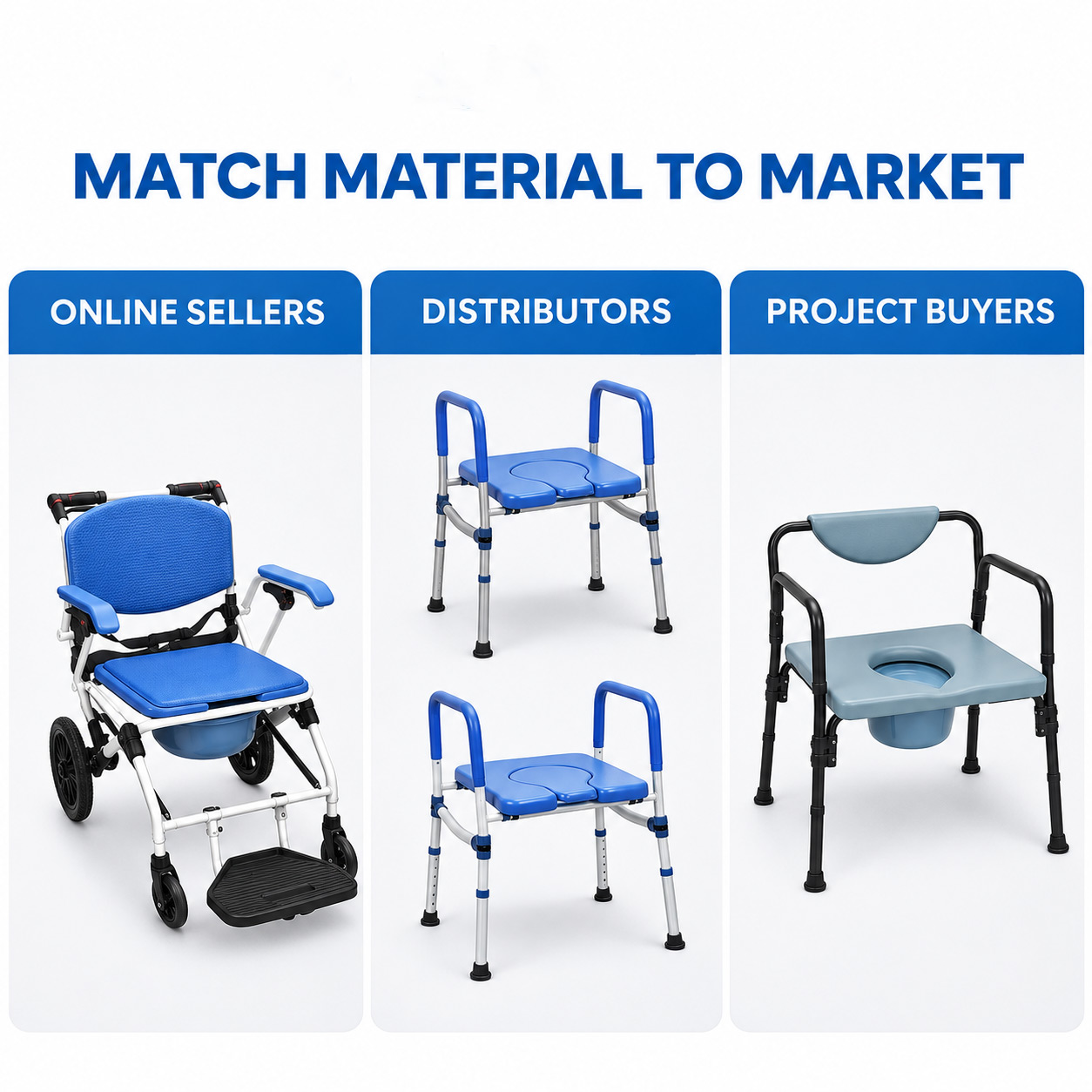
A steel commode chair may be the better starting point when:
▪ A reinforced or wide-seat structure is required
▪ The chair will mainly remain in one location
▪ The product is intended for a cost-focused range
▪ The purchasing program involves larger project quantities
▪ Surface color customization is required
▪ The buyer needs a stationary heavy-duty platform
▪ Unit cost is a primary selection factor
These recommendations are general. The final selection should be based on a specific model, not the material name alone.
Questions to Ask Your Manufacturer
Before approving an aluminum or steel commode chair, ask:
▪ What is the exact frame material and surface treatment?
▪ What are the tube diameter and wall thickness?
▪ What is the rated weight capacity for this model?
▪ What testing supports the published specification?
▪ What is the product’s net and gross weight?
▪ What are the assembled and folded dimensions?
▪ How many units fit into the selected shipping method?
▪ Which components may be customized?
▪ Will structural changes require new testing or tooling?
▪ How are incoming materials and welding quality inspected?
▪ How is coating or surface-finish consistency controlled?
▪ Are spare parts available for repeat orders?
▪ Can the supplier maintain the same specification across batches?
These questions provide a more reliable basis for comparison than asking only whether the frame is aluminum or steel.
How KDB Health Supports Material Selection
KDB Health works with healthcare brands, distributors, retailers, online sellers and project partners developing commode chairs and bathroom safety solutions.
Our manufacturing and engineering support includes:
▪ Aluminum and steel commode chair platforms
▪ Static, folding and wheeled configurations
▪ Heavy-duty and wide-seat structures
▪ Frame, seat and accessory customization
▪ OEM and ODM development
▪ Private-label colors and packaging
▪ Sample development and specification review
▪ Production quality control under an ISO 13485 quality-management system
For selected projects, our engineering team can compare existing platforms before recommending structural changes. This helps buyers avoid unnecessary tooling and select a material based on product requirements rather than assumptions.
Healthcare brands considering private-label development can also review our guide to OEM and ODM commode chairs for medical brands.
Frequently Asked Questions
Is aluminum always better for bathroom use?
No. Aluminum generally offers better resistance to red rust, but performance still depends on alloy quality, surface treatment, welding, fasteners, cleaning chemicals and maintenance.
Is steel always stronger than aluminum?
No. Product strength depends on the complete structure, including tube dimensions, bracing, joints and manufacturing quality. Buyers should verify the rated capacity and supporting test information of the exact model.
Are aluminum commode chairs always more expensive?
Not necessarily. The final price depends on material grade, structure, components, finish, order quantity and production requirements.
Can the same commode chair be produced in both aluminum and steel?
Sometimes, but changing the frame material is not always a simple substitution. Tube dimensions, welding processes, joints, weight distribution, load capacity and testing may need to be reassessed.
Which material is better for e-commerce sellers?
Aluminum can be advantageous when lower product and parcel weight are important. Online sellers should also compare folded size, carton dimensions, assembly requirements and packaging protection.
Choose the Product Platform Before Choosing the Material
Aluminum and steel both have valuable roles in the commode chair market.
Aluminum is often suitable for lightweight, portable, folding and wet-environment products. Steel can be effective for reinforced, stationary, heavy-duty and cost-focused configurations.
The right choice depends on the complete product requirement—not one material characteristic.
Contact KDB Health to compare available aluminum and steel commode chair platforms, request specifications or discuss OEM/ODM customization for your target market.
Table of Contents
- There Is No Universally Better Material
- Aluminum Commode Chairs: Main Advantages
- Steel Commode Chairs: Main Advantages
- Aluminum vs Steel: Buyer Comparison
- Frame Design Matters as Much as Material
- Consider Total Landed Cost, Not Only Unit Price
- Material Recommendations by Buyer Type
- When Should You Choose Aluminum?
- When Should You Choose Steel?
- Questions to Ask Your Manufacturer
- How KDB Health Supports Material Selection
- Frequently Asked Questions
- Choose the Product Platform Before Choosing the Material