 EN
EN
For hospital group, or large volume buyer of healthcare projects, procurement of rehabilitation and personal care equipment has never been purely transactional exercise. Instead, it represents strategic choice impacting both patient safety and operational efficiency and capital investment. In an increasingly interconnected and competitive market, smart acquisition or costly error may often depend entirely upon degree to which right selection process was followed. This section outlines the primary criteria buyers should use when assessing potential rehabilitation equipment partners. These criteria help ensure that hospital procurement strategies balance clinical proficiency with fiscal responsibility.
The Strategic Shift: From Price-Driven to Value-Based Sourcing
In past, hospital procurement teams have concentrated purely on price, One of key factors for rehabilitation equipment industry, however, is that TCO is real measurement. Bariatric commodes, patient lifts and shower chairs will all be subject to continuous, heavy duty usage. Cheaper units which break within 18 months and lead to patient slippages, repairs and disruption to clinical environment will vastly outstrip costs of product that is higher priced but enables long term, trouble free use for user.
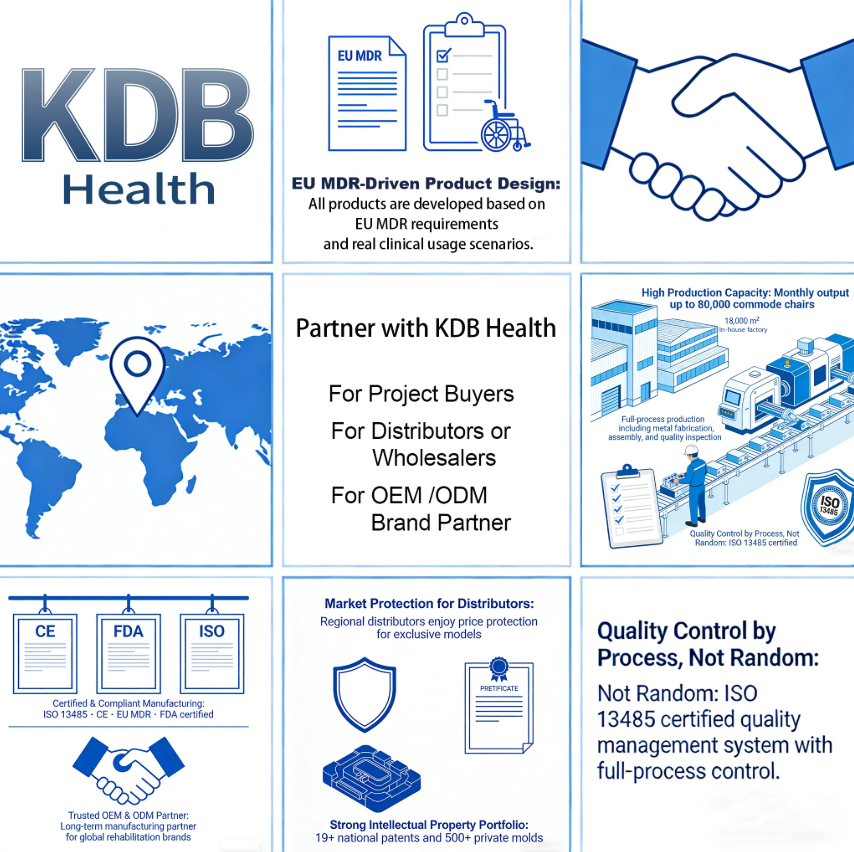
Today's progressive procurement officers are embracing strategy of value based procurement, selecting vendors with engineering finesse, right materials (think non rusting aluminum vs. Cheap steel), and of course meeting global standards for safety. When it comes to your sourcing for healthcare equipment sourcing, don't even begin with purchase price! It’s crucial to see and verify manufacturer's quality systems and obtain relevant quality certifications such as ISO 13485 This certification shows well established Quality Management System which provides you with assurance of consistent product quality on an ongoing basis. CE and/or FDA Registration If you work in Europe or North America, these product clearances are prerequisite for ensure your procured goods are legally sound, and clinically safe within your respective region.
Core Criteria for Hospital Supplier Evaluation
So how can you approach hospital supplier evaluation in your facilities from different perspective? We use following five pillars as part of supplier evaluation process to evaluate our rehabilitation equipment partners:
Regulatory & Quality Compliance: Check that supplier holds valid ISO 13485 quality system, and that their particular products are CE marked and/or FDA 510(k) cleared. This is minimum level to be considered serious for any hospital project. Request copies of certifications and check that they are up-to-date.
R&D and Customization Capability (OEM/ODM): The hospital setting is very broad. A rural long term care facility is much different in space requirements than rehabilitative ward in metropolitan hospital. Examine if supplier can make modifications, is manufacturer able to customize seat height on commode chair, build bariatric appropriate lift sling system, or incorporate desired armrest style into design. In-house R & D teams can meet your clinical needs and produce prototypes within 15 days so that you can test fit and function before placing an order for manufactured goods.
Manufacturing Scale and Consistency: If you're large hospital system or government bidder with to produce quality on 100,000s basis, can they? Assess their production capacity, level of automation, and raw material sourcing. A facility that runs show in-house, vs. Ones who outsource, will more consistently hit tight tolerances and delivery windows.
Post-Market Surveillance and After-Sales Support: You'll want spare parts, maintenance instructions, and system for timely, skilled technical assistance for rehab equipment. Determine if supplier has any history of dealing with customer complaints, product recalls, or providing substitute parts. You’ll want supplier with an effective post market surveillance system to protect your hospital from legal and other liabilities.
E-Commerce and Consumer Alignment: If your healthcare system has retail DME stores or discharge-to-home offerings in addition to provider based clinics, evaluate whether a DME partner is familiar with direct-to-consumer space. If partner has dedicated e-commerce development team they might understand how to deliver packaging, product branding, and functional features appealing to consumer on Amazon or receiving it at home – how to turn clinical hospital hardware into an attractive home accessory.
Product-Specific Considerations for Hospital Procurement
When selecting providers, you should also evaluate product-specific features, such as:
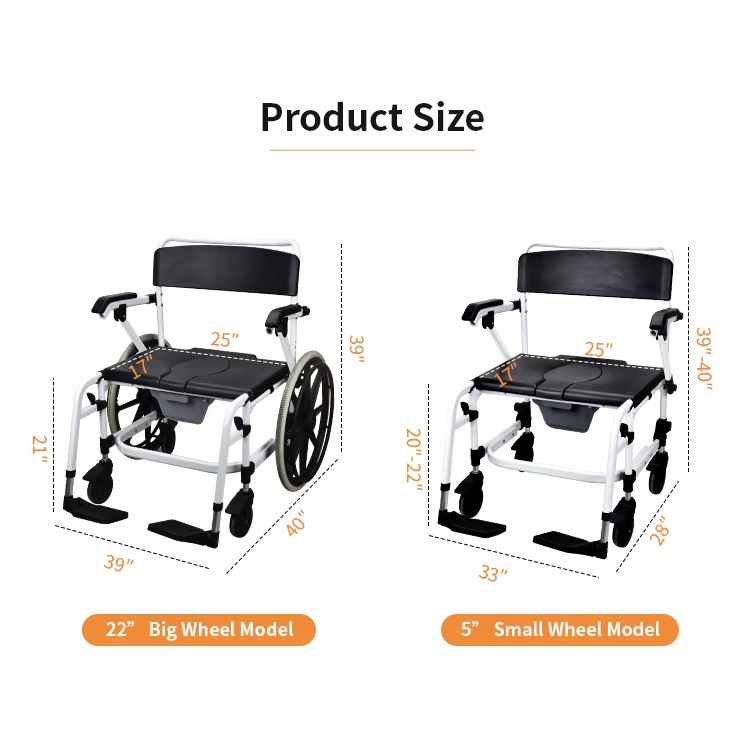
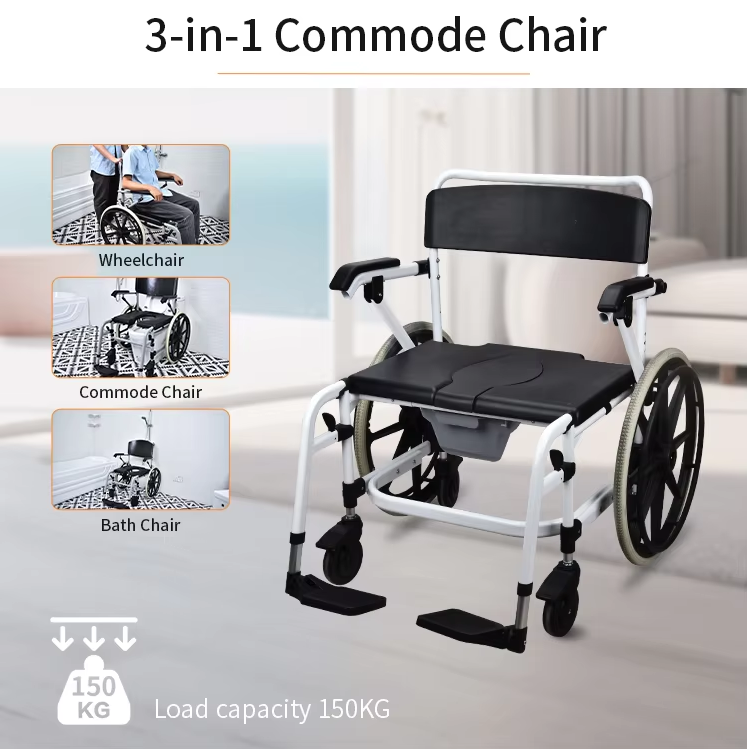
Commode Chairs: Confirm that it has models to cover static non wheeled bedside and multi function 3-in-1 versions for transit. Check that this specification has bariatric weight capacity and stability accreditation if applicable. Look for features which allow tool free breakdown, easy cleaning and storage.
Bathroom Safety Equipment: The shower chairs and stools should both be of slip resistant material with an anti corrosive coating. Assess whether your supplier provides either height adjustable chair or range of booster seats and rise aids.
Walking Aids and Bedside Rails: For rollators and walking frames, you may want to ensure brakes systems, foldability, and handle ergonomics. For bedside rails, you will need to make sure it fits with current bed frames and has good safety locking device to avoid potential trapping dangers.
Operational Efficiency: The Rapid Prototyping Advantage
Large scale product buys come under considerable time pressure. If your product validation plan gets dragged out, facility openings and even ward refurbishments can end up being delayed. That’s why we would advise using supplier that offers fast prototyping. If your supplier or manufacturer is able to take your idea or variation idea and supply you with an operating example of that within two weeks, this may quickly advance your timeline considerably. Your clinicians can obtain to examine, evaluate and also order things – no slow bureaucracy included.
Long-Term Partnership Over Transactional Selling
Lastly, let’s examine ideal hospital purchasing tactics. Consider partnerships with vendors that invest in innovation—developing products that accommodate weight increases, reduce maintenance, and enhance patient dignity. Companies that prioritize safety, dignity, and innovation will use higher-quality materials and keep you informed of regulatory changes and new developments.
KDB Health has realized this type of partner relationship. Our manufacture (KDB Medical) division, and consumer solutions division (sangohe), allows us to fuse industrial scale of manufacturing and end user design, on same platform. Our ISO 13485 approved factory, working with our own R&D teams, solve your OEM/ODM needs for shower chair, bariatric commode chair, patient lift or walking aids, quickly and efficiently with 15 day speed to market rapid prototyping, and our end user focus for hospital group shopping or specification tendering. Depend on KDB Health for sound support for your next healthcare project.