
 EN
EN
The commode chair has long been backbone of daily living support in care facilities, including hospitals, extended care facilities, and home based care environments. Given the growing aging population and corresponding escalating need for care, intelligent commode chair design is more important than ever for ensuring patient's and caregiver's security and comfort. For nursing homes, rehab facilities, and medical centers, selection of appropriate equipment for purchase will have direct implications on care, retention and efficiency.
The Safety Imperative: Engineering for Patient Protection
Engineering a safe commode chair begins with understanding the specific risks faced by users with limited mobility. Falls are one of the greatest dangers during toileting and hygiene activities in wet bathroom environments. In fact, over 30% of falls among seniors occur in the bathroom.
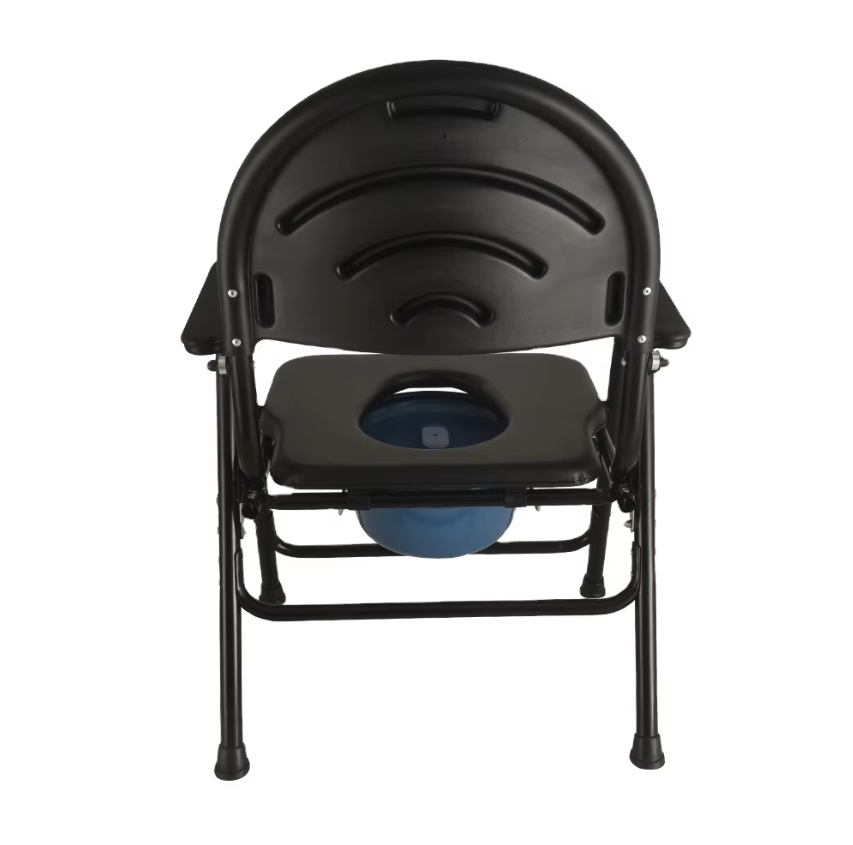
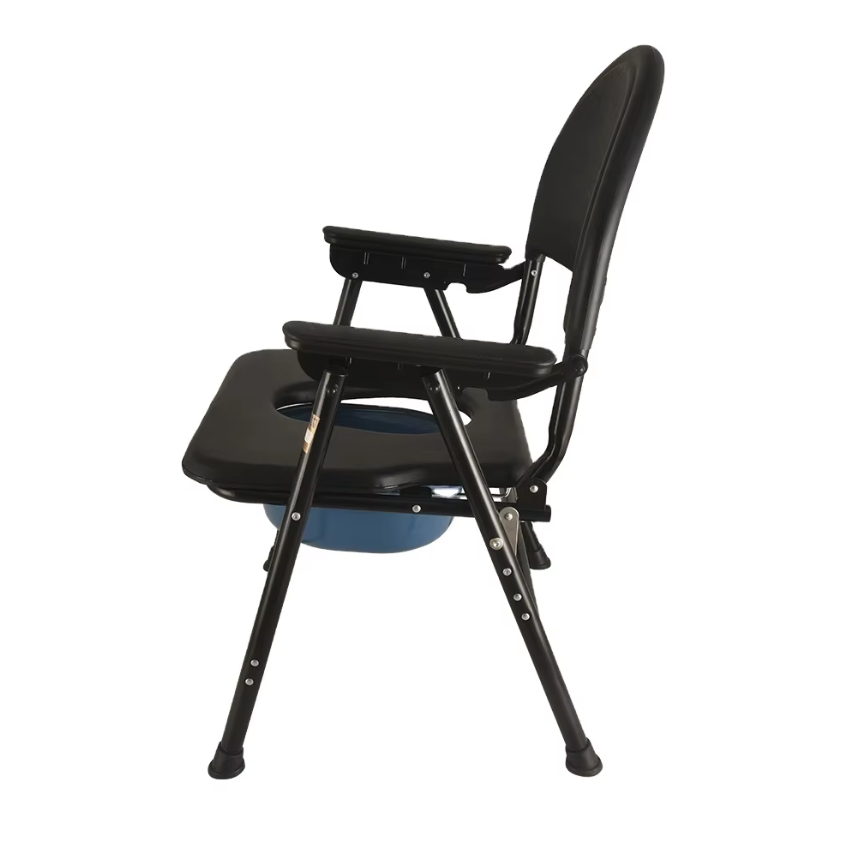
Stability and Weight Capacity: At the center of any chair is stability, along with assurance that it’s going to hold you reliably. High-quality chairs will have strong build from frame and are usually built with aluminum alloy or steel with load-bearing capacity from 125kg up to 160kg as standard, with bariatric models capable of carrying up to 320kg. Non-slip rubber ferrules are also common feature on chairs with static frames, along with optional locking casters. Mobile chairs have also added directional and parking brakes on castors that will lock out when transferred .
Ergonomic Seating and Positioning: Contoured seat surfaces distribute the user's weight evenly, preventing pressure points and reducing the risk of skin breakdowns. Open-faced or U-shaped cut-out seats promote personal hygiene with limited postural compromises. In some of high-spec tilt in space chairs this has allowed caregivers to recliner client on chair for safer caring and this position maintains hip-knee angle of client reducing any risk of client sliding down.
Transfer - Facilitating Design Features: These features support safe patient transfers in several ways. There are adjustable height mechanisms for most models, frequently with 4 or 5 steps of adjustment. This provides appropriate height so chair height either complements raised bed or toilet height which greatly reduces vertical transfers. Swing-away or detachable armrests and foot supports prevent obstruction, allowing caregivers to approach from the side or front. This facilitates safer transfers and reduces fall risk, especially for high-risk patients.
Reducing Caregiver Strain: Equipment as Workforce Support
Direct strain on caregivers’ body from lifting and carrying patients is major reason care workers seek out new employment. Caregiver-friendly equipment is more than simply helpful tools, they are strategic addition that is central to provider’s long term vision as well as workers who make day to day successful.
Reducing Physical Burden: This means caregivers no longer need to contort themselves to support their patients. By using mobile commode that has integrated propulsion (self-propulsion or push bars), patients can easily transition between bed, toilet and shower, eliminating need to manually carry or support their weight. Functions such as powered height-adjustment and tilt remove need for repetitive bending or leaning at difficult angles to achieve adequate working height, and provide for simpler and easier performance of hygiene care.
Ease of Cleaning and Maintenance: Chairs with non-porous surfaces and easily removable commode buckets significantly reduce cleaning time—directly lowering caregiver workload. Chairs with materials that prevent corrosion are durable for frequent cleanings to maintain critical sanitation standards required to prevent spread of infection. The fewer crevices to work around, less time spent cleaning.
Enhanced Access for Care: Wide rear openings and low mounted seats to ease ingress into vehicle while helping nurses and care staff reach patient whilst delivering essential personal care. Care Access features are designed to negate bending and uncomfortable body positions thus reducing risks of musculoskeletal injury to staff and supporting patient dignity.
Procurement Considerations for Care Facilities
Key considerations should guide purchasing professionals in choosing commode chairs for institution applications, Regulatory Compliance is paramount, compliance with ISO 13485, CE-MDR, and FDA certification indicates that equipment will safely and reliably perform. Durability and Longevity result in lower total ownership costs – products with proven lifespan and good warranty benefit from fewer replacements. Versatility and Adaptability, for example 3-in-1 commode chair/shower chair/toilet riser, increase equipment utilization.
KDB Health: A Partner in Care Solutions
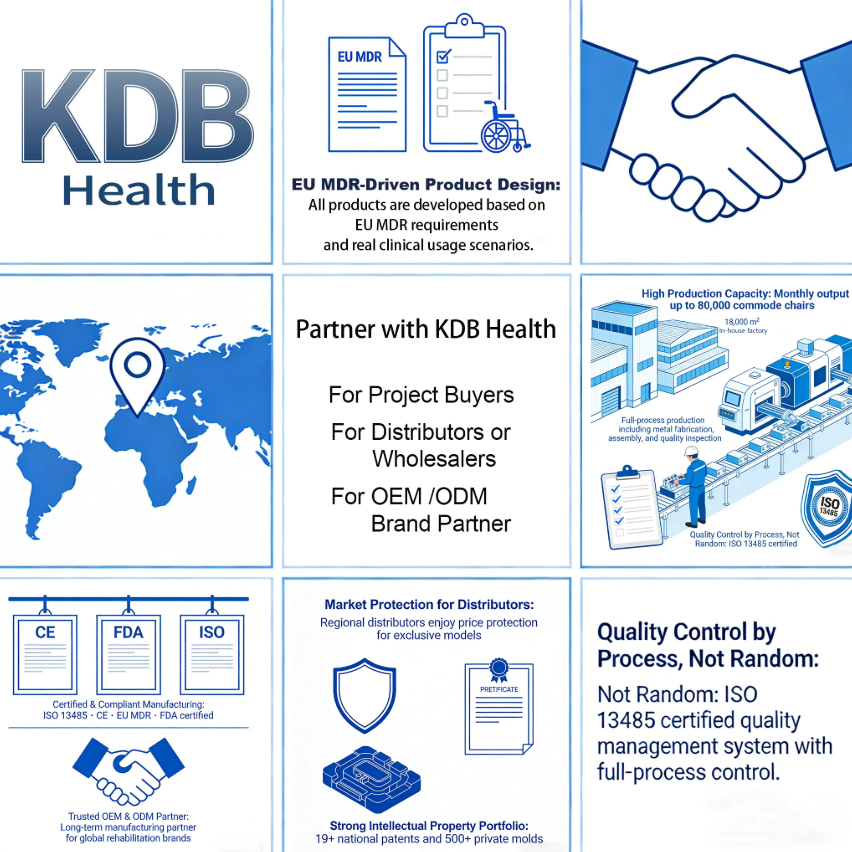
KDB Health has been committed to innovation and production of commode chairs for over decade. We provide user-friendly and reliable commode products for medical and home care—ranging from bariatric models to fold-down designs for improved space mobility. We leverage expertise from worldwide caregivers and patients to tailor our wide product selection, with R&D staff, and ISO 13485 accredited production, CE and FDA marked products available. As your trusted partner in healthcare sector, KDB Health’s OEM & ODM capabilities can provide comprehensive plan that works within your specified timeline of concept, to prototype in as fast as 15-days.