
 EN
EN
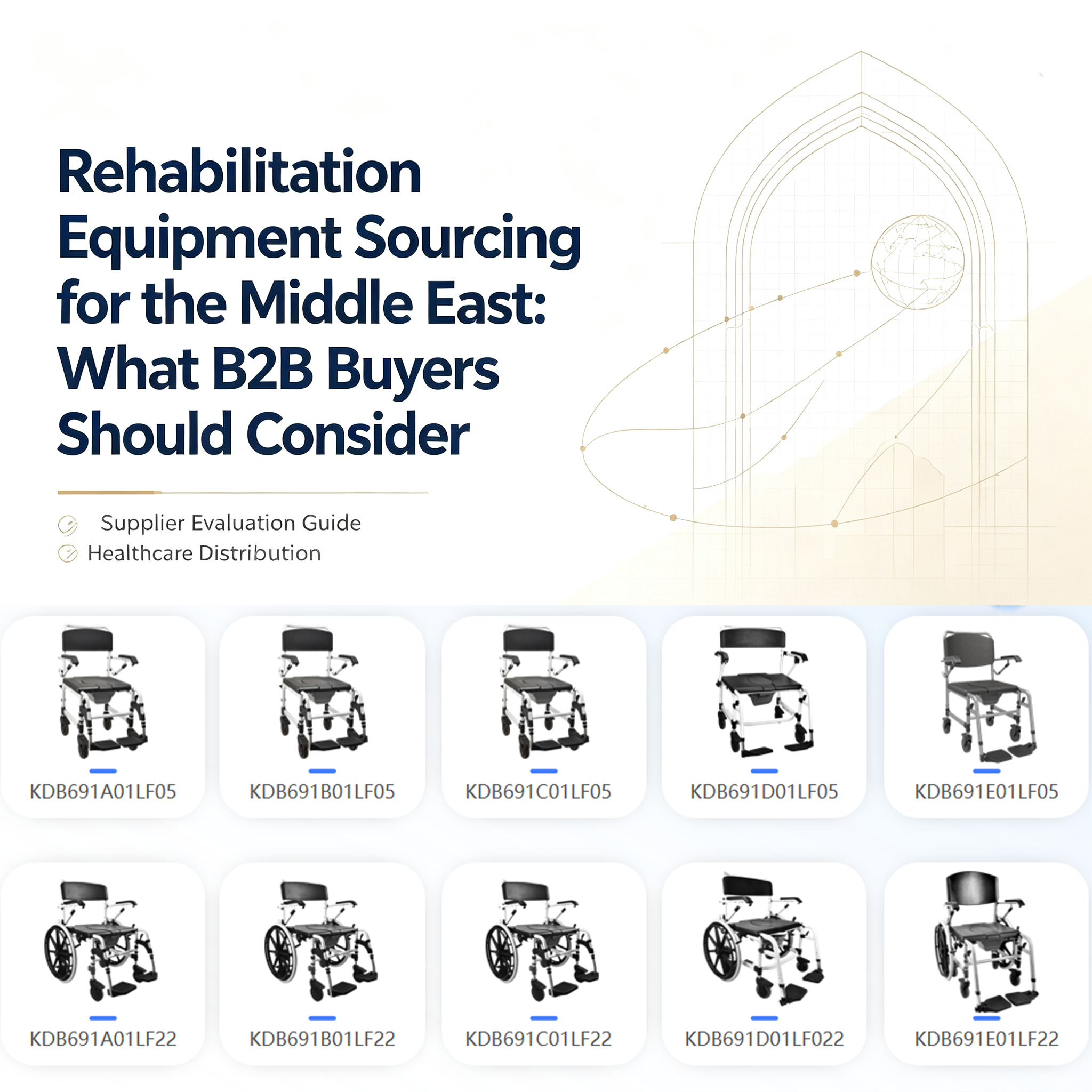
For healthcare distributors, medical equipment importers, rehabilitation brands, and institutional procurement teams in the Middle East, sourcing rehabilitation equipment involves more than comparing product prices.
Buyers also need to consider product suitability, quality management, documentation, customization requirements, production capability, packaging, and ongoing product support.
These considerations become particularly important when purchasing rehabilitation and elderly care equipment from overseas manufacturers.
A supplier may offer competitive pricing, but that alone does not determine whether the products will be suitable for a distributor's market or a long-term healthcare equipment program.
For Middle Eastern buyers sourcing rehabilitation equipment from China, the key is to evaluate the complete supplier capability before placing an order.
This guide explains the main factors B2B buyers should consider when evaluating rehabilitation equipment suppliers for the Middle Eastern market.
What Rehabilitation Equipment Do Middle Eastern Buyers Typically Source?
The rehabilitation equipment market covers a wide range of products serving hospitals, rehabilitation centers, elderly care facilities, homecare providers, distributors, and other healthcare organizations.
Depending on the target market and customer base, a distributor may source products such as commode chairs, shower chairs, patient transfer equipment, patient lifts, walkers, and other mobility-related equipment.
The right product portfolio depends on the buyer's market positioning and the applications it intends to serve.
For example, a distributor supplying elderly care facilities may require a different product mix from a company focused on homecare or rehabilitation centers.
This is why product sourcing should begin with the intended application and customer requirements rather than simply selecting the largest possible product catalog.
What Should Buyers Consider When Sourcing Rehabilitation Equipment from China?
China has a large manufacturing base for rehabilitation and healthcare equipment, giving international buyers access to a wide range of products and manufacturing capabilities.
However, suppliers can differ significantly in product quality, engineering capability, production processes, documentation, and experience with international B2B procurement.
Before selecting a supplier, buyers should evaluate several areas.
Product Suitability
The first consideration is whether the product is appropriate for the intended application.
Buyers should review factors such as product dimensions, materials, functional configuration, load capacity, maneuverability, cleaning requirements, and accessories according to the product category.
A product that performs well in one application may not necessarily be suitable for another.
For distributors, it is also important to consider whether the product configuration fits the expectations of the target market.
This can include product appearance, packaging, labeling, accessories, and other market-specific requirements.
Quality Management and Production Consistency
For rehabilitation equipment, quality should be evaluated beyond the appearance of a sample.
B2B buyers should understand how the manufacturer controls product quality during production and how consistency is maintained between batches.
Areas worth reviewing include incoming material inspection, production-stage inspection, functional testing, final inspection, and handling of non-conforming products.
For medical device manufacturers, ISO 13485 is an internationally recognized quality management standard specifically designed for medical devices.
However, the existence of a quality management certificate should not be the only consideration.
Buyers should also understand how the manufacturer's quality procedures are implemented in actual production.
Regulatory and Product Documentation
Regulatory requirements can vary according to the destination market, product classification, and applicable local regulations.
Middle Eastern buyers should therefore confirm which documentation is available for the specific products they intend to import.
Depending on the product and market, documentation may include product specifications, test reports, declarations or certificates of conformity where applicable, quality management documentation, labeling information, user manuals, and other technical materials.
Buyers should avoid treating regulatory compliance as a single universal certification.
Instead, the manufacturer and buyer should identify the applicable requirements for the intended market and product before procurement.
For distributors serving multiple Middle Eastern markets, this distinction is particularly important because requirements may not be identical across countries.
Product Customization and Private Label Requirements
Many healthcare distributors and rehabilitation brands do not want to rely entirely on standard catalog products.
They may require customized colors, branding, packaging, accessories, product configurations, or other market-specific features.
A manufacturer with OEM and ODM capabilities may be able to support these requirements depending on the scope of customization.
For example, customization may involve:
Product appearance and color.
Brand logos and private-label packaging.
Product dimensions or selected configurations.
Accessories and components.
User manuals and product labels.
Packaging specifications.
The appropriate customization route depends on the product and the required changes.
Buyers should therefore define their requirements clearly before requesting a quotation.
This helps the manufacturer determine whether the project can be handled through an existing product platform or requires additional engineering development.
Why Product Materials Matter in the Middle Eastern Market
The operating environment should also be considered when selecting rehabilitation equipment.
Some Middle Eastern markets have high temperatures, humidity, coastal exposure, or other environmental conditions that may influence material selection and product maintenance.
For products used in bathrooms or other wet environments, buyers may need to pay particular attention to frame materials, surface treatment, corrosion resistance, fasteners, and other components exposed to moisture.
The appropriate material depends on the product design and intended application.
Rather than selecting materials based only on appearance or price, buyers should consider how the product will be used and maintained in the target environment.
Packaging and Labeling for International Distribution
Packaging becomes increasingly important when rehabilitation equipment is purchased for distribution rather than direct local use.
Products may pass through several stages of transportation, warehousing, and handling before reaching the end customer.
B2B buyers should therefore clarify packaging requirements before production.
Important considerations may include:
Product protection during transportation.
Carton dimensions and packing configuration.
Branding and private-label requirements.
Product labels.
User manuals and instructions.
Language requirements.
Shipping marks and other agreed packaging information.
Clear packaging specifications help reduce misunderstandings between the buyer and manufacturer and make the products easier to manage within a distributor's own supply process.
Why Manufacturing Capability Matters to B2B Buyers
A rehabilitation equipment supplier should be evaluated based on more than its product catalog.
Manufacturing capability can influence whether a supplier can support both initial orders and future product requirements.
Buyers may want to understand the manufacturer's production facilities, product development capabilities, quality procedures, tooling resources, engineering team, and experience with international B2B customers.
This is particularly relevant for distributors planning to expand their product portfolio.
A supplier capable of supporting multiple related product categories may provide greater flexibility as the buyer's business develops.
However, product range should not replace product expertise.
The manufacturer should be able to demonstrate appropriate knowledge and manufacturing capability for the specific product categories being sourced.
What Should Buyers Ask Before Placing an Order?
Before moving forward with a rehabilitation equipment supplier, B2B buyers should clarify several practical questions.
Product Information
Are the product specifications clearly defined?
Are the materials, dimensions, functions, accessories, and packaging requirements confirmed?
Documentation
What product and technical documentation is available?
Which compliance information applies to the intended market?
Customization
Can the supplier support the required branding, packaging, colors, configurations, or product modifications?
Samples
Can the buyer evaluate samples before placing a larger order?
Can the final production specifications be confirmed against an approved sample?
Production
Can the manufacturer support the expected order volume?
Can production requirements be maintained consistently for repeat orders?
After-Sales Support
Are user manuals, spare parts, technical information, and warranty procedures available where applicable?
These questions help buyers evaluate the supplier from a long-term B2B procurement perspective rather than focusing only on the initial quotation.
Building a Rehabilitation Equipment Portfolio for the Middle Eastern Market
For distributors, sourcing individual products is only one part of developing a competitive healthcare equipment business.
A broader product portfolio can allow distributors to serve different customer groups and procurement requirements.
For example, a rehabilitation equipment portfolio may combine bathroom safety products, patient transfer equipment, mobility aids, and other elderly care products.
The exact portfolio should be based on the distributor's target customers and market demand.
A manufacturer that can support complementary product categories may also make it easier for distributors to develop their product range over time.
The goal should not be to purchase as many products as possible.
Instead, buyers should build a product portfolio with clear applications, consistent quality, appropriate documentation, and a supplier structure that can support future growth.
KDB Health: Rehabilitation Equipment Manufacturing for Global B2B Buyers
KDB Health supports healthcare distributors, medical equipment importers, rehabilitation brands, private-label businesses, hospitals, and project buyers with rehabilitation and elderly care equipment.
Our product portfolio includes commode chairs, shower chairs, bathroom safety equipment, patient lifts, bedside rails, and mobility-related products.
For international B2B customers, our manufacturing capabilities include product customization, OEM and ODM support, sample development, production coordination, quality inspection, and product documentation according to project requirements.
For Middle Eastern buyers, product sourcing can involve more than selecting a standard catalog item.
Market requirements, product applications, environmental conditions, documentation, packaging, customization, and long-term supply requirements should all be considered before procurement.
KDB Health works with B2B partners to evaluate product requirements and develop suitable rehabilitation and elderly care equipment solutions for their target markets.
Conclusion: Choosing the Right Rehabilitation Equipment Supplier
For Middle Eastern distributors and healthcare procurement teams, successful rehabilitation equipment sourcing requires more than finding a competitive price.
Product suitability, quality management, documentation, customization capability, manufacturing resources, packaging, and ongoing support all contribute to the overall value of a supplier.
Buyers should evaluate these factors before placing an order and clearly define their product and market requirements with the manufacturer.
For healthcare distributors, rehabilitation brands, medical equipment importers, hospitals, and project buyers looking for rehabilitation and elderly care equipment, KDB Health can discuss product requirements, catalogs, OEM/ODM customization, and B2B sourcing solutions.
Published: July 25, 2025 | Last updated: September 9, 2026
Table of Contents
- What Rehabilitation Equipment Do Middle Eastern Buyers Typically Source?
- What Should Buyers Consider When Sourcing Rehabilitation Equipment from China?
- Quality Management and Production Consistency
- Regulatory and Product Documentation
- Product Customization and Private Label Requirements
- Why Product Materials Matter in the Middle Eastern Market
- Packaging and Labeling for International Distribution
- Why Manufacturing Capability Matters to B2B Buyers
- What Should Buyers Ask Before Placing an Order?
- Building a Rehabilitation Equipment Portfolio for the Middle Eastern Market
- KDB Health: Rehabilitation Equipment Manufacturing for Global B2B Buyers
- Conclusion: Choosing the Right Rehabilitation Equipment Supplier