
 EN
EN
Quick Links
Engineering, Quality Systems, and Supply Chain Reliability Matter More Than Price
The global rehabilitation equipment market is becoming increasingly competitive. Hospitals, distributors, private-label brands, and healthcare retailers are no longer selecting suppliers based solely on price. Instead, they are looking for manufacturing partners capable of supporting product innovation, ensuring regulatory compliance, maintaining stable quality, and adapting quickly to changing market demands.
For many healthcare brands, choosing the right Original Design Manufacturer (ODM) has become a long-term business strategy rather than a purchasing decision.
A reliable ODM partner contributes far beyond production. From product engineering and prototype development to quality management and supply chain stability, an experienced manufacturer becomes an extension of the customer's own product development team.
This article explores why long-term ODM partnerships are becoming increasingly important and what healthcare buyers should evaluate before selecting a manufacturing partner.
Healthcare purchasing has changed significantly over the past decade.
Distributors are expected to launch products faster.
Hospitals require greater product consistency.
Private-label brands need differentiated products rather than identical catalog items.
E-commerce sellers face intense competition and shorter product life cycles.
As a result, manufacturers are expected to contribute engineering expertise, continuous product improvement, and flexible production capabilities—not simply manufacturing capacity.
This shift has transformed the role of an ODM manufacturer from a supplier into a strategic partner.
Lowest purchase price does not always result in the lowest total cost.
Healthcare products directly affect user safety, product reliability, after-sales service, and brand reputation.
For distributors, recurring warranty claims or unstable product quality often create costs that exceed any initial purchasing savings.
Experienced buyers increasingly evaluate factors such as:
These factors directly influence long-term business performance.
Engineering is one of the biggest differences between a manufacturing partner and a production-only factory.
A capable engineering team continuously improves product ergonomics, structural strength, manufacturing efficiency, user experience, and production consistency.
For rehabilitation equipment such as commode chairs, shower chairs, patient lifts, bedside rails, and mobility aids, small engineering improvements can significantly improve caregiver safety, patient comfort, and long-term durability.
Engineering is not simply product design—it is continuous product optimization.
For rehabilitation products, manufacturing consistency is often more valuable than the lowest purchase price.
A product that performs consistently over thousands of units protects distributors from warranty costs, strengthens customer confidence, and supports long-term brand growth.
Healthcare products operate within highly regulated environments.
International buyers increasingly evaluate whether manufacturers operate under structured quality management systems rather than relying solely on final product inspection.
A mature quality system typically includes:
These processes reduce quality variation and improve supply reliability across multiple production batches.
Global supply chains have experienced significant disruption in recent years.
Reliable manufacturers help partners reduce supply uncertainty through stable production planning, flexible scheduling, inventory management, and transparent communication.
Rather than focusing only on manufacturing capacity, experienced buyers increasingly assess whether suppliers can maintain consistent delivery performance during periods of market volatility.
Stable supply chains protect both distributors and healthcare providers.
Today's healthcare market values differentiation.
Instead of competing solely on price, distributors increasingly seek products designed specifically for their regional markets and customer needs.
Examples include:
Flexible ODM capability allows healthcare brands to build unique product portfolios while maintaining efficient production.
Before establishing a long-term manufacturing partnership, procurement teams should consider the following questions:
• Does the manufacturer have an independent engineering team?
• Can prototype development be completed efficiently?
• Is the factory operating under a recognized quality management system?
• Does the manufacturer support OEM and ODM projects?
• Can production scale as demand increases?
• Are product improvements continuously implemented?
• Does the supplier demonstrate long-term industry experience?
Choosing an ODM partner should focus on sustainable cooperation rather than short-term purchasing costs.
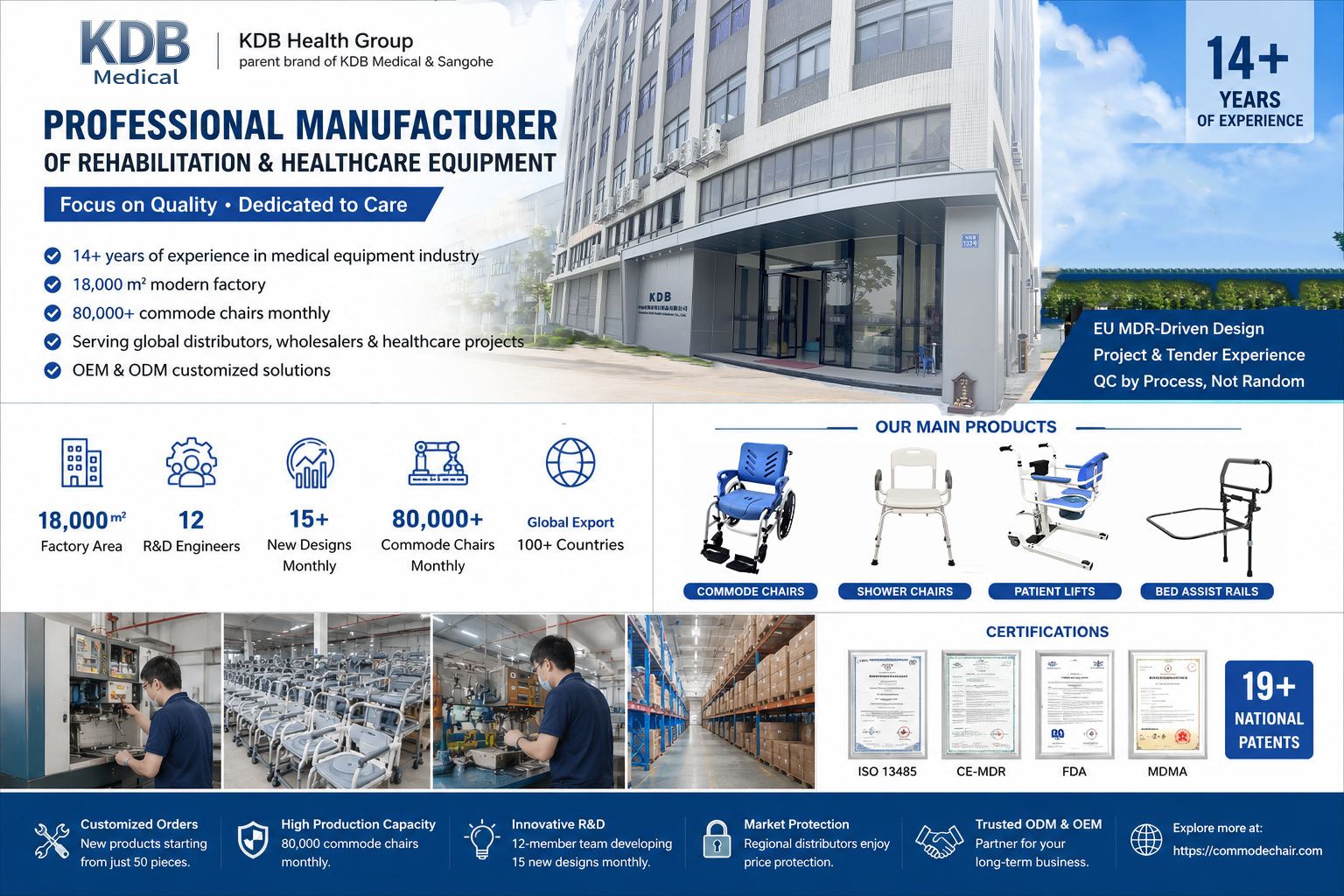
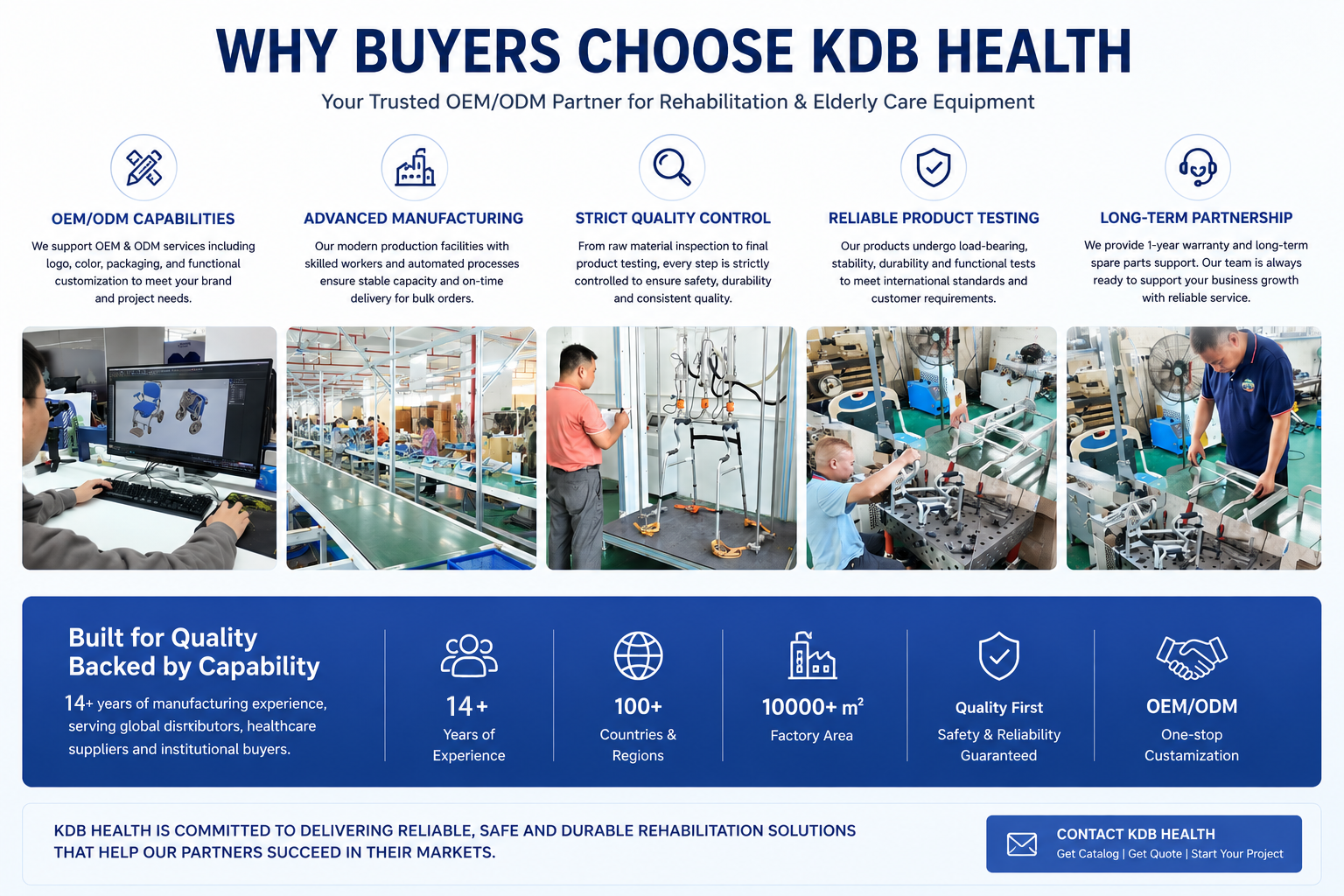
At KDB Health, we believe manufacturing begins with engineering.
For more than 13 years, our team has focused on developing rehabilitation equipment that combines practical functionality, manufacturing efficiency, and long-term reliability.
Our capabilities include:
Every project begins with understanding customer requirements before engineering, manufacturing, and quality teams work together to transform ideas into reliable products.
The most successful healthcare brands rarely choose manufacturing partners based solely on today's quotation.
Instead, they seek partners capable of supporting future growth, product innovation, regulatory compliance, and continuous improvement.
A strong ODM relationship creates long-term value through engineering expertise, consistent quality, operational efficiency, and supply chain resilience.
For distributors and healthcare brands planning sustainable growth, selecting the right manufacturing partner may become one of the most important strategic decisions they make.
OEM manufacturing produces products according to a customer's existing design, while ODM manufacturing includes product design, engineering development, and manufacturing support provided by the factory.
ODM partners help reduce development time, improve product innovation, and simplify supply chain management while supporting brand differentiation.
No. Engineering capability, quality consistency, compliance, delivery reliability, and long-term cooperation often have greater influence on business success than unit price alone.
Healthcare distributors, rehabilitation equipment brands, hospitals, nursing care suppliers, medical retailers, and private-label businesses commonly benefit from ODM partnerships.
Long-term manufacturing partnerships are built on trust, engineering capability, consistent quality, and shared business growth.
As healthcare markets continue to evolve, manufacturers that contribute knowledge, innovation, and reliable execution will become strategic partners rather than production suppliers.
For buyers seeking sustainable growth, choosing the right ODM manufacturer is not simply about purchasing products—it is about building a stronger future.
KDB Health is an engineering-driven rehabilitation equipment manufacturer specializing in OEM and ODM solutions for commode chairs, shower chairs, patient lifts, walkers, bedside rails, bathroom safety products, and home healthcare equipment.
Our mission is to help healthcare brands, distributors, and institutional buyers develop reliable rehabilitation solutions through engineering excellence, quality manufacturing, and long-term partnership.
If you are a distributor, healthcare brand, hospital group, or procurement manager looking for a reliable OEM/ODM rehabilitation equipment manufacturer, we would be pleased to discuss your project.
Website: https://kdbhealth.com
Email: [email protected]