
 EN
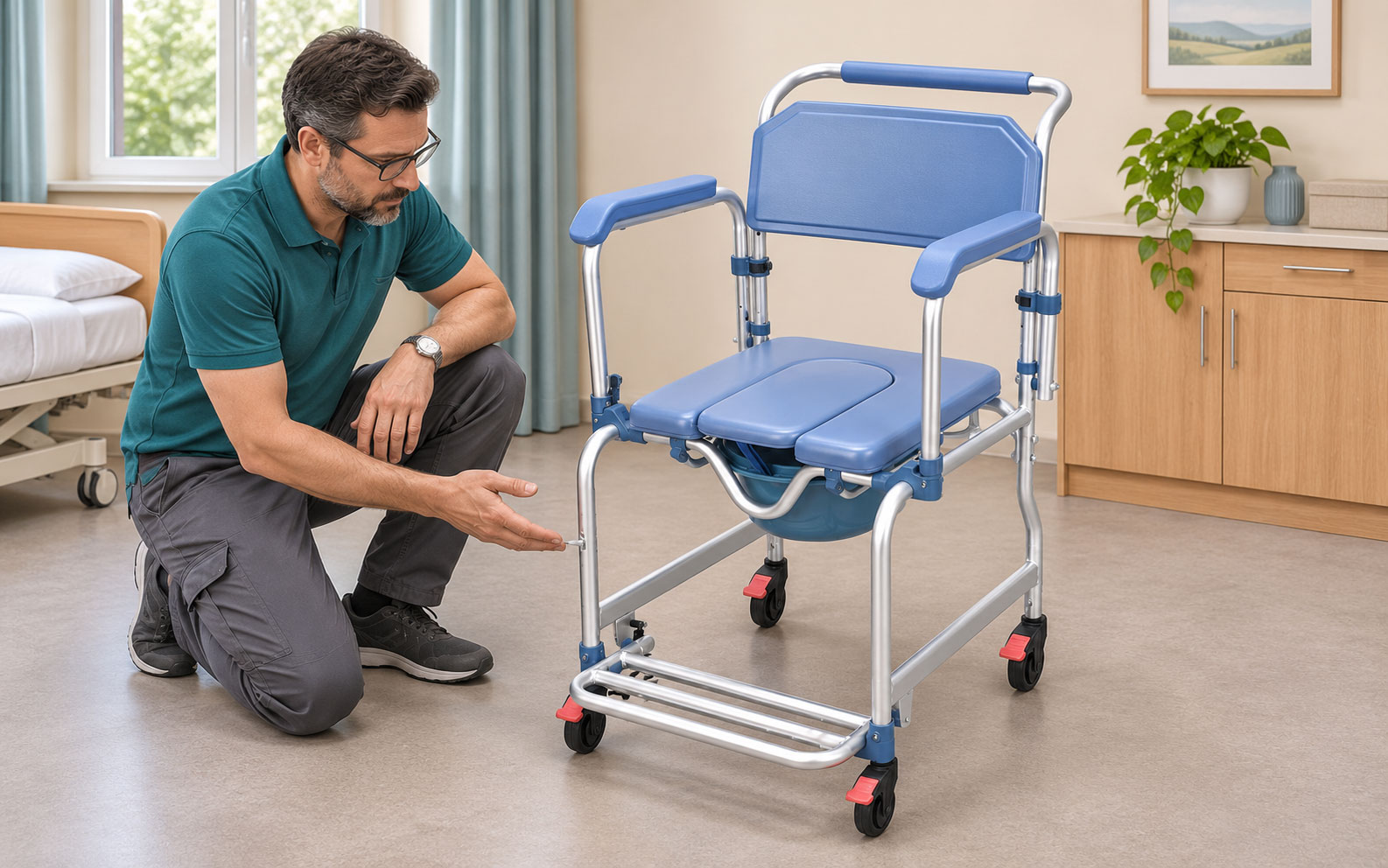
Published: October 14, 2025 | Last Updated: November 13, 2026
Toileting and bathing can become more difficult for people with reduced balance, lower-limb strength, endurance, coordination or transfer ability. The right assistive equipment can provide seated support, reduce unnecessary movement and help users participate more comfortably in everyday care routines.
The World Health Organization explains that assistive products can help maintain or improve functioning related to mobility and self-care. However, selecting a commode chair or shower chair requires more than choosing a product with the right appearance or weight capacity.
The equipment must match the individual’s abilities, transfer method, body dimensions, care environment and level of caregiver support.
Commode and shower chairs should be treated as part of a wider care and risk-management plan—not as products that can independently prevent every fall or injury. The U.S. Centers for Disease Control and Prevention notes that falls are usually associated with a combination of risk factors, including lower-body weakness, walking or balance difficulties, medication, vision and environmental hazards.
Start with the User and Care Task—not the Product
Before selecting a commode or shower chair, care teams and procurement professionals should define how the equipment will be used.
Important questions include:
▪ Can the user stand and pivot independently?
▪ Is assistance from one or more caregivers required?
▪ Will the user transfer from a bed, wheelchair or toilet?
▪ Is side-transfer access required?
▪ Does the user have sufficient trunk and upper-body control?
▪ What seat height and width are appropriate?
▪ What is the required rated load?
▪ Will the equipment be used beside the bed, over a toilet or inside a shower?
▪ Is occupied movement required?
▪ How frequently will the product be cleaned and disinfected?
▪ Is the equipment intended for one person or shared institutional use?
▪ What bathroom, doorway and storage dimensions are available?
These requirements should be confirmed before comparing models.
A product that is suitable for a user who can stand with assistance may not be appropriate for someone who requires a lateral transfer or a patient-lifting system. Similarly, a bedside commode is not automatically suitable for showering, and a wheeled commode is not automatically approved for occupied transport.
How Commode Chairs Support Toileting and Transfer Routines
Commode chairs provide a seated toileting option when access to a standard bathroom or toilet is difficult.
Depending on the model and intended use, a commode chair may be positioned:
▪ Beside a bed
▪ Over an existing toilet
▪ As a freestanding toileting chair
▪ In a bathroom or shower environment
▪ As part of an assisted transfer routine
KDB Health’s commode chair range includes static, folding, wheeled, shower-compatible, bariatric and multifunctional configurations. Each model should be evaluated according to its specified intended use.
Seat Height and Adjustment
Seat height affects positioning and transfer requirements.
A higher seat may reduce the amount of knee and hip flexion required when standing, but a seat that is too high may prevent the user’s feet from achieving stable floor contact. A seat that is too low may make standing more difficult and increase the effort required from the user or caregiver.
Height-adjustable models can support different users and care environments, but the correct setting should be determined according to:
▪ User height and lower-leg length
▪ Foot position
▪ Transfer method
▪ Toilet or bed height
▪ Caregiver assistance
▪ Applicable clinical assessment
Height adjustment should not be described as universally safer without considering these factors.
Armrest Configuration
Armrests can provide support during sitting, standing and repositioning.
Different configurations serve different transfer requirements:
▪ Fixed armrests provide continuous lateral support
▪ Flip-up armrests create additional side access
▪ Drop-arm designs may support selected lateral-transfer procedures
▪ Removable armrests may simplify setup or storage
Care teams should confirm that the armrest mechanism locks securely and that the selected configuration matches the user’s transfer plan.
Static and Wheeled Models
Static commode chairs may be appropriate when the product will remain beside a bed or over a toilet.
Wheeled models may improve maneuverability within an appropriate care environment, but wheels do not automatically make a product suitable for occupied transport.
For wheeled models, evaluate:
▪ Caster size and material
▪ Brake design and accessibility
▪ Directional stability
▪ Threshold and floor conditions
▪ Footrest configuration
▪ Push-handle position
▪ Anti-tip features, where applicable
▪ Occupied-movement instructions
Always confirm the permitted movement and transfer procedures in the exact model’s instructions for use.
Buckets, Seats and Hygiene
A removable commode bucket can simplify waste handling when the chair is used away from a toilet.
Evaluate:
▪ Bucket removal direction
▪ Lid availability
▪ Handle design
▪ Contact surfaces
▪ Splash control
▪ Cleaning access
▪ Replacement availability
Padded seats may improve comfort for some users, but they should not be described as preventing pressure injuries unless the product has been specifically evaluated and documented for that purpose.
Users at risk of pressure injury require an appropriate clinical assessment, repositioning plan and seating strategy.
How Shower Chairs Support Bathing Tasks
Shower chairs provide seated support for users who may have difficulty standing throughout a bathing routine.
The right configuration depends on whether the user can transfer independently, requires caregiver assistance or needs a wheeled shower-commode solution.
KDB Health’s shower chair solutions include static, height-adjustable, folding and supported configurations for different care and procurement requirements.
Stability in Wet Environments
Wet floors, soap residue, transfers and limited balance can all affect bathing safety.
Depending on the model, stability-related features may include:
▪ Non-slip leg tips
▪ Lockable casters
▪ Wide or reinforced frame geometry
▪ Secure height-adjustment mechanisms
▪ Stable armrests
▪ Supportive backrests
▪ Textured seating surfaces
These features may support a safer setup, but they do not replace appropriate bathroom flooring, transfer procedures, grab bars, supervision or individualized risk assessment.
Drainage and Drying
Shower-chair seats should allow water to drain instead of collecting around the user or inside difficult-to-clean areas.
Procurement teams should evaluate:
▪ Drainage openings
▪ Seat contours
▪ Frame openings and joints
▪ Water-retaining areas
▪ Drying requirements
▪ Access for cleaning
▪ Removable seat or backrest components
A product used in shared institutional environments should be assessed for repeated cleaning and drying between users.
Materials and Corrosion Resistance
Shower chairs may be manufactured using aluminum, coated steel, stainless-steel components or engineering plastics.
No material should be assumed to be completely maintenance-free.
Buyers should review:
▪ Frame material
▪ Surface treatment
▪ Fasteners and adjustment pins
▪ Wheel and brake components
▪ Exposure to water and cleaning agents
▪ Cleaning instructions
▪ Inspection requirements
▪ Signs of coating damage or corrosion
The suitability of a material depends on the design, surface treatment, maintenance process and intended environment—not simply whether the frame is described as aluminum or steel.
Backrests and Armrests
Backrests and armrests can provide positioning support, but more support is not automatically appropriate for every user.
Evaluate:
▪ Trunk control
▪ Transfer direction
▪ Shoulder and arm movement
▪ Caregiver access
▪ Seat width
▪ Required lateral support
▪ Whether components can be removed or adjusted
A model selected for one user or care task may not be suitable for another without reassessment.
Commode Chair, Shower Chair or Combined Solution?
Commode chairs and shower chairs can support different stages of daily care, but they should not automatically be treated as interchangeable.
A Commode Chair May Be Appropriate When:
▪ The user cannot easily reach a bathroom
▪ Bedside toileting is required
▪ The chair will be positioned over a toilet
▪ A removable waste container is required
▪ The product is part of an assisted toileting routine
A Shower Chair May Be Appropriate When:
▪ The user cannot stand safely for the full bathing routine
▪ Seated bathing support is required
▪ The bathroom can accommodate the selected chair
▪ Appropriate drainage and cleaning are available
▪ Transfers can be completed according to the care plan
A Combined Shower-Commode Chair May Be Appropriate When:
▪ Toileting and showering functions are both specified
▪ The exact model is designed for wet environments
▪ The transfer method is compatible with the chair
▪ The dimensions fit toilets, showers and doorways
▪ Cleaning requirements can be met
▪ Occupied movement, if required, is permitted by the manufacturer
A multifunctional label does not prove that every configuration is suitable for toileting, showering and transport. Each intended function should be confirmed in the product specification and instructions.
Matching Product Features to Care Requirements
For Users with Limited Standing Endurance
Consider:
▪ Stable seated support
▪ Appropriate backrest
▪ Suitable seat height
▪ Secure armrests
▪ Positioning of the feet
▪ Caregiver access
For Side Transfers
Consider:
▪ Flip-up or drop-arm configuration
▪ Compatible seat height
▪ Clear transfer space
▪ Wheelchair positioning
▪ Brake access
▪ Caregiver technique
For Wet Bathroom Environments
Consider:
▪ Drainage
▪ Slip-resistant contact points
▪ Corrosion-resistant materials and finishes
▪ Lockable wheels or stable leg tips
▪ Cleaning and drying access
▪ Bathroom floor conditions
For Larger Users
Do not evaluate only the rated load.
Also confirm:
▪ Usable seat width
▪ Overall width
▪ Frame geometry
▪ Armrest spacing
▪ Stability
▪ Bathroom and doorway clearance
▪ Footrest dimensions
▪ Applicable test documentation
For Shared Institutional Use
Consider:
▪ Cleaning and disinfection instructions
▪ Replaceable components
▪ Model identification
▪ Adjustment controls
▪ Staff training
▪ Preventive inspection
▪ Spare-part availability
▪ Batch traceability
What Care Facilities Should Check Before Purchasing
Hospitals, nursing homes, rehabilitation centers and care projects should request information for the exact model being evaluated.
The procurement checklist should include:
▪ Intended use
▪ Product model and configuration
▪ Overall and seat dimensions
▪ Adjustment range
▪ Rated load
▪ Frame and contact materials
▪ Transfer and occupied-movement instructions
▪ Cleaning and maintenance instructions
▪ Product labels and instructions for use
▪ Applicable documentation for the destination market
▪ Replacement parts
▪ Warranty process
▪ Packaging configuration
▪ Sample availability
▪ Production and delivery schedule
▪ Product-change notification procedure
For institutional projects, a representative sample should be evaluated by the relevant clinical, procurement, infection-control and maintenance teams before the bulk order is approved.
How KDB Health Supports Institutional and Project Buyers
KDB Health develops commode chairs, shower chairs and patient transfer equipment for healthcare distributors, care facilities and project procurement partners.
Our support may include:
▪ Product requirement review
▪ Model and specification comparison
▪ Dimensional and functional evaluation
▪ Sample development
▪ Selected structural or component customization
▪ Product-specific documentation coordination
▪ Packaging and labeling support
▪ Batch-production planning
▪ Quality inspection and traceability
▪ Spare-part planning
▪ Export and delivery coordination
Our manufacturing operations are supported by an ISO 13485-certified quality-management system, an 18,000 m² manufacturing facility and production capacity of up to 80,000 commode chairs per month, depending on model and configuration.
MOQ, sample time, documentation and customization scope are evaluated according to the selected product and project requirements. For suitable projects, customized samples may be completed in approximately 15 days after the specification has been confirmed.
Frequently Asked Questions
Can a commode chair also be used as a shower chair?
Only if the exact model is designed and documented for shower use. Confirm the frame, seat, wheels, fasteners, drainage and permitted environment before use.
Can every wheeled commode chair transport an occupied user?
No. Occupied transport must be specifically permitted for the model. Review the instructions, wheel and brake configuration, footrests, handles and intended use.
How should seat height be selected?
Seat height should be assessed according to the user’s lower-leg length, foot contact, transfer method, toilet or bed height and caregiver support. Avoid assuming that the highest or lowest position is automatically best.
Do padded seats prevent pressure injuries?
Not automatically. Padding may improve comfort, but pressure-injury prevention requires an appropriate assessment and care plan. Do not treat a standard padded commode seat as a pressure-management product unless specifically documented.
Should care facilities evaluate a sample?
Yes. A representative sample allows the care, procurement, infection-control and maintenance teams to assess the exact product before approving a larger order.
What information should be sent when requesting a quotation?
Provide:
▪ Destination country
▪ Facility or project type
▪ Estimated quantity
▪ Intended care tasks
▪ Required dimensions and rated load
▪ Static or wheeled configuration
▪ Shower-use requirements
▪ Transfer method
▪ Accessories
▪ Documentation requirements
▪ Delivery schedule
Select Equipment Around the Care Task
The most appropriate commode or shower chair is not necessarily the model with the most functions.
It is the model that matches the user’s abilities, transfer method, care environment, cleaning process and support requirements.
Care facilities and project buyers should evaluate the exact product specification, permitted use, sample, documentation and long-term service requirements before bulk procurement.
Contact KDB Health to discuss your facility type, intended application, product configuration, destination market and estimated purchasing quantity.
This article provides general procurement information and does not replace clinical assessment, professional care planning or the product’s instructions for use.
Table of Contents
- Start with the User and Care Task—not the Product
- How Commode Chairs Support Toileting and Transfer Routines
- How Shower Chairs Support Bathing Tasks
- Commode Chair, Shower Chair or Combined Solution?
- Matching Product Features to Care Requirements
- What Care Facilities Should Check Before Purchasing
- How KDB Health Supports Institutional and Project Buyers
- Frequently Asked Questions
- Select Equipment Around the Care Task