 EN
EN
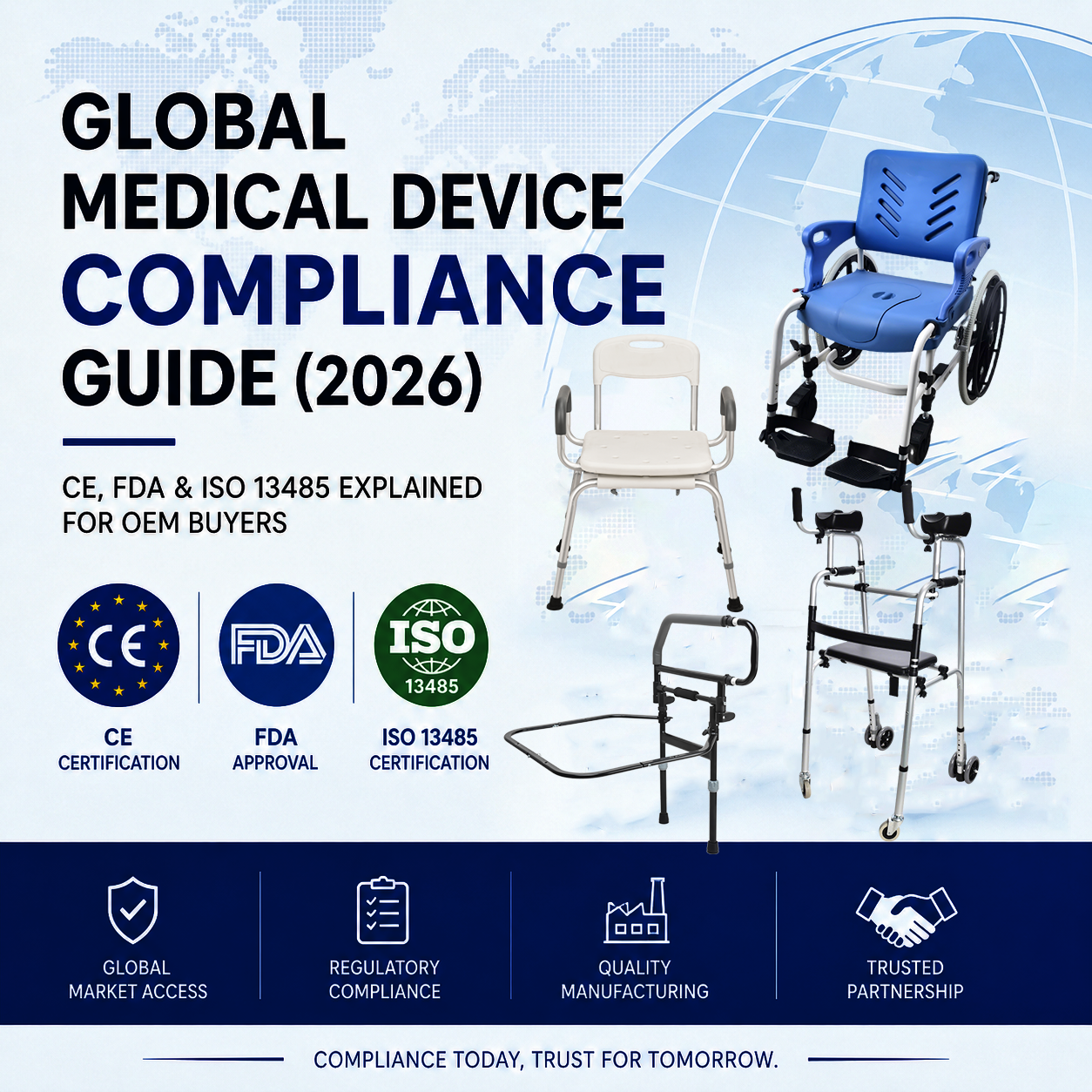
Learn CE certification, FDA approval, and ISO 13485 standards for medical devices. A complete compliance guide for OEM buyers and global distributors of rehabilitation equipment.
1. Introduction: Why Medical Device Compliance Determines Market Success

In the global medical equipment industry, regulatory compliance is not just a requirement—it is the foundation of market access and business credibility.
Whether you are an importer, distributor, or selecting an OEM/ODM manufacturing partner, understanding international standards such as CE certification, FDA approval, and ISO 13485 is essential for long-term success.
For B2B buyers in the rehabilitation and homecare sector, compliance directly impacts:
 Customs clearance efficiency
- Hospital procurement approval
- Product liability risk
- Brand trust in regulated markets
If you are working with a manufacturing partner, choosing a compliant supplier is not optional—it is strategic.
Learn more about our manufacturing capabilities here:
OEM/ODM Medical Equipment Solutions
2. CE Certification (European Market Access)
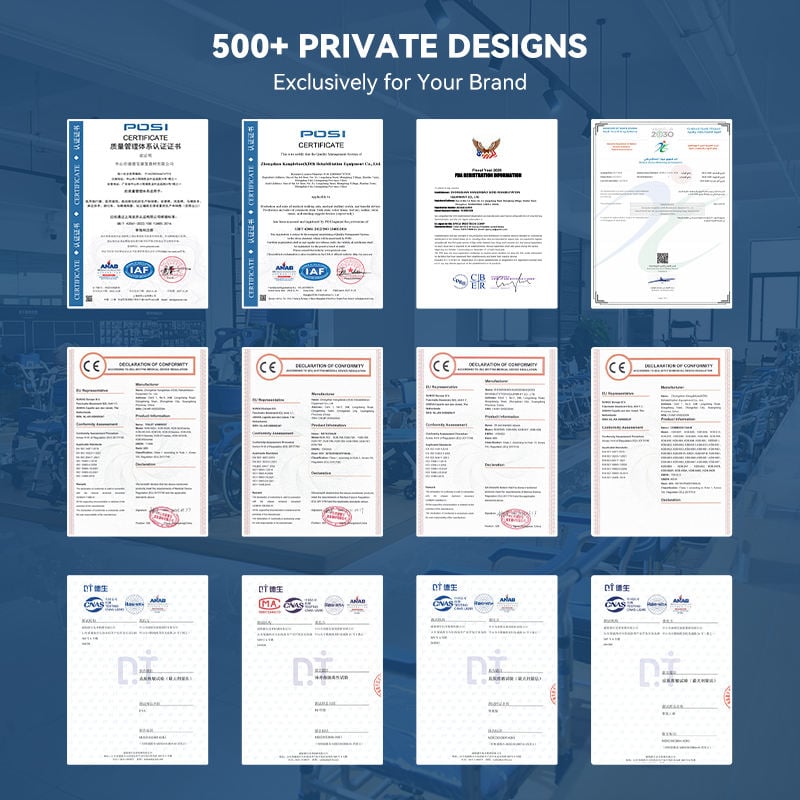
CE marking is mandatory for medical devices entering the European Union market.
It indicates that a product complies with EU safety, health, and environmental protection requirements under the Medical Device Regulation (MDR).
Key Requirements of CE Certification:
- Mandatory for EU market access
- Covers safety, performance, and clinical evaluation
- Requires technical documentation and risk assessment
Who Needs CE Certification:
- Importers selling in Germany, France, Spain, Italy, etc.
- OEM brands launching private label medical devices in Europe
- Distributors supplying hospitals and care institutions
Related reading (coming soon):
CE Certification Guide for Medical Devices
3. FDA Approval (United States Market Entry)
The FDA (U.S. Food and Drug Administration) regulates medical devices entering the U.S. market.
Medical devices are classified into three categories:
- Class I (low risk)
- Class II (moderate risk)
- Class III (high risk)
Most rehabilitation products fall under Class I or Class II and may require 510(k) clearance or FDA registration.
Key FDA Compliance Points:
- Required for U.S. market distribution
- Device classification determines approval pathway
- Strict labeling and documentation requirements
Related reading:
FDA Medical Device Approval Guide
4. ISO 13485 (Medical Device Quality Management System)
ISO 13485 is an international standard that defines the quality management system for medical device manufacturing.
Unlike CE or FDA, ISO 13485 does not certify a product—it certifies the manufacturing system.
What ISO 13485 Ensures:
- Consistent production quality
- Documented manufacturing processes
- Full traceability of materials and production
- Continuous risk management and improvement
Why It Matters for Buyers:
Hospitals, distributors, and government buyers prefer ISO 13485-certified suppliers because it reduces supply chain risk and ensures stable product quality.
Related reading:
ISO 13485 Quality Management System Explained
5. How CE, FDA, and ISO 13485 Work Together
These three systems are not competing standards—they work together as a global compliance framework:
- ISO 13485 → Manufacturing quality foundation
- CE → European market approval
- FDA → U.S. market approval
A truly global medical device manufacturer integrates all three systems into its production and compliance strategy.
This ensures smoother market entry across multiple regions and increases trust from institutional buyers.
6. Common Compliance Mistakes B2B Buyers Should Avoid
Many importers and distributors lose time and money due to avoidable compliance mistakes:
- Assuming CE marking automatically means MDR full compliance
- Ignoring ISO 13485 certification scope and validity
- Choosing suppliers without product-level certification verification
- Failing to confirm FDA classification before entering U.S. market
These mistakes often lead to shipment delays, customs rejection, or product recall risks.
7. Strategic Advice for OEM & Medical Equipment Buyers (IMPORTANT)
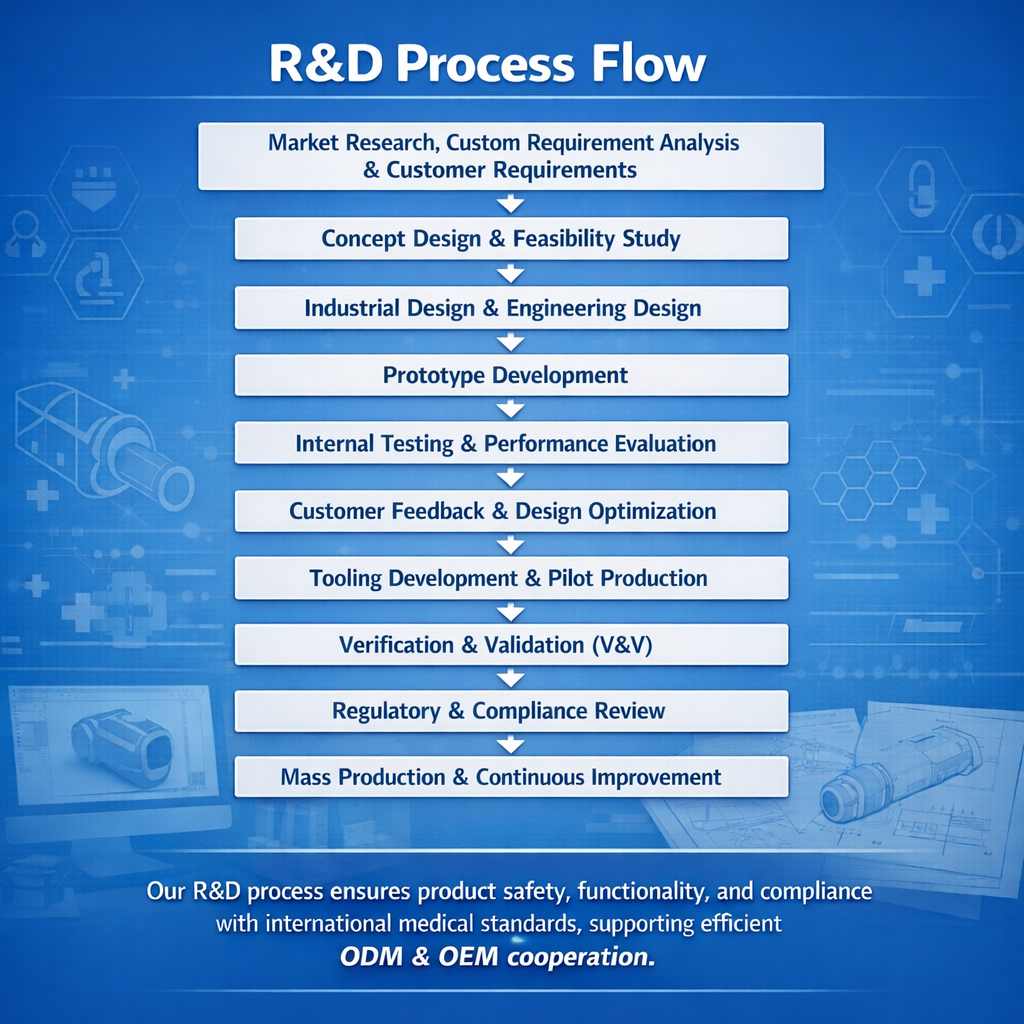
In today’s competitive medical supply chain, compliance should not be treated as documentation—it should be treated as a supplier selection strategy.
The most successful global distributors do not simply purchase certified products.
They partner with manufacturers who embed compliance into their entire production system.
This is the difference between a supplier and a long-term strategic manufacturing partner.
If you are planning to scale your medical equipment business internationally, choosing a fully compliant OEM/ODM partner is critical.
Contact us for OEM/ODM cooperation:
8. FAQ
Q1: Is ISO 13485 required for CE marking?
ISO 13485 is not legally mandatory for CE, but it is strongly recommended and often required by notified bodies during audits.
Q2: Can a medical device have CE certification but not FDA approval?
Yes. CE and FDA are independent regulatory systems with different requirements.
Q3: Which certification is more important—CE, FDA, or ISO 13485?
It depends on your market:
- Europe → CE
- United States → FDA
- Global manufacturing → ISO 13485
Q4: Do all medical devices require FDA approval?
Not all devices require full approval, but most must be registered and classified under FDA regulations.
9. Conclusion: Compliance is Your Competitive Advantage
In the global medical device industry, compliance is no longer a barrier—it is a competitive advantage.
Manufacturers who integrate CE certification, FDA compliance, and ISO 13485 quality systems are not just suppliers—they are enablers of global healthcare distribution.
For importers, distributors, and OEM buyers, choosing a compliant manufacturer is the first step toward building a scalable and sustainable medical business.
Table of Contents
- 1. Introduction: Why Medical Device Compliance Determines Market Success
- Key Requirements of CE Certification:
- Who Needs CE Certification:
- Key FDA Compliance Points:
- 4. ISO 13485 (Medical Device Quality Management System)
- What ISO 13485 Ensures:
- Why It Matters for Buyers:
- 5. How CE, FDA, and ISO 13485 Work Together
- 6. Common Compliance Mistakes B2B Buyers Should Avoid
- 7. Strategic Advice for OEM & Medical Equipment Buyers (IMPORTANT)
- 8. FAQ
- Q1: Is ISO 13485 required for CE marking?
- Q2: Can a medical device have CE certification but not FDA approval?
- Q3: Which certification is more important—CE, FDA, or ISO 13485?
- Q4: Do all medical devices require FDA approval?
- 9. Conclusion: Compliance is Your Competitive Advantage