 EN
EN
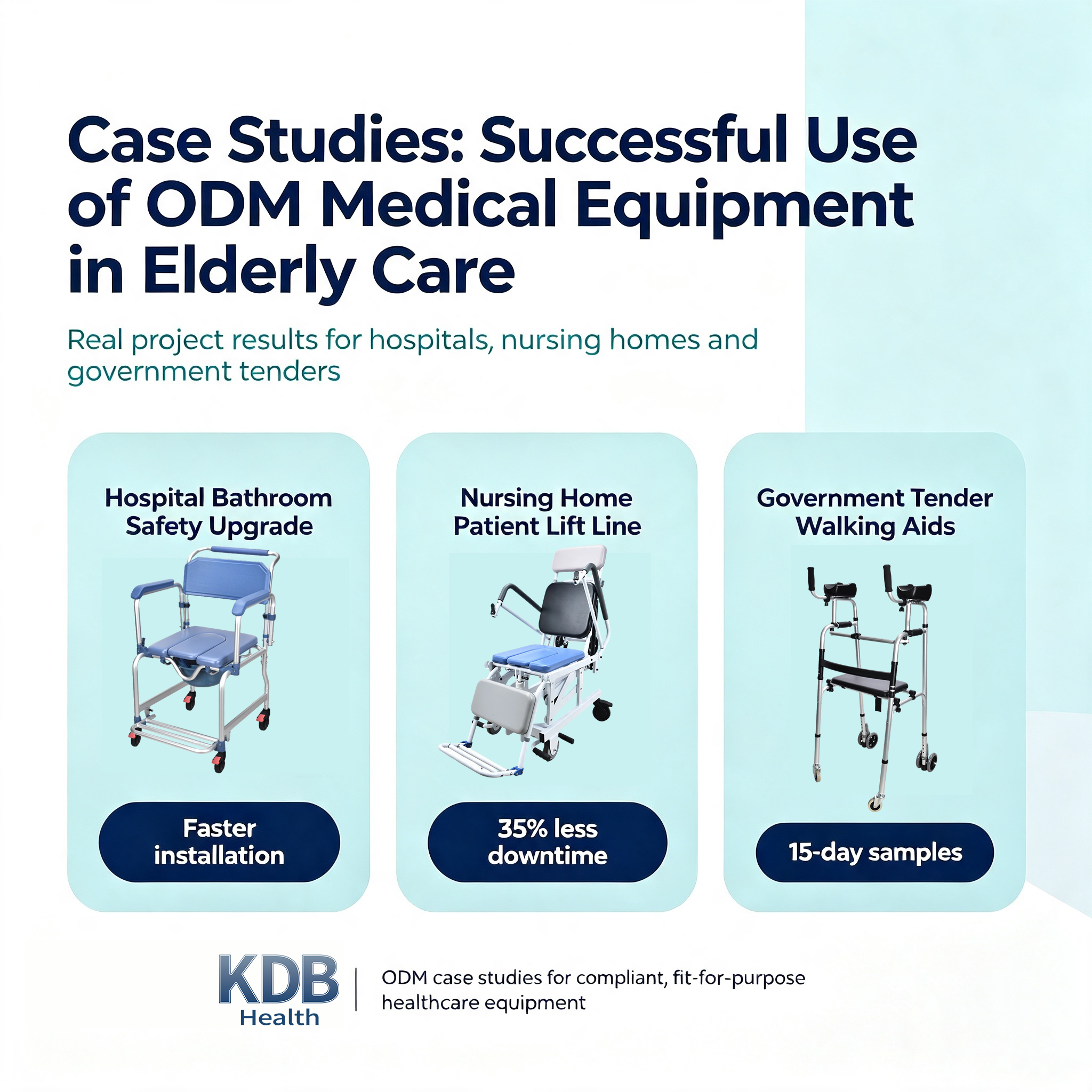
To hospital procurement leaders and project managers, there are more criteria involved in selecting a manufacturing partner than product specifications-it entails demonstration of actual performance. Even though quality certifications create a minimum threshold, specific case studies of successful ODM partnerships illustrate how custom solutions to the dilemmas of the complex care environment are achieved. This paper provides case studies in which the ODM partnerships have yielded project-specific equipment, attained quantifiable results and generated long-term value in the elderly care facilities.
Case Study 1: Project-Specific Equipment for a Hospital-Wide Bathroom Safety Upgrade
When one of the regional hospital groups decided to do a complete renovation of bathrooms they were faced with a major problem which was that standard shower chairs and commode chairs were not compatible with their clinical workflows and facility infrastructure. The procurement department needed equipment and other project-specific equipment tthat would fit perfectly with the existing bathroom layout while complying with the highest standard of infection control and patient handling processes.
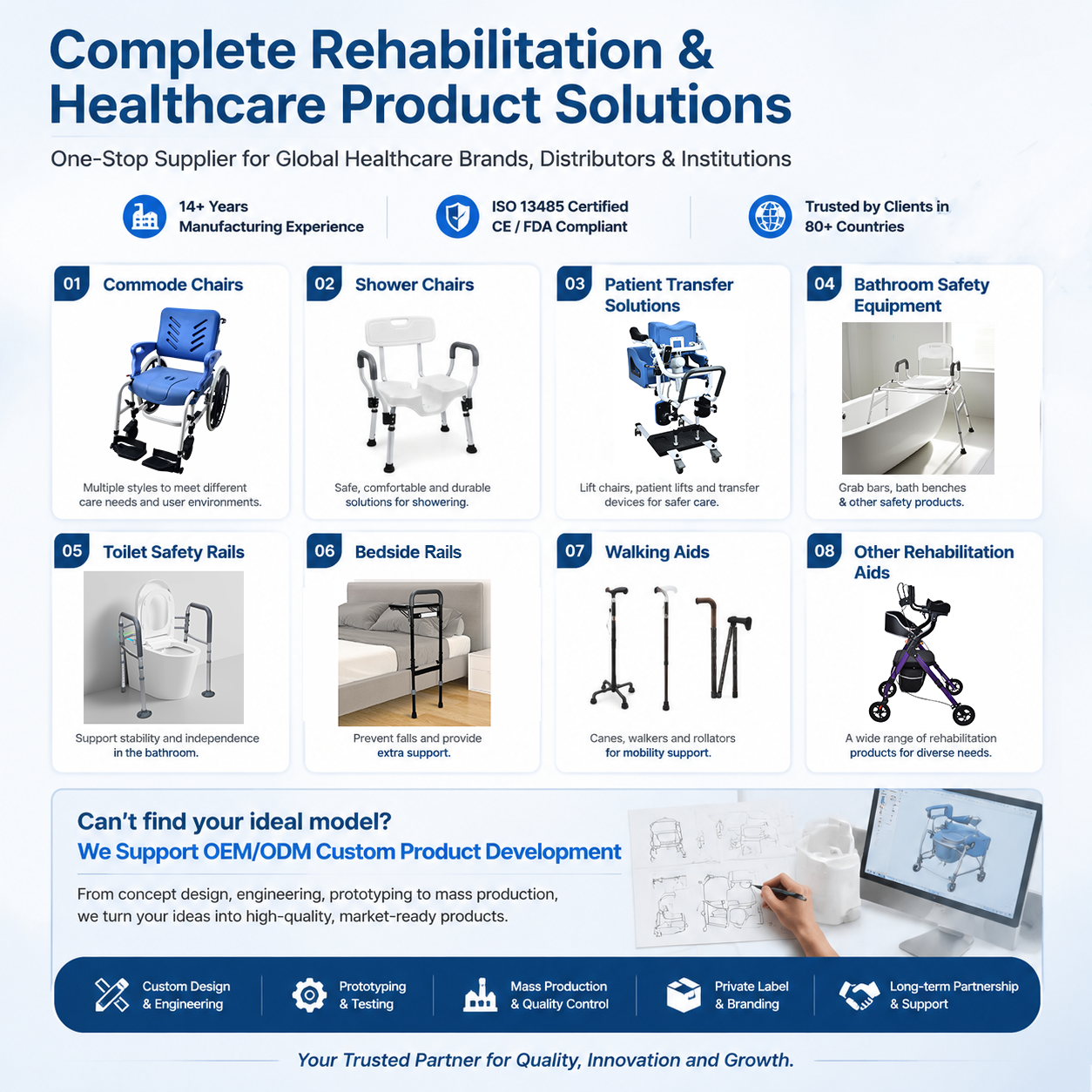
KDB Health designed a custom series of shower chairs in ODM partnership which could be configured in different heights to meet the different designs of facilities. The chairs were designed with antimicrobial surface finishes and without the use of tools to ensure the chairs could be completely cleaned, which is paramount in terms of infection prevention in a hospital. Also, the commode chairs with inbuilt positioning aids were geared towards assisting bariatric patients but being maneuverable in tight areas.
The results of this project were quite impressive: the time spent on installation was cut to zero because the products perfectly fit the specifications of the facilities, the time spent on training the staff was minimized to 40 percent because of clear design, and patient transfer incidents decreased after the implementation. To the hospital procurement team, the success justified the worth of ODM alliances in providing genuinely fit-for-purpose solutions.
Case Study 2: Nursing Home Success Through an Exclusive Patient Lift Line
A national nursing home operator that runs more than 30 nursing homes wanted to unify its patient handling equipment in the organization. The past procurement strategies resulted in a mix of products from various suppliers making the process of staff training, maintenance and inventory management difficult. The operator required one, unique product line that would make all operations integrated and at the same time guaranteeing the safety of the different resident population.
ODM partnership was aimed at a comprehensive patient lift series development, i.e., mobile lifts, sit-to-stand lifts and components of ceiling lifts. All the products were created to have standardized controls, universal sling fittings and standard color codes used to signify weight capacities. The nursing home success was established based on a wide consultation with clinical personnel so that designs could take into consideration real-life care situations.
The outcomes were revolutionary. The patient handling competency of staff increased because of the consistency of training in all the facilities. The standardized spare parts inventory reduced equipment downtime by 35%. Above all, the level of caregiver confidence was enhanced which helped to achieve better patient safety results. The B2B procurement example presented here reflects how strategic ODM alliances have the potential to bring efficiencies of operations without sacrificing clinical excellence in large-scale healthcare organizations.
Case Study 3: Rapid Deployment of Walking Aids for a Government Tender
A medical distributor who received a government tender to provide walking aids was confronted with hard times and definite technical specifications. Specific dimensions and load capacity parameters of wheelchairs, walker rollators, and walking sticks were spelled out in the tender. Off-the-shelf products were not entirely satisfactory and had to be developed bespoke in under a tight deadline.
The distributor using the fast capabilities of KDB Health in designing drew in a few days, and the sample units were delivered in less than 15 days- within the tender deadline. The project-specific equipment featured strong frames, ergonomically designed hand grips, and colors matching the government agency’s branding requirements.
The ODM case study explains the ability of partners to take advantage of the time-sensitive case by using the efficiency of development processes. The distributor was able to win the contract and later end-user comments were able to verify that the custom designs achieved better patient comfort and mobility results than the already implemented alternatives.
Key Takeaways for Procurement Leaders
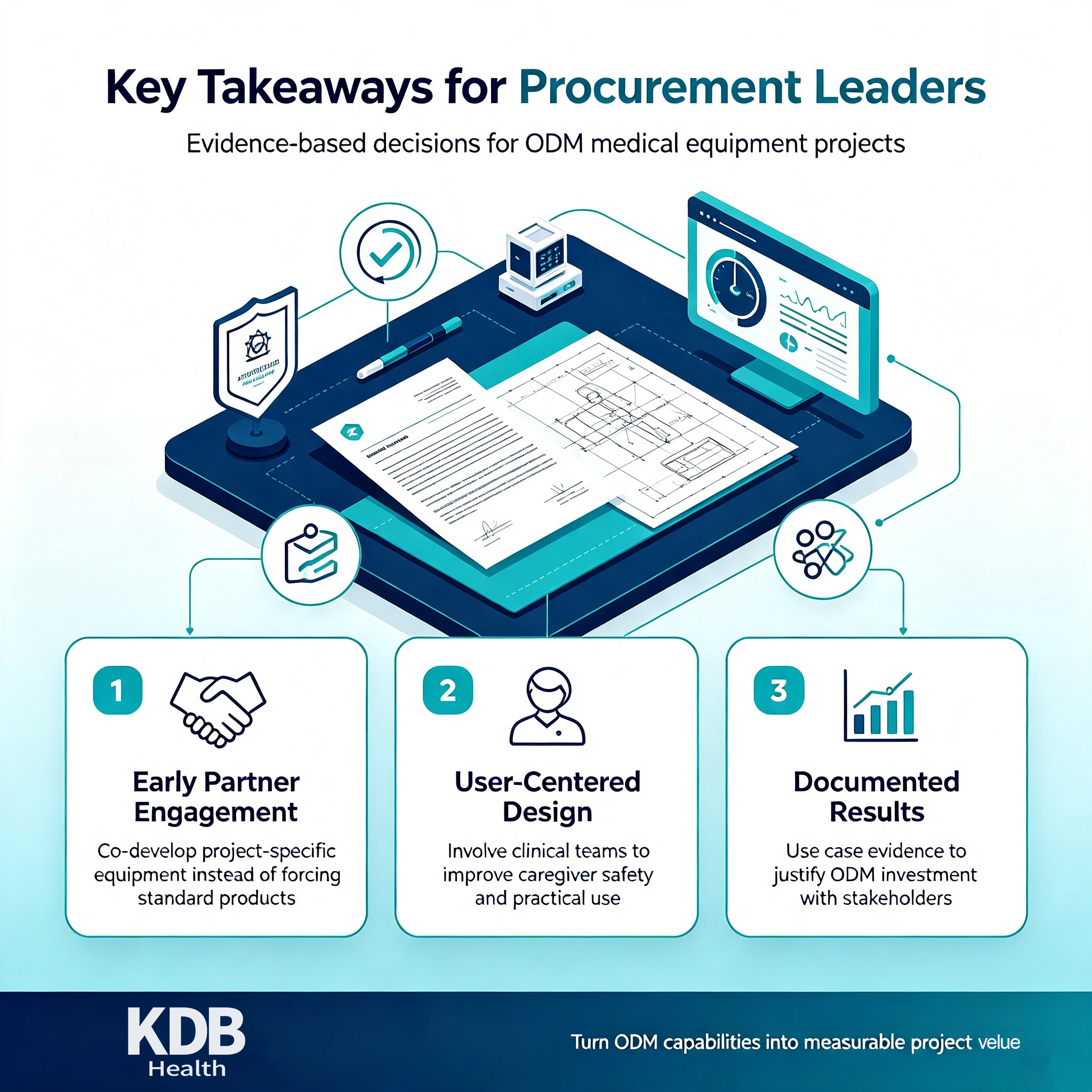
These ODM case studies have similar success factors. To begin with, the ability to start working with a manufacturing partner at an early planning stage enables the project-specific equipment development instead of imposing standardized products on inappropriate usages. Second, user-focused design (including clinical personnel in the development) is a direct source of nursing home success since the products need to benefit caregivers. Third, documented results from these B2B procurement examples offer procurement leaders the evidence to support the ODM investments with the stakeholders.
Conclusion
ODM partnerships provide a strategic direction to the hospital and project procurement leaders to meet the complex care environment needs. The ODM case studies show how project-specific equipment can optimize facility operations, how careful planning can make a case of a nursing home success due to operational efficiencies, and how flexible manufacturing meets urgent B2B procurement needs under strict deadlines. KDB Health is a blend of ISO 13485 certified quality, global regulatory compliance and agile development, to provide both clinical and procurement solutions.