
 EN
EN
Published: June 24, 2026 | Last Updated: September 12, 2026
For small and medium-sized healthcare distributors, launching a new shower chair involves more than selecting a model and comparing prices. Buyers must also consider market demand, inventory pressure, customization costs and the reliability of future supply.
Large minimum order quantities can make a new product launch difficult, especially when a distributor is entering a new market, testing a private-label product or supplying a project with an uncertain purchasing schedule.
A low-MOQ purchasing program provides a more practical starting point. It allows qualified buyers to evaluate selected models, packaging and brand presentation before committing to larger production volumes.
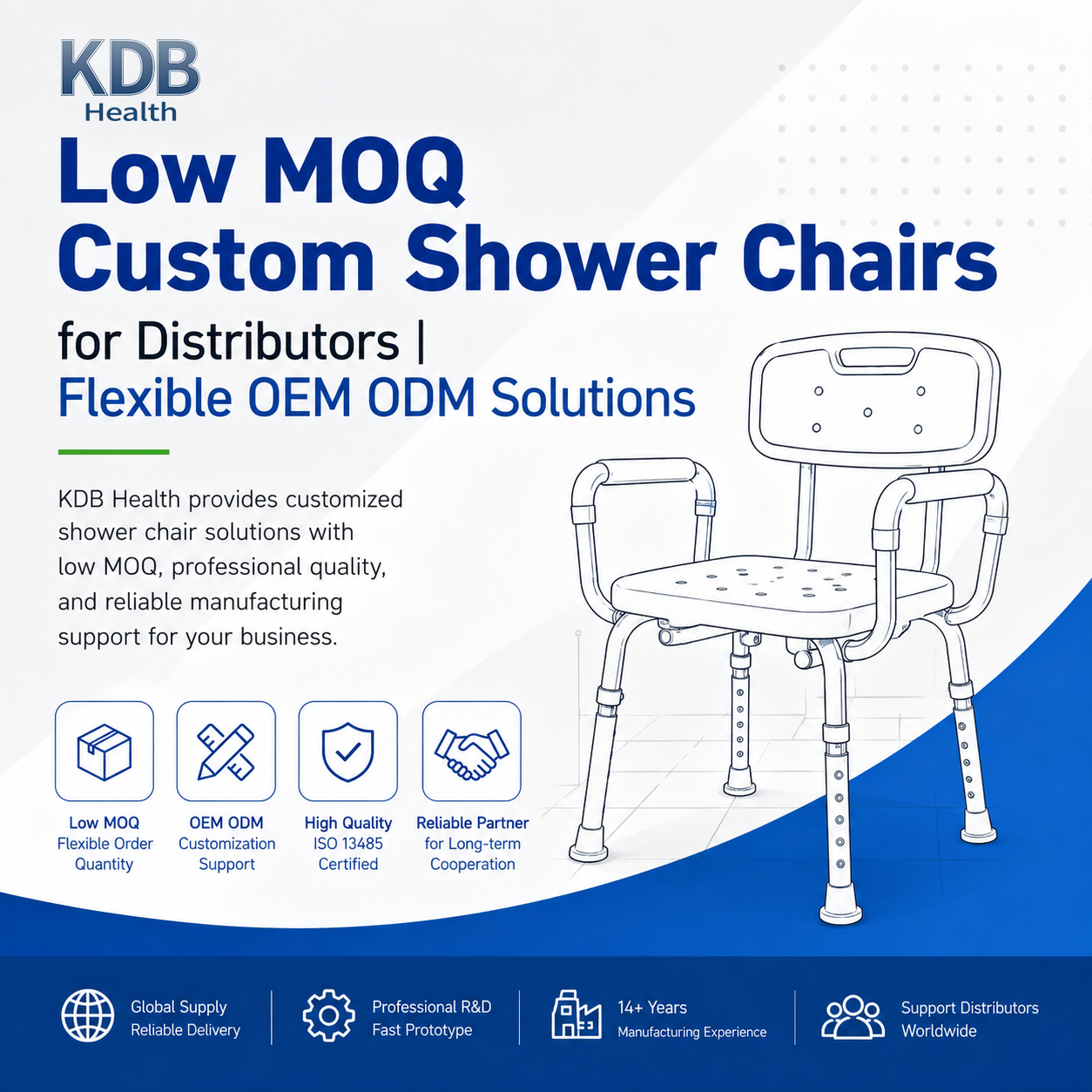
KDB Health supports distributors, rehabilitation equipment brands, importers and project buyers with low-MOQ custom shower chair solutions based on the selected product, customization level and order requirements.
Why Low MOQ Matters to Shower Chair Distributors
Demand can vary significantly between markets and sales channels. A model that performs well in one country may not be suitable for another market’s bathroom layout, preferred seat design, retail positioning or price range.
Low-MOQ sourcing can help distributors:
- Test a new shower chair category with lower inventory exposure
- Introduce a private-label product without immediately committing to large volumes
- Compare customer response to different models or configurations
- Supply smaller healthcare projects with more appropriate quantities
- Collect market feedback before expanding the product range
- Build a gradual purchasing plan based on actual sales performance
This approach is particularly useful for growing distributors and brands that need greater flexibility during the early stages of product development.
However, low MOQ does not mean that every type of customization can be completed in a small order. The practical MOQ depends on the base model, materials, requested modifications, packaging and whether new tooling is required.
What Can Be Customized in a Low-MOQ Order?
The most efficient low-MOQ projects normally begin with an existing shower chair platform. Buyers can then select practical customization options without redesigning the complete product.
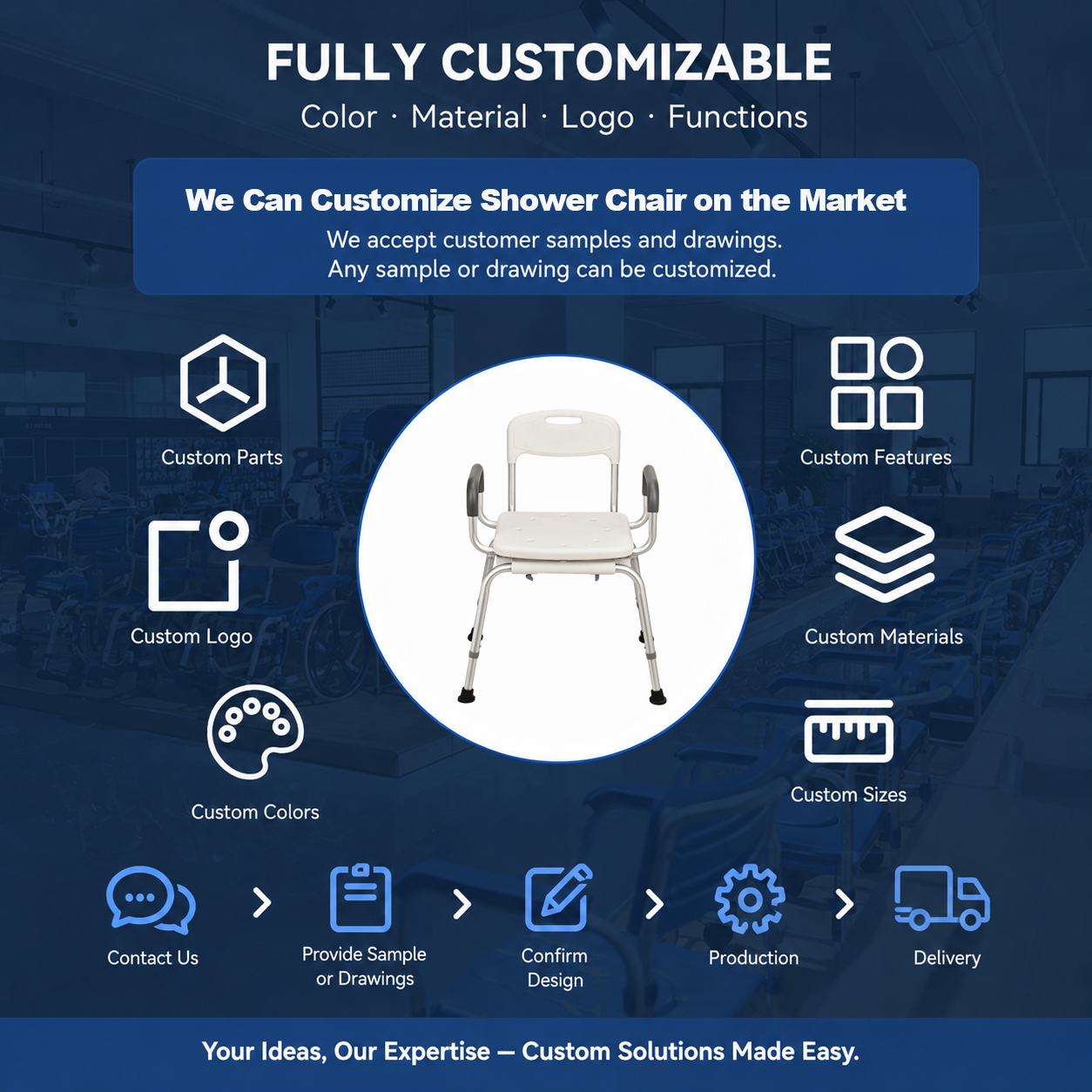
Depending on the model and order configuration, customization may include:
- Product colors and surface finishes
- Logo application and private labeling
- Carton artwork and shipping marks
- Instruction manuals and product labels
- Selected seat, backrest or armrest configurations
- Accessories and packaging combinations
- Minor functional adjustments based on the existing structure
Distributors can review available models in the KDB Health shower chair product range before discussing suitable customization options.
Using an existing platform generally reduces development complexity and helps buyers move from product selection to sample evaluation more efficiently.
By contrast, changes involving frame dimensions, load-bearing structures, newly designed components or exclusive product architecture may require engineering evaluation, prototype development and new tooling. These projects should be treated as ODM development rather than standard private-label customization.
OEM and ODM Are Not the Same Type of Project
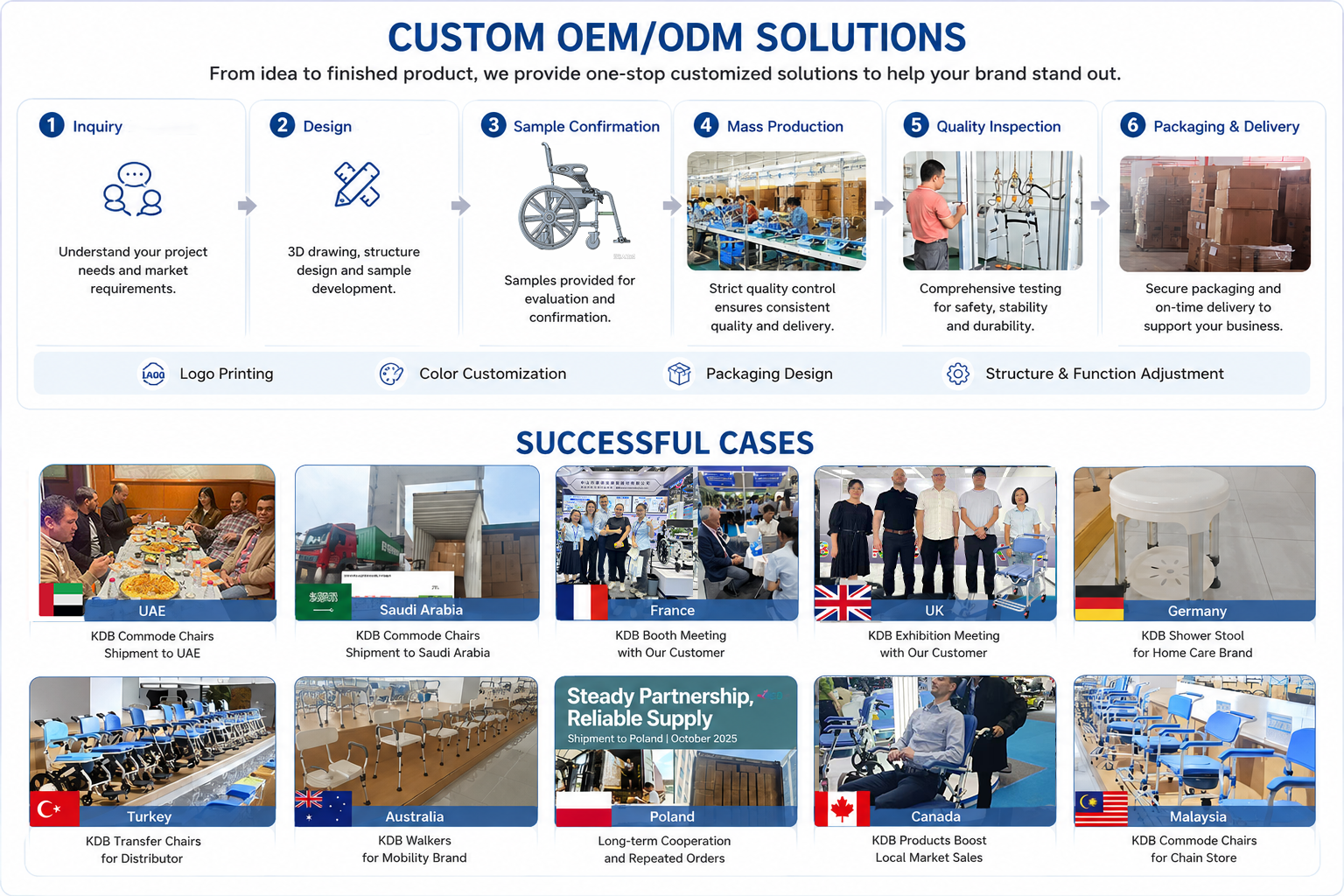
Understanding the difference between OEM and ODM helps buyers set realistic expectations for MOQ, development work and project schedules.
OEM Shower Chair Manufacturing
OEM is suitable when a distributor selects an existing product and requires brand-related or configuration-based changes.
Typical OEM requirements may include:
- Brand logo
- Customized color
- Private-label packaging
- Product labels
- User manuals
- Selected accessories
- Minor configuration adjustments
OEM projects usually involve fewer engineering changes because the primary product structure already exists.
ODM Shower Chair Development
ODM is more suitable when a buyer requires structural or functional changes that are not available on an existing model.
An ODM project may involve:
- Frame or seat dimension adjustments
- New armrest, backrest or footrest structures
- Functional improvements
- New component development
- Prototype testing
- Mold or tooling development
KDB Health evaluates these projects according to technical feasibility, expected quantity, tooling requirements and the intended market.
For buyers still defining their product concept, our article on designing custom shower chairs for regional usage preferences explains how market needs can influence product configuration.
How to Reduce Risk Before Placing a Custom Order
Low MOQ reduces initial inventory exposure, but buyers should still evaluate the product and supplier carefully.
Before confirming an order, distributors should consider the following steps.
1. Define the Target Buyer and Sales Channel
A shower chair intended for homecare retail may have different requirements from one supplied to a hospital, nursing home or rehabilitation project.
The buyer should define:
- Target country or region
- Intended user group
- Retail, wholesale or institutional sales channel
- Expected price positioning
- Required functions
- Estimated initial quantity
2. Select an Existing Product Platform
Starting with an existing model is normally more practical for a trial order. It allows the buyer to focus on commercially important changes instead of paying for unnecessary development work.
The broader KDB Health bathroom safety solutions range can help distributors compare shower chairs with related products such as commode chairs, toilet safety rails and bathroom assistance equipment.
3. Separate Essential Changes from Optional Changes
Not every requested feature is necessary for the first order. Buyers should identify which changes are essential for market entry and which can be introduced after receiving customer feedback.
For example, private-label packaging may be necessary for a brand launch, while a completely new structural component may be better considered after the initial product has been tested.
4. Confirm the Sample Before Bulk Production
The sample should be reviewed for product dimensions, assembly, appearance, functionality, labeling and packaging.
Any required changes should be confirmed before bulk production begins.
5. Plan for Future Order Growth
A trial order should not be treated as an isolated transaction. Buyers should consider whether the selected model, components and packaging can support future repeat orders and higher purchasing volumes.
What Information Should Buyers Provide for a Quotation?
Clear project information helps the manufacturer determine whether the request is suitable for OEM customization, ODM development or an existing model.
When requesting a quotation, buyers should provide:
- Target market
- Buyer type and sales channel
- Preferred shower chair model
- Estimated order quantity
- Required materials or functions
- Color and branding requirements
- Packaging requirements
- Expected delivery schedule
- Applicable market or procurement requirements
- Reference images or drawings, when available
If the exact product has not yet been selected, buyers can describe the intended application, target users and required functions. The manufacturer can then recommend an appropriate starting model.
Manufacturing Capability Behind Flexible Orders
Flexible order quantities still require consistent manufacturing and quality management.
KDB Health is supported by:
- More than 14 years of rehabilitation equipment manufacturing experience
- An ISO 13485 quality management system
- An 18,000-square-meter manufacturing facility
- A professional R&D team
- More than 500 existing product molds
- OEM and ODM product development capabilities
These resources allow KDB Health to support both initial market-testing orders and future volume growth.
Quality expectations should not be reduced simply because the first order is smaller. Product specifications, approved samples, packaging details and inspection requirements should be confirmed before production.
Professional buyers evaluating a long-term partner can also review our guide on how to evaluate a medical equipment OEM manufacturer.
From Trial Order to Scalable Supply
A low-MOQ order should provide information that supports the next purchasing decision.
After the initial products enter the market, distributors can evaluate:
- Customer feedback
- Product return or complaint patterns
- Preferred colors or configurations
- Packaging performance
- Sales speed
- Demand from different customer groups
- Requirements for the next order
Based on this information, the buyer and manufacturer can refine the product, adjust the purchasing mix and prepare for larger repeat orders.
This gradual process reduces the risk of developing a product based only on assumptions. It also creates a clearer path from market testing to stable supply.
Frequently Asked Questions
What is the MOQ for custom shower chairs?
The MOQ depends on the selected model, customization level, packaging requirements and order configuration. Logo, color or packaging customization may have different requirements from structural ODM development. Buyers should provide their estimated quantity and customization needs for evaluation.
Can distributors add their own brand and packaging?
Yes. Private-label support may include logo application, product labels, instruction manuals, carton artwork and packaging customization, depending on the model and order requirements.
Can I start with an existing shower chair model?
Yes. Using an existing product platform is usually the most practical approach for a trial order. Buyers can select an available model and discuss suitable branding, packaging or configuration changes.
Does structural customization require a new mold?
Not always. Minor adjustments may be possible using existing components, while newly designed parts or major structural changes may require new tooling. The engineering team must review the requested design before confirming the development plan.
Can a sample be evaluated before bulk production?
Sample evaluation can be arranged according to the selected model and customization requirements. Buyers should confirm dimensions, functions, appearance, labels and packaging before approving bulk production.
What information is required to receive a quotation?
Buyers should provide the target market, preferred model, estimated quantity, required functions, branding needs, packaging requirements and expected delivery schedule. Reference images or drawings are also helpful for custom projects.
Discuss Your Custom Shower Chair Project
A well-planned low-MOQ project can help distributors test demand, control inventory exposure and build a stronger private-label product line.
KDB Health supports healthcare distributors, importers, brands and project buyers with shower chair selection, OEM customization and ODM development.
Contact our team for current product options, MOQ evaluation, catalog information, pricing or a customized shower chair solution.
Table of Contents
- Why Low MOQ Matters to Shower Chair Distributors
- What Can Be Customized in a Low-MOQ Order?
- OEM and ODM Are Not the Same Type of Project
- How to Reduce Risk Before Placing a Custom Order
- What Information Should Buyers Provide for a Quotation?
- Manufacturing Capability Behind Flexible Orders
- From Trial Order to Scalable Supply
- Frequently Asked Questions
- Discuss Your Custom Shower Chair Project