
 EN
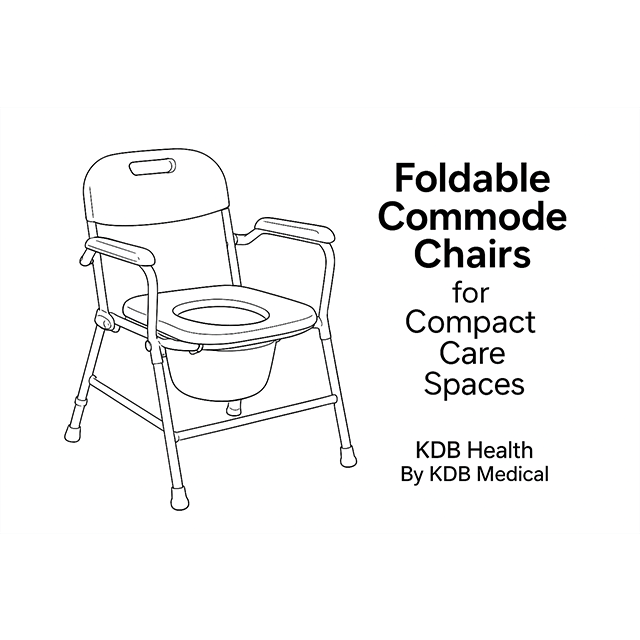
A foldable commode chair can reduce storage space between uses, but its folded size is only one part of a procurement decision. A compact care room still needs enough space for the user, caregiver, access route and cleaning procedure when the chair is fully open.
Measure the room in working conditions
Record doorway width, bedside clearance, toilet position and turning space. Measure with furniture in its normal position. Ask suppliers for open width, depth and height, folded dimensions, seat height range, usable seat width and net weight. Check that the specified configuration can pass through the route without removing parts contrary to the instructions.
Separate storage needs from care needs
For occasional bedside use, folded depth and bucket access may be priorities. For frequent institutional use, easy cleaning, replaceable wear parts and a clear inspection procedure may matter more. A chair intended for toileting is not automatically approved for showering or for transporting an occupied user. Confirm each intended use in the model’s instructions.
Inspect the folding and locking mechanism
- Check that staff can identify the fully open and locked position.
- Look for finger-trap points and confirm the prescribed opening and closing sequence.
- Ask for repeated-operation and strength evidence for the exact model.
- Inspect joint play, fasteners and foot contact on a representative sample.
Fold and unfold the chair only as instructed, without an occupant. Do not substitute an informal demonstration for load or durability verification.
Match fit and support to the user
Compare the rated load and seating dimensions with the intended user group. Review armrest position, seat height adjustment and foot support where applicable. A care professional should assess whether the user can transfer to and from the selected chair and what assistance is needed.
Review cleaning and storage together
Ask whether the bucket, lid and seat can be removed for cleaning, which agents are compatible and whether concealed joints retain water or debris. Plan a dry storage position that keeps the folded chair secure without obstructing an exit. Identify who inspects feet, joints and locks before the next use.
Use a model comparison sheet
Compare each candidate using the same fields: intended use, open and folded dimensions, rated load, adjustment range, cleaning instructions, test evidence, spare parts and warranty terms. Specify acceptance criteria before approving a production sample.
For a wider selection framework, see our conventional commode chair buying guide. Send KDB Health your room dimensions and intended care scenario to request current model-specific drawings and documentation.